REVIEW · TOKYO TOURS
EDOCCO Tea House–A Quick Dive into Japanese Traditional Culture
Tokyo offers plenty of temples and museums, but EDOCCO Tea House lets you try several Japanese traditions in one compact visit. In about an hour, you prepare matcha, watch a Japanese dance performance, dress in kimono, write calligraphy, and fold origami.
I like the small-group format, which gives beginners room to ask questions and try each activity without feeling lost. I also like that the instruction is available in English, with warm hosts such as Ori and Mr. Bambu helping explain the customs behind each exercise.
The main drawback is the tight schedule. The dance performance can last less than 10 minutes, and some parts feel more like a lively introduction than a full tea ceremony or extended workshop. At $72.48, this is best judged as a broad cultural sampler, not a specialist lesson.
In This Review
- Key points at a glance
- What EDOCCO Tea House gets right in one hour
- Matcha and Japanese sweets: your first hands-on lesson
- The Japanese dance performance is beautiful but brief
- Kimono dress-up gives the visit a playful side
- Shodo calligraphy turns a brush into a keepsake
- Origami keeps the final workshop easy and social
- Why the English explanations matter
- Is $72.48 fair for an hour?
- Location, timing, and practical planning
- Who should book EDOCCO Tea House?
- Should you book it?
- FAQ
- How long does the EDOCCO Tea House experience last?
- Where does the experience begin and end?
- What is included in the price?
- Is the matcha-making equipment included?
- How many people can join the activity?
- Can I cancel for a full refund?
Key points at a glance
- Five traditions in one hour: Matcha, Japanese dance, kimono, shodo calligraphy, and origami are all included.
- A restored cultural setting: EDOCCO STUDIO is designed around the meeting of old Japanese style and modern Tokyo.
- English help throughout: Explanations make the customs easier to understand, especially for first-time visitors.
- Good for families: Children have several hands-on tasks, including folding paper, writing characters, and wearing kimono.
- Small groups, up to 20 people: The format allows for individual instruction and photos.
- Useful keepsakes: You take away your calligraphy and origami work, along with memories of the kimono experience.
What EDOCCO Tea House gets right in one hour
The smart idea here is variety. Instead of asking you to spend an entire afternoon mastering one tradition, EDOCCO gives you a taste of several practices that shape Japanese arts and daily culture.
That makes the experience especially useful near the start of a Tokyo trip. You get basic context for matcha, calligraphy, folding paper, traditional clothing, and Japanese dance before seeing these customs elsewhere. I like tours that give you enough background to make later sightseeing more meaningful, and this one has that role.
The setting helps, too. EDOCCO STUDIO is a restored space intended to express the meeting of old and new Japan. It is not simply a classroom with a list of activities. The surroundings provide a more fitting backdrop for tea, kimono, and dance than a standard city attraction would.
The group size is capped at 20 people. That is not a private lesson, but it is small enough to offer a more personal feel than a large stage show. Some sessions may be much smaller. One couple had the program largely to themselves, and the center continued with the activity rather than canceling it.
Other Tokyo days people book alongside this one:
- Mt Fuji and Hakone 1-Day Bus Tour Return by Bullet Train
★ 5.0 · 26,383 reviews - 1-Day Tokyo Bus Tour
★ 5.0 · 14,250 reviews - Tokyo: TOKYO SKYTREE® Admission ticket
★ 4.5 · 11,192 reviews
Matcha and Japanese sweets: your first hands-on lesson
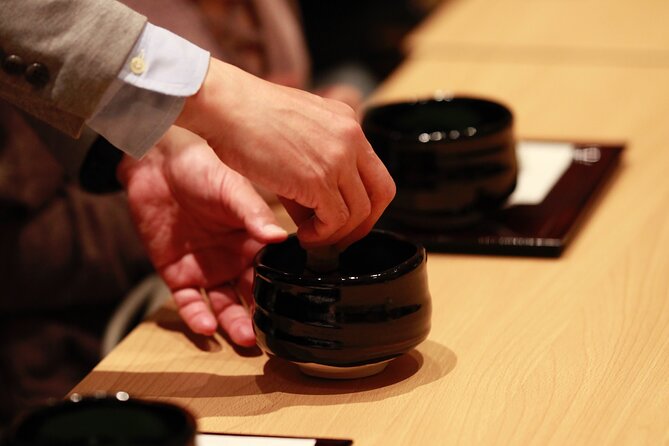
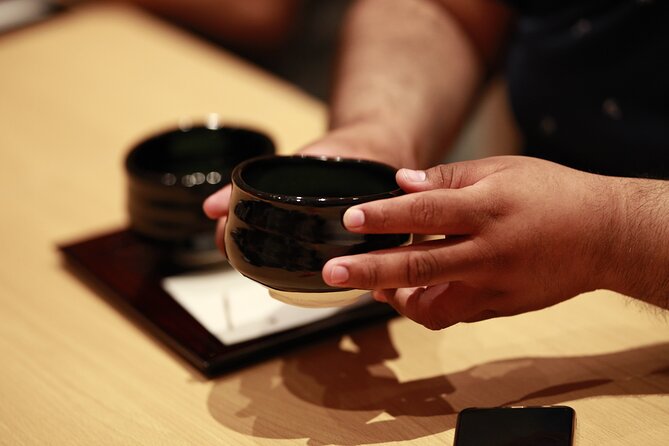
The session begins with matcha and a Japanese sweet. An instructor guides you through preparing and serving the tea, showing how the bowl, powder, bamboo whisk, and other tools fit together.
For many first-time visitors, this is the most useful part of the program because you are not only watching. You handle the equipment and learn the order of the steps. The process also gives the group a calm opening before the more playful activities begin.
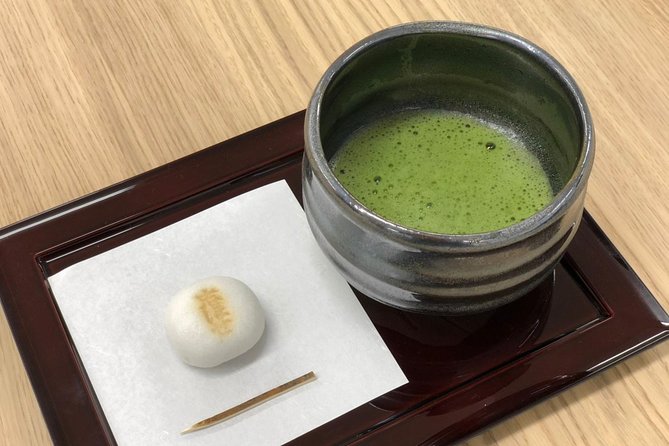
The included snack is a set of matcha and Japanese sweets. The sweet is more than a small bite with your drink. In a tea setting, it helps balance the bitterness of the matcha, and the combination gives you a simple introduction to the care paid to presentation and taste.
Keep your expectations measured. This is a short lesson, not a formal, full-length tea ceremony with every ritual explained at length. If you want to continue practicing at home, a tea set with a bowl, matcha powder, bamboo whisk, and other tools is available to purchase, but it is not included in the tour price.
I would avoid buying the set simply because it is offered. First decide if you genuinely want to make matcha after returning home. The lesson itself gives you enough information to make that decision.
The Japanese dance performance is beautiful but brief
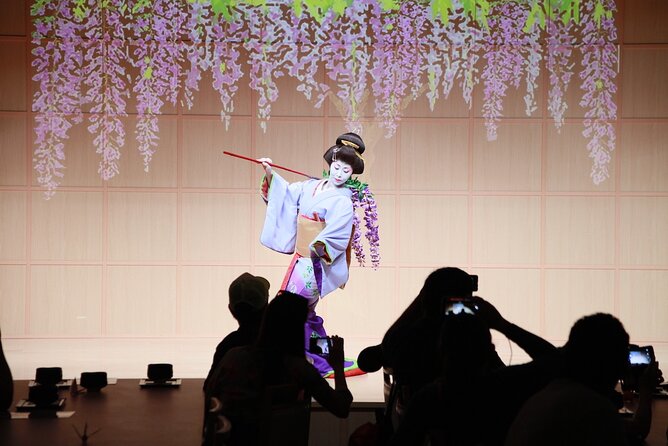
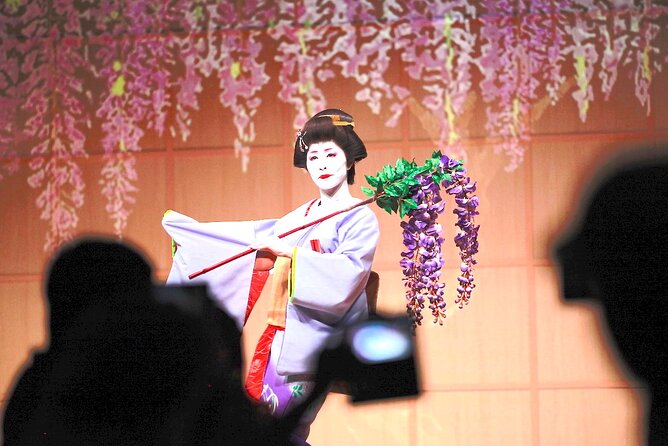
The dance segment brings a change of pace. A performer presents Japanese dance while the host explains the meaning of the movements and the cultural setting in English.
The performance has been warmly received, particularly for its grace and visual detail. The fan work and gestures offer a glimpse of an art form that can be hard to understand if you only watch it without context. The explanation matters because traditional dance can seem slow or abstract to an unfamiliar audience.
The catch is length. One detailed account rated the experience slightly lower because the dance lasted less than 10 minutes. That is fair. If dance is your main reason for booking, you may wish for more time and a fuller performance.
For most people, though, the short presentation works as part of the larger program. You are not paying for a dedicated dance recital. You are getting one carefully chosen piece in a cultural sampler. I would think of it as an introduction that may encourage you to seek out a longer performance later.
Kimono dress-up gives the visit a playful side
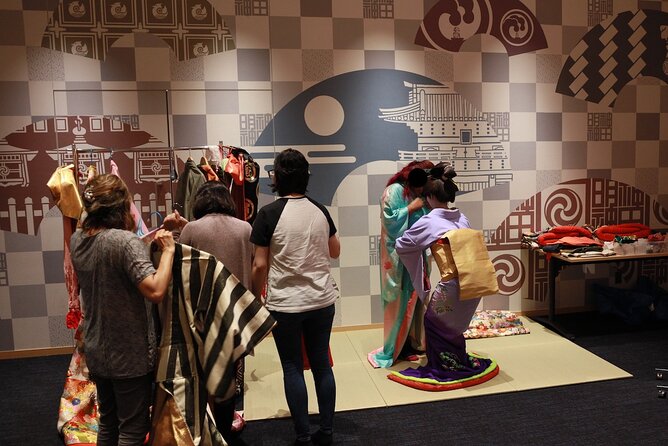
The kimono activity lets you put on traditional clothing and take photographs. It is presented as a cosplay experience, so the emphasis is on participation and atmosphere rather than a detailed study of historical dress.
That distinction is useful. You should expect a fun chance to look and feel the part, not a long lesson in textile construction, regional styles, or the complex rules of formal kimono wear. Still, dressing in the clothing changes how you relate to the rest of the program. Tea, dance, and calligraphy feel less like demonstrations when you are taking part in the visual world around them.
This section works especially well for families. Children can enjoy the transformation, photographs, and connection to the dance. Adults who prefer quiet cultural study may find the dress-up element a little light, but it adds warmth and variety to an otherwise instructional hour.
The dance and kimono activities also connect naturally. You see how clothing, posture, hand movements, and fans contribute to a traditional performance. Even in a short format, the combination makes the presentation easier to remember.
Same city, a completely different kind of day:
- Tokyo: teamLab Planets TOKYO Digital Art Museum Entry Ticket
★ 4.6 · 9,779 reviews - Mt Fuji & Hakone Cruise, Drum Show Bullet Train 1 Day from Tokyo
★ 4.0 · 7,413 reviews - Tokyo: Shinjuku Food Tour (13 Dishes at 4 Local Eateries)
★ 5.0 · 6,603 reviews - Tokyo Mt Fuji 5th St & Hakone Cruise Bus Tour w/Bullet Train
★ 4.4 · 5,024 reviews
Shodo calligraphy turns a brush into a keepsake
The calligraphy lesson introduces shodo, the Japanese art of brush writing. With guidance, you practice basic brush strokes and create a character of your own.
This is a simple activity, but it demands more attention than it first appears. A brush does not behave like a ballpoint pen. Pressure, direction, and the amount of ink change the line, so even a basic character gives you a feel for the control behind Japanese calligraphy.
The instructors are patient with beginners, which matters here. You do not need to know Japanese to take part, and the English explanations help you understand that the exercise is not just decorative handwriting. The shape and balance of a character are part of the art.
Your finished work becomes one of the useful mementos from the visit. I value that more than a generic souvenir because it records your own attempt. It may not be perfect, but it carries the memory of learning something with your hands.
If you have children, this is one of the activities where they can focus for a few minutes and see an immediate result. The same is true for adults who like practical demonstrations more than passive sightseeing.
Origami keeps the final workshop easy and social
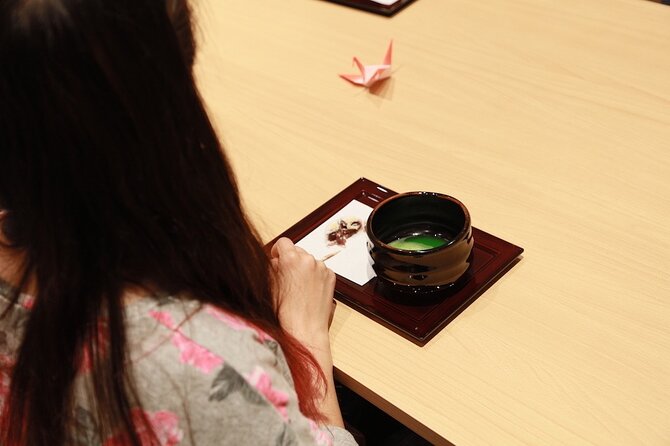
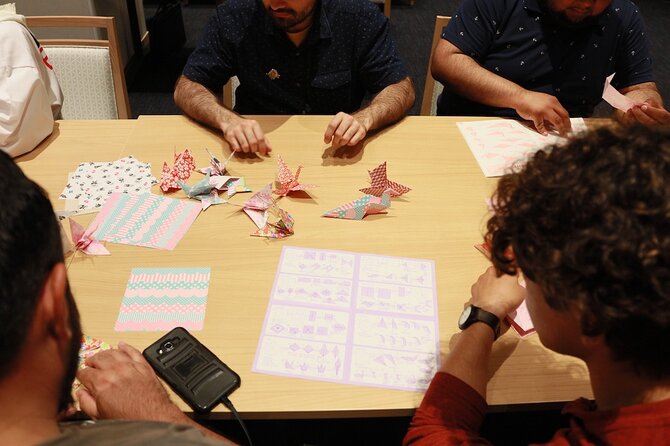
The origami mini workshop teaches traditional paper folding, from simple cranes to more involved shapes. The instructor breaks the process into steps, and you work with one sheet of paper to create a small piece of art.
Origami is a good choice for a short tour because the basic idea is clear right away. You do not need special equipment, prior knowledge, or Japanese language skills. You simply follow the folds, correct mistakes, and watch the paper take shape.
The activity also creates a relaxed social moment. People can compare their attempts and help one another, while the staff keeps the pace moving. Children often respond well to it because the result feels like a small surprise.
Do not expect a long craft class. The schedule gives you a brief introduction rather than time for several elaborate designs. Still, the simplicity is part of the appeal. You leave with a practical sense of how much can come from a single sheet of paper.
Together, calligraphy and origami give you two different kinds of souvenirs. One is made through brush control and written form. The other comes from folding and structure. Both are more personal than simply buying an item in a shop.
Why the English explanations matter
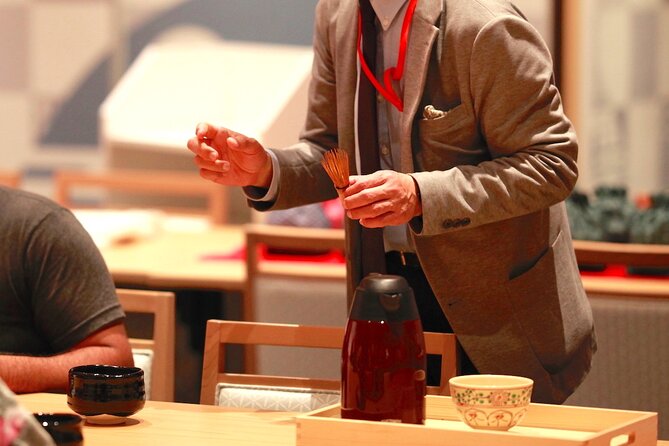
Language can determine whether a cultural activity feels open or confusing. At EDOCCO, the program is available in English, and the hosts explain what you are doing as well as why it matters.
That is particularly valuable during the tea ceremony and dance. Without explanation, you might notice the tools and gestures but miss their purpose. Clear guidance also helps during calligraphy, where instructions about brush movement are easier to follow when you can ask questions directly.
The staff’s manner is another important part of the experience. Hosts including Ori and Mr. Bambu are singled out for being friendly, attentive, and informative. That personal touch helps beginners feel comfortable making mistakes, which is exactly what you need in a workshop.
The program also appears willing to continue with very small numbers. A session attended by only one couple still went ahead, giving them unusually direct attention. You should not count on a private booking, but the possibility shows why the small-group design can work well.
Is $72.48 fair for an hour?
At $72.48 per person, this is not a bargain activity if you measure value by time alone. One hour is short, and the dance segment is especially brief. You could spend less on a single museum or temple visit.
The better comparison is what is included. You receive matcha and Japanese sweets, instruction in tea preparation, a Japanese dance performance, kimono dress-up, calligraphy, and origami. Several paid activities would be needed to sample all of those separately, and arranging them independently would take more time.
I consider the price reasonable for first-time visitors who want a guided introduction with English support. It is also good value for families if everyone takes part, since children and adults have several chances to do something rather than sit and watch.
The value is weaker for a visitor who already knows Japanese tea, shodo, and origami, or who wants a serious study of one tradition. In that case, the quick pace may feel too shallow. You are paying for range, friendly instruction, and convenience.
The included matcha snack and the keepsakes improve the overall value. The optional tea set is separate, so include that only if you want to practice at home.
Location, timing, and practical planning
The meeting point is EDOCCO STUDIO at 2-chome-16-2 Sotokanda, Chiyoda City, Tokyo 101-0021. The activity ends back at the same location, which makes it easy to fit before or after sightseeing in the area.
The venue is near public transportation. Allow enough time to find the studio, particularly if you are unfamiliar with Tokyo’s station exits and street layout. Your mobile ticket is accepted, and confirmation is normally issued at booking, subject to availability for bookings made within one day of the visit.
The activity lasts about one hour. I would avoid scheduling it too tightly against a train reservation, restaurant booking, or another timed attraction. Tokyo transfers can take longer than expected, and the value of this program depends on arriving calm enough to listen and take part.
The maximum group size is 20. Free cancellation is available up to 24 hours before the start time for a full refund. Changes or cancellations inside that window are not accepted, and the paid amount is not refunded.
The activity can also be canceled because of poor weather or because the minimum number of participants is not met. In those cases, you are offered another date or experience, or a full refund. That policy is worth noting even though the program takes place in a studio.
Who should book EDOCCO Tea House?
I would recommend this to first-time visitors who want a friendly orientation to Japanese culture without committing half a day. It is especially suitable if you want activities that produce memories and small keepsakes, not just photographs.
Families with children around school age should give it serious consideration. The mix of tea, dance, costume, brush writing, and paper folding gives each child several possible favorites. One child may enjoy the kimono while another prefers origami or calligraphy.
It also suits couples and solo visitors who appreciate a small group and direct instruction. English support makes the experience easier for people who have no Japanese language background.
I would be more cautious if you want a long, formal tea ceremony or an extended geisha dance show. The program uses those traditions as windows into Japanese culture, not as complete performances or advanced courses.
Should you book it?
Book EDOCCO Tea House if you want five approachable cultural activities in one hour, clear English guidance, and a setting that feels more thoughtful than a standard tourist workshop. The staff’s patience, the small groups, and the chance to make your own calligraphy and origami give the experience real value.
Skip it if you want depth in one discipline or dislike scheduled group activities. The dance is short, and the pace is brisk. For everyone else, this is a practical way to get your bearings with Japanese traditions early in a Tokyo visit, especially if you are traveling with children or have limited time.
FAQ
How long does the EDOCCO Tea House experience last?
The activity lasts approximately one hour.
Where does the experience begin and end?
It begins at EDOCCO STUDIO, 2-chome-16-2 Sotokanda, Chiyoda City, Tokyo 101-0021, Japan, and ends back at the same meeting point.
What is included in the price?
The price includes a matcha and Japanese sweets snack set, Japanese dance show appreciation, calligraphy, origami, and a Japanese dress-up experience.
Is the matcha-making equipment included?
The activity includes the matcha experience, but a tea set with a tea bowl, matcha powder, bamboo whisk, and other tools is available separately for purchase.
How many people can join the activity?
The maximum group size is 20 people.
Can I cancel for a full refund?
Yes. You can cancel at least 24 hours before the experience start time for a full refund. Cancellations or changes made less than 24 hours before the start time are not accepted and are not refunded.
Just added around Tokyo
- Private Memorable Tokyo Tour with English Speaking Driver★ 5.0 · 30 reviews
- Tokyo Photography Masterclass – Private Photography Lesson★ 5.0 · 25 reviews
- Private Tokyo Custom Full-Day Tour by Chartered Vehicle★ 5.0 · 16 reviews
- Private Sightseeing to Mt Fuji and Hakone with English Driver★ 5.0 · 51 reviews
- Private Mt. Fuji Day Trip from Tokyo with English-Speaking Driver★ 5.0 · 33 reviews
- 4 Day Tour – Mount. Fuji, Tokyo, Hakone, Kamakura and Yokohama★ 5.0 · 19 reviews
- Private Unforgettable Mt Fuji Tour with English Speaking Driver★ 5.0 · 142 reviews
- Private Tokyo Food Tour – A Journey Through Time Through Food★ 5.0 · 36 reviews
Tokyo Tours, compared.

Mt Fuji and Hakone 1-Day Bus Tour Return by Bullet Train
Read our review →

teamLab Planets TOKYO Digital Art Museum Entry Ticket
Read our review →
Mt Fuji & Hakone Cruise, Drum Show Bullet Train 1 Day from Tokyo
Read our review →
Shinjuku Food Tour (13 Dishes at 4 Local Eateries)
Read our review →
Tokyo Mt Fuji 5th St & Hakone Cruise Bus Tour w/Bullet Train
Read our review →