REVIEW · TOKYO TOURS
Easy Japanese Speaking Experience and Meet Locals in Shibuya
This Shibuya language exchange turns Japanese practice into a social evening rather than a classroom drill. At Jinnan Cafe, staff place you in small mixed groups, provide conversation cards, and rotate the seating so you speak with several people during the two hours.
I like the built-in structure, since topic cards and timed language changes make it easier to start talking. I also like the included drink, which takes some pressure off the first few minutes. The main drawback is that this is a group social event, not a private lesson, so the amount of Japanese you use depends partly on your tablemates and the night’s attendance.
In This Review
- Key Points
- Japanese Practice Without Classroom Pressure
- Arriving at Jinnan Cafe in Shibuya
- How the Two-Hour Conversation Works
- Topic Cards Make the First Conversation Easier
- What You Can Learn From Local Conversation
- A Friendly Choice for Solo Visitors
- Is $53 a Fair Price?
- Who Will Get the Most From This Event?
- Simple Ways to Prepare Before You Go
- Booking, Cancellation, and Practical Details
- Should You Book This Shibuya Language Exchange?
- FAQ
- Where does the Japanese speaking experience take place?
- What time does the event run?
- How long does the experience last?
- What drink is included?
- Are snacks included?
- Do I need to speak Japanese to join?
- How are the conversation groups organized?
- Do the groups stay the same all evening?
- Are conversation topics provided?
- What is the cancellation policy?
Key Points
- Conversation rotates every 15 minutes: You change between English and Japanese, giving both sides a fair chance to practice.
- Small groups keep the evening approachable: Staff aim for groups of three or four with a mix of Japanese and international participants.
- Topic cards prevent awkward silences: You can use prepared prompts when small talk runs dry.
- The meeting place is Jinnan Cafe: Order your included drink on the first floor, then check in at reception on B1.
- You can join without Japanese skills: The event welcomes people who are interested in Japanese, even complete beginners.
- The Tuesday schedule is fixed: The experience runs approximately 7:30 PM to 9:30 PM and allows up to 20 people.
Japanese Practice Without Classroom Pressure
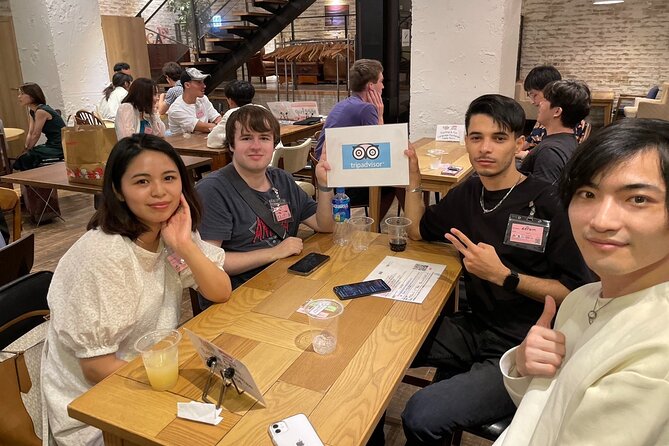
Many language exchanges sound better in theory than they feel in person. You arrive alone, find a room full of strangers, and wonder how to begin. This event deals with that problem in a practical way. Staff prepare seats, offer topic cards, and move people around during the evening.
You are not expected to give a speech or prove your grammar. You simply take part in short conversations, listen to someone else, and try a few Japanese phrases. If you make a mistake, the format lets you keep going instead of getting stuck on one sentence.
The event uses both Japanese and English. That makes it useful for people at different levels. A beginner can ask for help, repeat simple phrases, or listen for familiar words. Someone with more experience can try longer exchanges and help an English-speaking partner practice.
The relaxed format also gives you something a textbook cannot: a chance to hear how people actually keep a casual conversation moving. You can ask about food, neighborhoods, travel plans, daily life, or other subjects from the provided cards. The value is less about memorizing a long vocabulary list and more about getting your mouth used to speaking.
Other Tokyo days people book alongside this one:
- Mt Fuji and Hakone 1-Day Bus Tour Return by Bullet Train
★ 5.0 · 26,383 reviews - 1-Day Tokyo Bus Tour
★ 5.0 · 14,250 reviews - Tokyo: TOKYO SKYTREE® Admission ticket
★ 4.5 · 11,192 reviews
Arriving at Jinnan Cafe in Shibuya
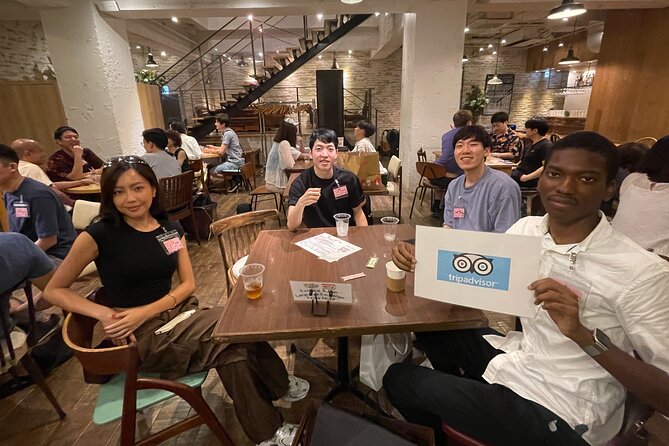
The event takes place at Jinnan Cafe, a convenient Shibuya meeting point near public transportation. The directions have two parts, so pay attention when you arrive.
First, order your included drink on the first floor. The included choice is one soft drink or one alcoholic beverage. After ordering, go to the basement level, marked B1, and check in at reception.
That arrangement is worth knowing before you arrive. You are not simply walking into a cafe and hoping to spot the right table. The drink order happens upstairs, while the event check-in and seating take place below. Have your mobile ticket ready, since the experience uses mobile admission.
The cafe setting helps the evening feel less formal. You can hold a drink, sit down, and begin with a simple introduction. There are no snacks included, so eat beforehand if you expect to need more than a beverage during the two-hour session.
The meeting place also makes this easy to add to a Shibuya evening. The scheduled time is Tuesday from 7:30 PM to 9:30 PM. That timing suits a visitor who has spent the afternoon sightseeing and wants a social activity at night. It is less useful if your schedule only allows daytime events or if you are leaving Tokyo before Tuesday.
How the Two-Hour Conversation Works
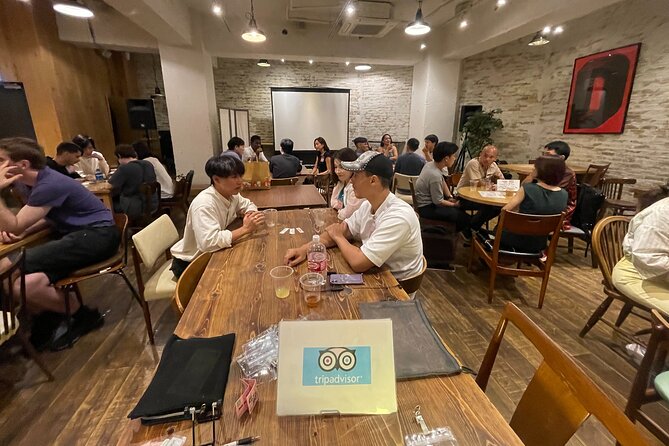
Staff organize participants into small groups, generally three or four people. Each group includes a mix of Japanese and foreign participants when possible. This is an important part of the experience. A small table gives you enough time to speak, but it avoids the pressure of addressing a large circle.
The conversation follows a planned rhythm. One part of the schedule gives you about 15 minutes of English conversation, followed by Japanese conversation. The format lets Japanese participants practice English while international participants practice Japanese. You are not left to negotiate the language balance by yourself.
Staff also change the seating during the evening. The aim is for you to speak with more than one group, generally two or three times. This keeps the experience from becoming a single long conversation with the first people you meet.
I like this setup because it helps solo visitors. You do not need to bring a Japanese friend or arrive with a ready-made group. The staff provide the social framework, and the rotating seats give you fresh introductions if one conversation feels slow.
The tradeoff is that rotation can interrupt a conversation that is going well. If you connect with someone over a shared interest, you may want more time than the schedule allows. Still, the change is useful if your first table is quiet or your Japanese level does not match the group.
Topic Cards Make the First Conversation Easier
The topic cards are a simple but useful tool. They give you a starting point when introductions are over and nobody knows what to ask next. You can use them for a natural chat rather than trying to invent a subject in a language you are still learning.
For beginners, a card can help you form a basic question and understand the answer. For stronger speakers, it can push the conversation beyond the usual Where are you from? exchange. The cards are not a substitute for conversation, but they reduce the dead air that can make a language event feel awkward.
You can also treat each card as a mini speaking exercise. Ask the question in Japanese, listen carefully, then ask one follow-up question. If that feels too difficult, answer in a short sentence and build from there.
The provided information does not specify the exact subjects on the cards, so you should not expect a particular theme. The useful point is that prompts are available if you need them. You can also bring your own interests and use the card only as a backup.
Same city, a completely different kind of day:
- Tokyo: teamLab Planets TOKYO Digital Art Museum Entry Ticket
★ 4.6 · 9,779 reviews - Mt Fuji & Hakone Cruise, Drum Show Bullet Train 1 Day from Tokyo
★ 4.0 · 7,413 reviews - Tokyo: Shinjuku Food Tour (13 Dishes at 4 Local Eateries)
★ 5.0 · 6,603 reviews - Tokyo Mt Fuji 5th St & Hakone Cruise Bus Tour w/Bullet Train
★ 4.4 · 5,024 reviews
What You Can Learn From Local Conversation
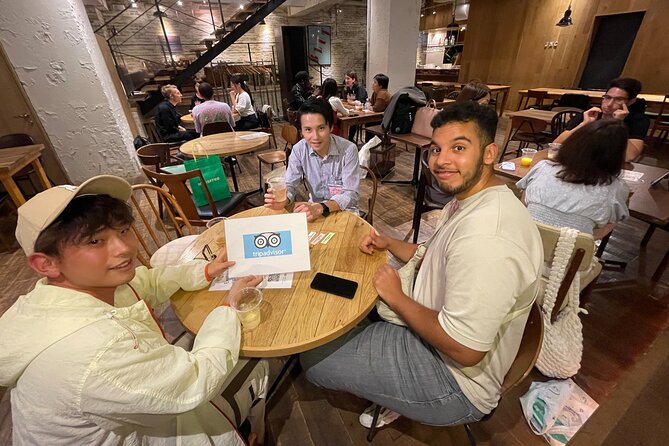
The event is designed for more than grammar practice. You can ask people at the table for practical advice about Japan, including places to visit, food to try, and ideas for future trips. Local tips are most useful when you have a clear question ready.
Instead of asking for a general recommendation, try something specific. Ask which area they like for a quiet evening, what Japanese phrase is useful at a restaurant, or how they would spend a free afternoon in Tokyo. These questions are easier to answer and give you language you can use right away.
You may also learn useful Japanese terms that do not always appear in beginner lessons. Casual conversation can introduce words, expressions, and ways of responding that make daily interactions feel less stiff.
The benefit depends on your approach. If you sit quietly and wait for others to carry the conversation, you will get less language practice. If you prepare a few simple questions and make an effort to answer in Japanese, the two hours can become a practical workout.
You do not need to speak perfectly. A useful goal is to say a little more each time the seating changes. The first round may be mostly introductions. By the second or third round, you may feel more comfortable asking questions and trying new words.
A Friendly Choice for Solo Visitors
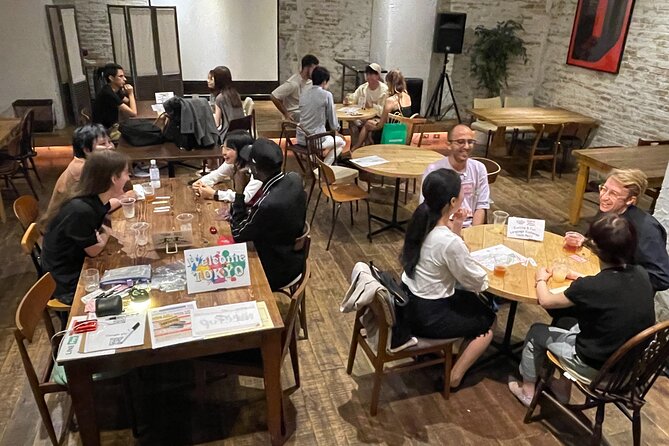
This experience suits solo visitors especially well. You can show up without a partner and still have a clear way into the group. The staff organize the tables and change the seats, so you are not dependent on finding someone who wants to talk.
It also works for people who want to meet others without committing to a full nightlife event. The included drink gives you something to do while settling in, but the focus remains conversation.
The atmosphere has been described as warm, lively, and easy to join. Practical details support that feeling: small tables, staff-led rotations, and prepared topics. The maximum group size is 20 people, which keeps the event more manageable than a huge party-style meetup.
Still, a social exchange is not the same as a guaranteed private connection. Some evenings may feel busier or more talkative than others. Your experience can change based on the mix of language levels and personalities in attendance.
If you are very shy, the first few minutes may feel uncomfortable. That is normal for this kind of event. Use the topic card, introduce yourself in a short sentence, and ask one simple question. You do not need an impressive opening.
Is $53 a Fair Price?
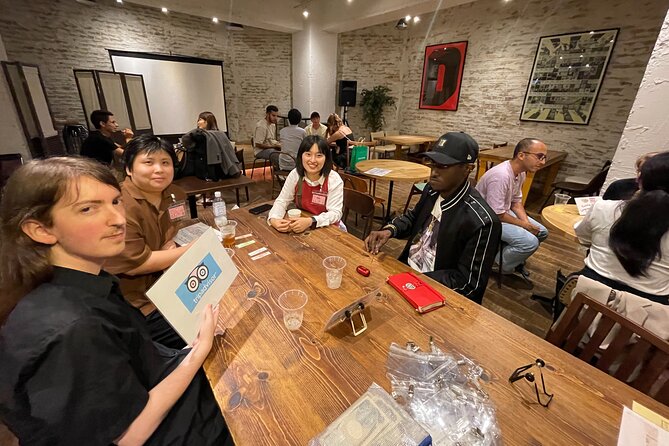
The listed price is $53 per person for about two hours. That is more than the cost of buying a drink at a cafe, so the value rests in the organized social format rather than the beverage alone.
You are paying for staff coordination, the group structure, topic cards, seat changes, admission, and one soft drink or alcoholic beverage. You also receive a direct chance to practice with Japanese speakers and meet people from different backgrounds.
For someone already taking Japanese classes, the event can be a useful extra speaking session. It gives you a reason to use what you have studied in a casual setting. For a beginner, the value is more about confidence and exposure than formal instruction.
I would not choose this experience if your main goal is a detailed lesson plan, private correction, or one-to-one tutoring. Those needs require a different type of activity. I would consider it if you want an organized way to speak Japanese and meet people during a Tokyo visit.
The average booking lead time is six days. That suggests you should not leave it until the last night if the Tuesday schedule is important to you. The group can hold up to 20 people, but availability may vary.
Who Will Get the Most From This Event?
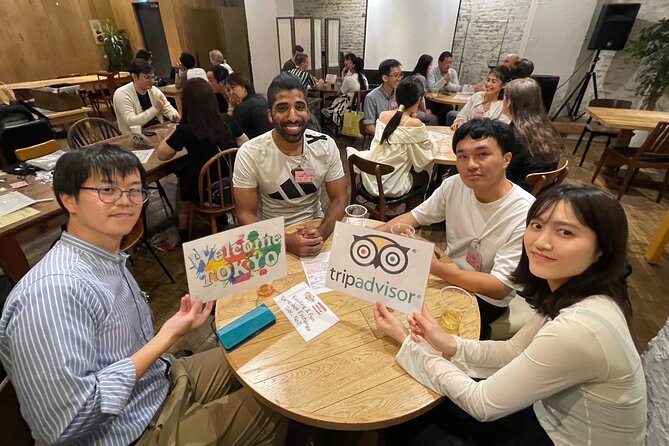
This is a good match for you if:
- You want to practice spoken Japanese, even at a beginner level.
- You are comfortable meeting people from different countries.
- You are traveling alone and want a planned social activity.
- You enjoy casual conversation more than formal teaching.
- You want local suggestions for future time in Japan.
- You can attend on Tuesday evening from 7:30 PM to 9:30 PM.
It may be less suitable if you need a quiet, private setting. It may also disappoint you if you expect every conversation to stay in Japanese. Since the event serves both Japanese and English learners, the language switches are part of the design.
You should also consider your comfort with alcohol. One alcoholic drink is included as an option, but you can choose a soft drink instead. Snacks are not included.
Simple Ways to Prepare Before You Go
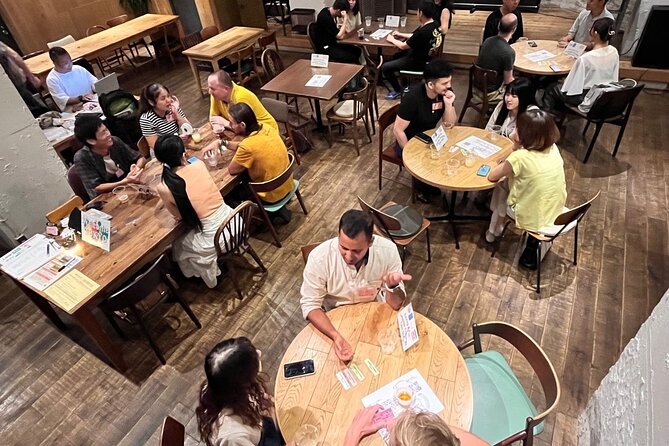
A little preparation will help you get more from the two hours. Write down three questions in simple Japanese before arriving. You might ask where someone lives, what food they recommend, or what place in Tokyo they like best.
Prepare a short self-introduction as well. Include your name, home country, how long you are in Japan, and one thing you enjoy. You can repeat it at each table and then add one new sentence as the evening continues.
Bring a patient attitude. You may meet people with very different speaking levels. Some conversations will be easy, while others may require gestures, repetition, or English support. That mixture is normal for a language exchange.
Use the staff and topic cards when you need help. The event is organized specifically to make conversation smoother, so you do not have to solve every awkward pause alone.
Booking, Cancellation, and Practical Details
Confirmation is provided when you book, and the experience uses a mobile ticket. Public transportation is nearby, and most people can participate. The maximum group size is 20.
Free cancellation is available if you cancel at least 24 hours before the local start time. Cancellations made inside that 24-hour window are not refunded, and changes are not accepted during that period.
The operating schedule provided is Tuesday, 7:30 PM to 9:30 PM, covering the stated date range through February 18, 2027. Check the date and local time carefully when booking, since the event is not presented as a daily activity.
Should You Book This Shibuya Language Exchange?
Book it if you want a low-pressure way to speak Japanese, meet locals, and get beyond sightseeing. The strongest parts are the small groups, the 15-minute language rhythm, the rotating seats, and the topic cards. Together, they give you a clear path into conversation.
Skip it if you want private teaching, guaranteed one-to-one practice, or a tour with a sightseeing route. This is a social language event at Jinnan Cafe, not a guided tour of Shibuya.
At $53, the experience makes the most sense when you value the organized introductions and speaking time. Choose the soft drink if you do not want alcohol, prepare a few questions, and arrive ready to speak even if your Japanese is basic. For the right participant, it is a practical and friendly addition to a Tokyo visit.
FAQ
Where does the Japanese speaking experience take place?
It takes place at Jinnan Cafe in Shibuya, Tokyo.
What time does the event run?
The event runs on Tuesdays from 7:30 PM to 9:30 PM.
How long does the experience last?
It lasts approximately two hours.
What drink is included?
One soft drink or one alcoholic beverage is included.
Are snacks included?
No. Snacks are not included.
Do I need to speak Japanese to join?
No. The event welcomes people who are interested in Japanese, even if they cannot speak it.
How are the conversation groups organized?
Staff place participants into small groups of about three or four people, with a mix of Japanese and international participants when possible.
Do the groups stay the same all evening?
No. Staff change the seating so you have the chance to speak with different people more than two or three times.
Are conversation topics provided?
Yes. Topic cards are available to help keep conversations going.
What is the cancellation policy?
You can cancel for a full refund up to 24 hours before the experience start time. Cancellations or changes made less than 24 hours before the start are not accepted for a refund.
Just added around Tokyo
- Private Memorable Tokyo Tour with English Speaking Driver★ 5.0 · 30 reviews
- Private Tokyo Custom Full-Day Tour by Chartered Vehicle★ 5.0 · 16 reviews
- Private Sightseeing to Mt Fuji and Hakone with English Driver★ 5.0 · 51 reviews
- Tokyo Photography Masterclass – Private Photography Lesson★ 5.0 · 25 reviews
- Private Mt. Fuji Day Trip from Tokyo with English-Speaking Driver★ 5.0 · 33 reviews
- 4 Day Tour – Mount. Fuji, Tokyo, Hakone, Kamakura and Yokohama★ 5.0 · 19 reviews
- Private Unforgettable Mt Fuji Tour with English Speaking Driver★ 5.0 · 142 reviews
- Private Tokyo Food Tour – A Journey Through Time Through Food★ 5.0 · 36 reviews
Tokyo Tours, compared.
Mt Fuji and Hakone 1-Day Bus Tour Return by Bullet Train
Read our review →


teamLab Planets TOKYO Digital Art Museum Entry Ticket
Read our review →
Mt Fuji & Hakone Cruise, Drum Show Bullet Train 1 Day from Tokyo
Read our review →
Shinjuku Food Tour (13 Dishes at 4 Local Eateries)
Read our review →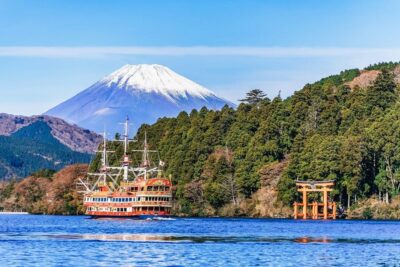
Tokyo Mt Fuji 5th St & Hakone Cruise Bus Tour w/Bullet Train
Read our review →