REVIEW · TOKYO TOURS
Daikoku Parking : going by this mini JDM – one customer only
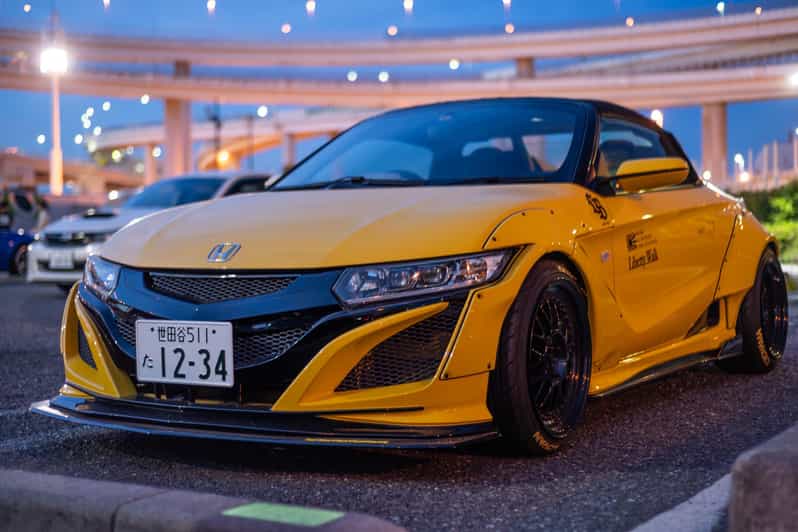
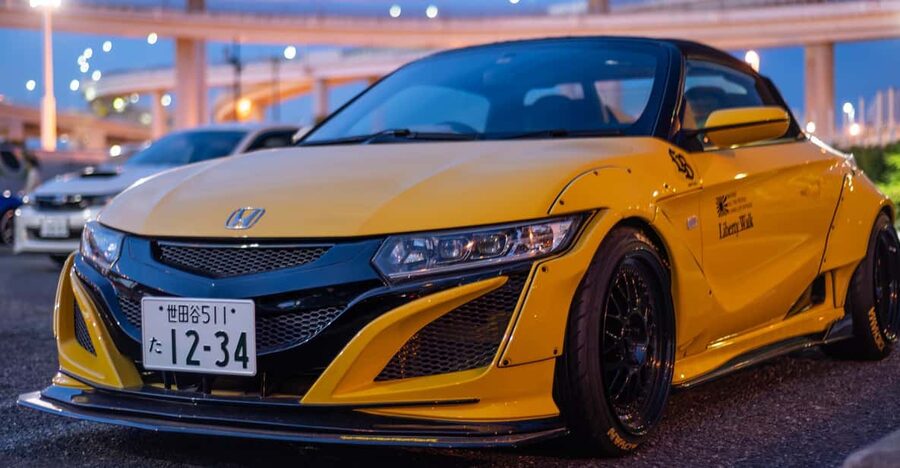
The unusual part is the car itself: a tiny, mid-engine Honda S660, modified by Liberty Walk, with room for one passenger and one local driver. You are not riding in a minivan or joining a large convoy. You are part of the scene as Toshiro drives through Tokyo’s expressways and bay roads.
I like the private setup, which gives you time to chat with Toshiro, and I like that the ride is as important as the car parks. The main caution is simple: the S660 is very small, with an economy-airline-sized seat and no luggage space.
In This Review
- Key points
- Why the Honda S660 changes the whole experience
- Starting in Ōba and heading onto Tokyo’s expressways
- Daikoku Parking Area: a short but important stop
- Tatsumi 1st Parking Area and the longer stop
- Rainbow Bridge, Tokyo Tower, and Skytree from the road
- What the private format is really worth
- Comfort, luggage, and practical limits
- Choosing the right night and planning around closures
- Who will enjoy this most
- Should you book this S660 night ride?
- FAQ
- Is this a shared minivan tour?
- How long does the experience last?
- Where does the tour start?
- What car will I ride in?
- Does the tour include Daikoku Parking Area?
- How long do I spend at Tatsumi 1st Parking Area?
- Will I stop at Tokyo Tower or Tokyo Skytree?
- Is self-driving included?
- Can I bring luggage?
Key points
- One passenger only: This is a private ride, not a shared van tour.
- A genuine JDM car: You ride in Toshiro’s modified Honda S660, a distinctive domestic Japanese sports car.
- Tokyo by expressway: The route includes the Metropolitan Expressway, Bay Shore Route, and Rainbow Bridge.
- Two famous car-meet stops: Daikoku Parking Area and Tatsumi 1st Parking Area form the heart of the outing.
- Night timing matters: Friday and Saturday departures may run from 6:00 to 9:00 p.m. because police can close Daikoku from about 8:30 p.m.
Why the Honda S660 changes the whole experience
Many Tokyo car tours are really transport services. You get picked up, driven to a parking area, and shown a few cars. This outing feels different because the drive is part of the attraction.
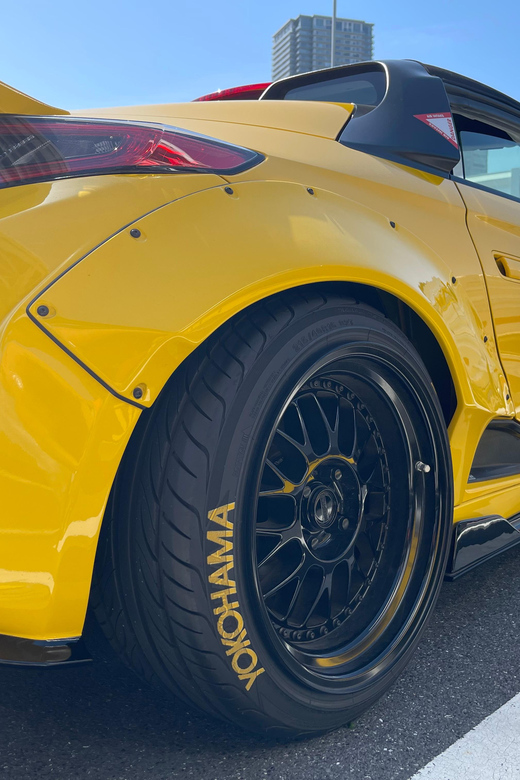
The Honda S660 is a compact Japanese two-seat roadster with a mid-mounted engine. This particular car has Liberty Walk modifications, giving it a far more dramatic look than a standard S660. It is not a giant supercar, and that is part of its charm. You are riding in a small, homegrown Japanese sports car that feels closely tied to the local tuning scene.
You sit low, close to the road, with little extra room around you. That can make the expressway ride feel vivid, especially after dark when Tokyo’s lights pass by. It also means you should be honest about your own comfort. If you prefer a roomy seat, air around your shoulders, or space for a backpack, this is not the right vehicle.
The car is for sightseeing, not racing. Toshiro follows traffic laws, and you should not expect street-racing stunts or a video game simulation. The fun comes from the route, the car, the city views, and the chance to see the same type of expressway setting associated with Wangan Midnight and Shuto Ko Battle.
Other Tokyo days people book alongside this one:
- Mt Fuji and Hakone 1-Day Bus Tour Return by Bullet Train
★ 5.0 · 26,383 reviews - 1-Day Tokyo Bus Tour
★ 5.0 · 14,250 reviews - Tokyo: TOKYO SKYTREE® Admission ticket
★ 4.5 · 11,192 reviews
Starting in Ōba and heading onto Tokyo’s expressways
The meeting point is in front of MOS Burger in Ōba. Hotel transportation is not included, so you need to reach this point on your own and arrive ready for a prompt departure.
Once you get into the S660, the tour begins immediately. The route uses Tokyo’s Metropolitan Expressway and the Bay Shore Route, giving you a moving view of the city rather than a standard sightseeing circuit. This is valuable for car fans because the road itself has a cultural role. Tokyo’s expressways are part of the setting behind much of Japan’s famous street-car imagery.
The route also lets you see Tokyo from several angles. You are not simply going from one parking area to another. The drive connects the stops and gives you the feeling of moving through the city’s nighttime road network.
Toshiro serves as both driver and English-speaking local guide. The small car creates a more personal setting than a bus or van, and the ride gives you plenty of time to ask about Japanese cars, modifications, and the places you visit. Previous customers especially liked talking with him during the drive and described him as friendly, pleasant, and a good driver.
Daikoku Parking Area: a short but important stop
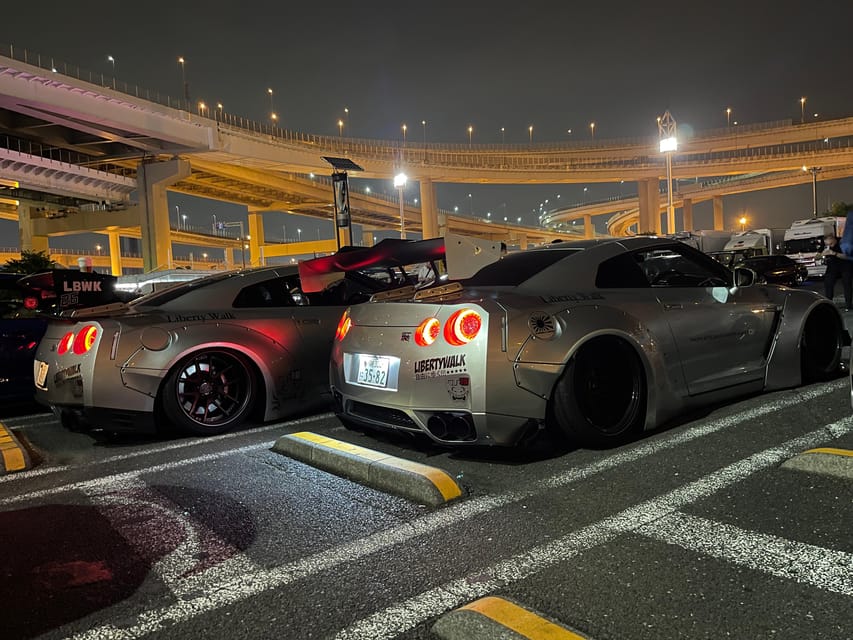
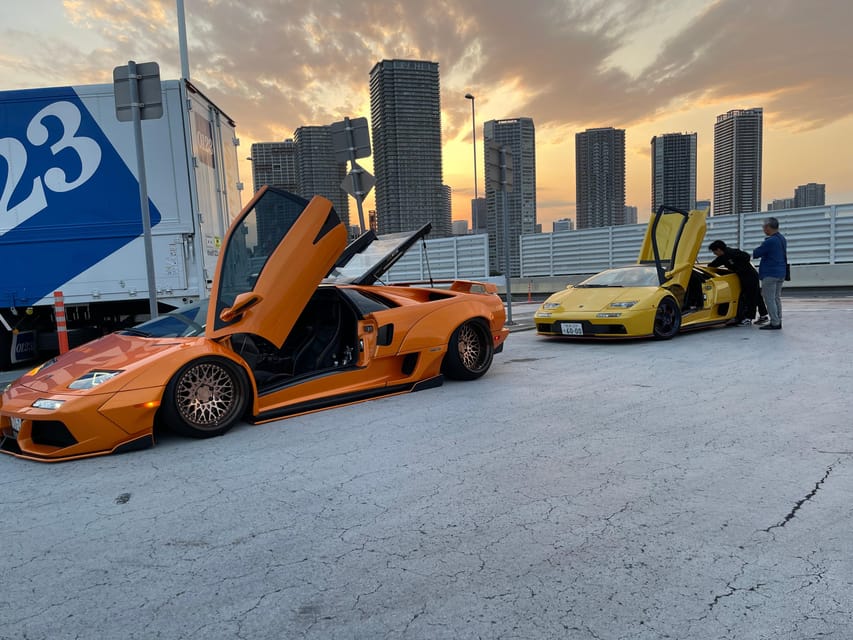
Daikoku Parking Area is the name most strongly linked with Tokyo’s international car culture. It is a meeting place for modified Japanese cars and other interesting vehicles, though the exact mix on any given night can change.
The scheduled stop here is about 15 minutes. That is enough for a quick walk, photographs, and a look at the cars gathered at the time. Do not plan on a long, leisurely visit. The point is to reach this famous location as part of a private JDM ride, take in the atmosphere, and continue before conditions change.
Timing is especially important at Daikoku. On Friday and Saturday nights, the group may leave around 6:00 p.m. and return around 9:00 p.m. Police may close the parking area from about 8:30 p.m., so a late start could risk losing access. The experience can also run on weekdays, but Friday, Saturday, or Sunday is suggested as the better choice.
Car-meet culture is never fully predictable. You may see heavily modified JDM cars, but the exact vehicles cannot be promised. That uncertainty is normal and should be part of your expectation. The attraction is seeing the real location and whatever turns up, not receiving a fixed showroom display.
Rain can affect the outing, and the date may be postponed to another convenient day. That is useful flexibility for a car-focused tour, since wet weather can reduce the appeal of standing outside at a parking area and photographing vehicles.
Tatsumi 1st Parking Area and the longer stop
Tatsumi 1st Parking Area receives about an hour and a half in the schedule, making it the main stop of the tour. You have time to walk around, take photographs, and see what cars are present without the quick turnaround required at Daikoku.
This longer stop is one reason the experience works best for someone who wants more than a fast photo opportunity. You can look carefully at modifications, talk with Toshiro, and enjoy the setting instead of treating the parking area as a brief checklist stop.
Tatsumi and Daikoku are not identical experiences. Their atmosphere and the cars present can vary by night, which gives the route some uncertainty but also keeps it from feeling staged. If your main goal is to see one specific model, color, or famous vehicle, you may be disappointed. If you want to watch Japanese car culture in its real setting, the open-ended format is a better match.
The timing also affects your comfort. The car has a small seat, and you will spend most of the three-hour outing inside a very compact vehicle. The 90-minute parking-area break gives you a chance to get out, stretch your legs, and walk around.
Same city, a completely different kind of day:
- Tokyo: teamLab Planets TOKYO Digital Art Museum Entry Ticket
★ 4.6 · 9,779 reviews - Mt Fuji & Hakone Cruise, Drum Show Bullet Train 1 Day from Tokyo
★ 4.0 · 7,413 reviews - Tokyo: Shinjuku Food Tour (13 Dishes at 4 Local Eateries)
★ 5.0 · 6,603 reviews - Tokyo Mt Fuji 5th St & Hakone Cruise Bus Tour w/Bullet Train
★ 4.4 · 5,024 reviews
Rainbow Bridge, Tokyo Tower, and Skytree from the road
The tour includes several Tokyo landmarks, but most are passed rather than visited.
You cross Rainbow Bridge as part of the drive. This is one of the most enjoyable parts for anyone who likes city roads and night views. From the S660, you see the bridge and waterfront route as part of a moving journey, not from a fixed observation deck.
Tokyo Tower and Tokyo Skytree are also passed by. You should think of these as visual highlights along the route, useful for photographs from the road when conditions allow, but not as stops where you get out and explore.
That distinction matters. This is not a conventional Tokyo sightseeing tour. You will not enter Tokyo Tower or Skytree, and there is no scheduled observation-deck visit. The landmarks add context to the drive and help you see how the expressways connect different parts of the city.
The route is likely most appealing after dark. The night return drive has been especially praised, with the expressway setting reminding one customer of a Wangan Midnight game. If you want daytime landmark photography, choose another Tokyo tour. If you want illuminated roads, bridges, and a sports car cabin, the evening schedule fits better.
What the private format is really worth
The price is $192 for a group of up to one person, so in practice this is a solo private experience. Fuel and toll roads are included. There is no shared-tour supplement hidden behind a low headline price, but the total cost is still significant for three hours.
I see the value in the format rather than in the number of stops. You are paying for exclusive use of a rare modified car, a local Japanese driver, expressway travel, and a flexible conversation about the car scene. A regular sightseeing bus would cost less, but it would not give you this vehicle or this level of personal attention.
The value is strongest if you are traveling alone and already care about Japanese cars, tuning, or the visual world of Tokyo’s expressways. It is less convincing if you simply want to visit Daikoku as cheaply as possible. The 15-minute Daikoku stop is short, and the price is high if that is your only goal.
If you want to bring a second person, contact the provider in advance. The standard arrangement is one customer only, though larger groups may be possible by message. Do not assume that another passenger can simply be added at the meeting point.
Comfort, luggage, and practical limits
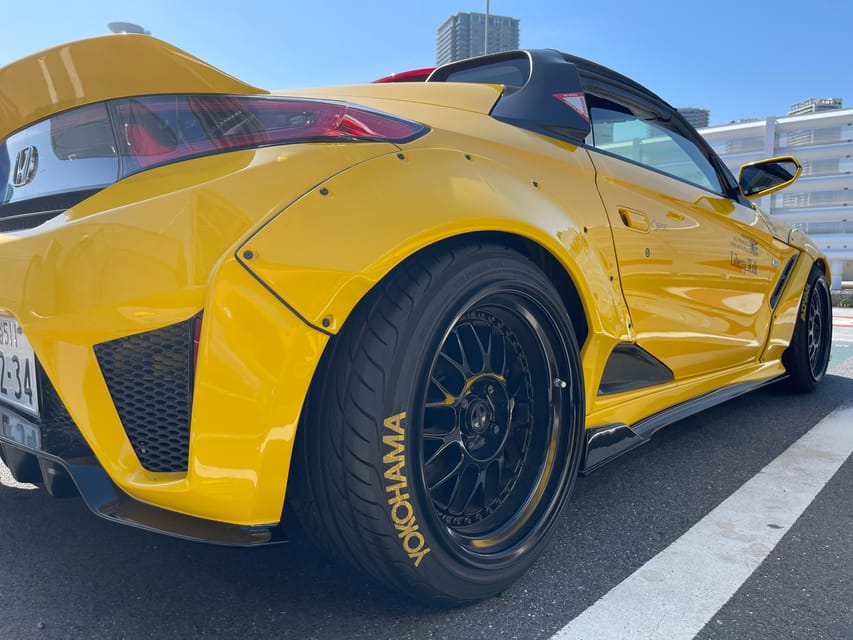
The Honda S660 has no luggage space. Bring only what you can keep with you comfortably, and avoid arriving with a suitcase. The supplied information compares the seat size to an economy-class airplane seat, which is the clearest warning you need.
You also do not drive the car yourself. Toshiro handles the driving, including the expressways and toll roads. This makes the outing easy for visitors who want to experience the car without dealing with Japanese road rules or navigation, but it may disappoint you if your dream is to rent and drive a JDM sports car.
The tour is conducted in English. Since the group is private, you can use the ride to ask questions and set the conversation around your interests. The car itself can be a conversation starter, and the compact cabin gives the outing a friendly, one-to-one feel.
Wear clothing that lets you sit comfortably for several hours. That advice is based on the car’s size, not on a formal dress rule. You will also walk around at the parking areas, so sensible shoes are useful.
Choosing the right night and planning around closures
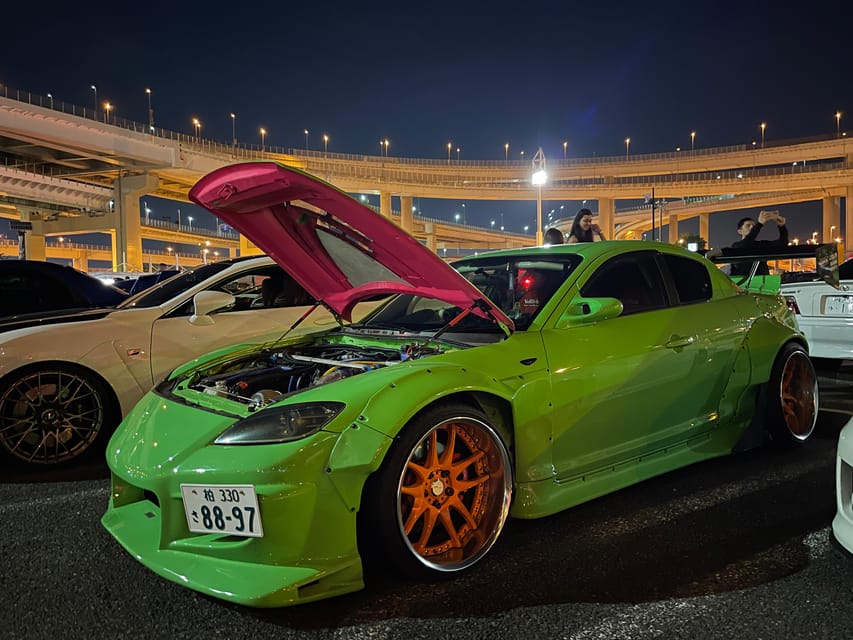
Friday and Saturday nights are attractive because they are associated with stronger car-meet activity, but they also bring the risk of parking-area closure. The tour may leave at 6:00 p.m. and return around 9:00 p.m. on those evenings.
Sunday and weekday outings are also possible. The provider suggests Friday, Saturday, or Sunday as the better choices, but no night guarantees a particular collection of cars. If seeing the largest possible range of modified vehicles is your priority, ask about current conditions before booking.
Rain can lead to a postponement. That is worth considering when you have a tight Japan itinerary. The cancellation policy allows a full refund if you cancel at least 24 hours ahead, and you can reserve now and pay later, which gives you some planning flexibility. A weather-related change can still affect your evening plans, so keep some room in your schedule.
Who will enjoy this most
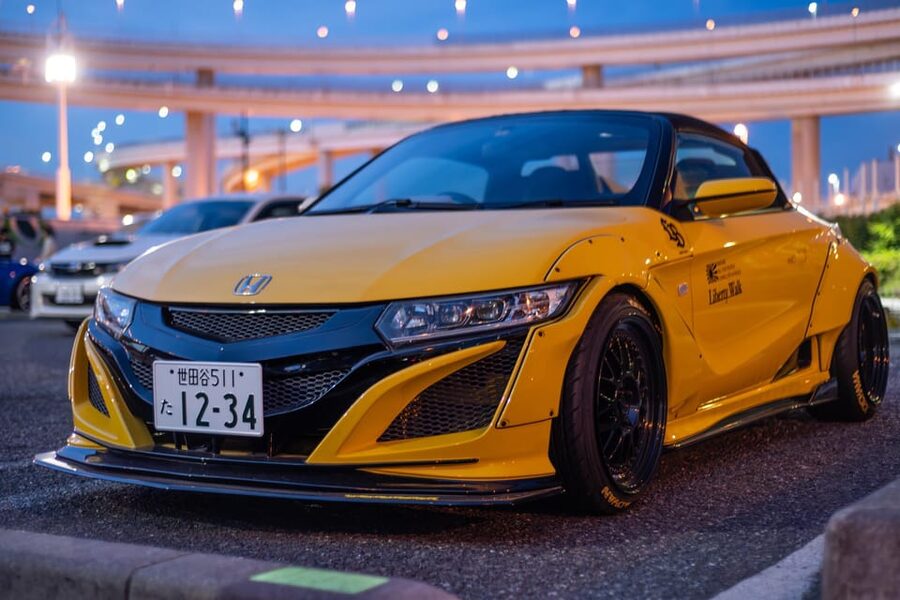
I would choose this for a solo visitor who has an active interest in JDM cars, Liberty Walk builds, Japanese expressways, or car-related films and games. It also suits someone who prefers a local conversation and a private ride over a standard group excursion.
You do not need to be an expert. The experience can work for a curious visitor who wants to see a less conventional side of Tokyo. Toshiro’s role as driver and guide helps if you want context about the cars and the meet areas.
I would hesitate to recommend it to families, couples who want to sit together, or anyone carrying luggage. The standard setup is for one passenger. I would also steer you elsewhere if your main aim is a broad tour of Tokyo landmarks, a long visit at Daikoku, or a chance to drive the car yourself.
The rating is 4.9 from 14 reviews, and the praise centers on a few clear points: the private format, the striking car, Toshiro’s friendly company, and the nighttime return through Tokyo. Those strengths are real, but they matter most to the right kind of customer.
Should you book this S660 night ride?
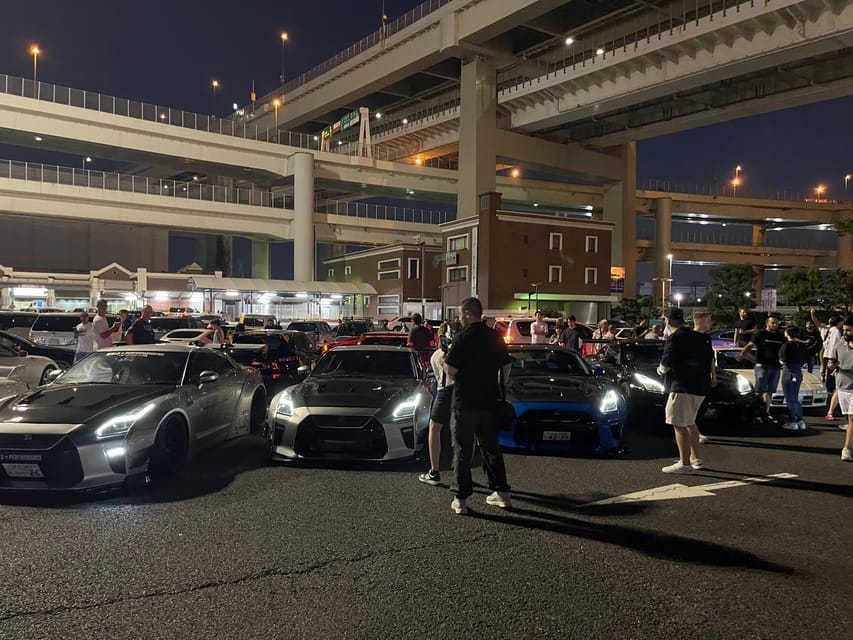
Book it if the idea of riding through Tokyo in a one-of-a-kind modified Honda S660 sounds as exciting as seeing the cars at Daikoku and Tatsumi. The private arrangement, expressway route, Rainbow Bridge crossing, and English-speaking guide make this much more personal than a minivan outing.
Skip it if you need room, want a conventional landmark tour, or care only about spending a long time at Daikoku. For the right solo car enthusiast, though, the drive is the main event, and the parking areas are the bonus.
FAQ
Is this a shared minivan tour?
No. The standard experience is private, with one customer and one local Japanese driver in a modified Honda S660.
How long does the experience last?
The total duration is three hours.
Where does the tour start?
It starts in Ōba, at a meeting point in front of MOS Burger.
What car will I ride in?
You will ride in Toshiro’s domestic Japanese Honda S660, modified by Liberty Walk. It is a compact, mid-engine sports car.
Does the tour include Daikoku Parking Area?
Yes. Daikoku Parking Area is included, with about 15 minutes for a break, photographs, walking, and sightseeing.
How long do I spend at Tatsumi 1st Parking Area?
The scheduled time at Tatsumi 1st Parking Area is about one and a half hours.
Will I stop at Tokyo Tower or Tokyo Skytree?
No. Tokyo Tower and Tokyo Skytree are passed by during the drive rather than visited as walking stops.
Is self-driving included?
No. Self-driving is not included. Toshiro drives the car for the entire experience.
Can I bring luggage?
No luggage space is available in the car. The seat is also comparable in size to an economy-class airplane seat, so pack very lightly and expect a tight fit.
Just added around Tokyo
- Tokyo: Customizable Private Guided Walking Tour★ 4.5 · 129 reviews
- Private Harajuku Omotesando Architecture Tour★ 4.9 · 18 reviews
- Tokyo: Guided Helicopter Ride★ 4.9 · 24 reviews
- Tokyo: Guided Walking Tour of Tsukiji Market with Lunch★ 4.4 · 24 reviews
- Tokyo: Private Personalized Local Food Tour★ 4.5 · 101 reviews
- Tokyo GINZA: KONPARU Japanese Cabaret Show with Drink★ 4.8 · 38 reviews
- Tokyo: Guided Walking Tour of Tsukiji Market with Breakfast★ 4.4 · 134 reviews
- Tokyo: Gotokuji Cat Temple, Shinjuku Cat Cafe & 3D Cat Tour★ 4.9 · 38 reviews
Tokyo Tours, compared.
Mt Fuji and Hakone 1-Day Bus Tour Return by Bullet Train
Read our review →
teamLab Planets TOKYO Digital Art Museum Entry Ticket
Read our review →
Mt Fuji & Hakone Cruise, Drum Show Bullet Train 1 Day from Tokyo
Read our review →
Shinjuku Food Tour (13 Dishes at 4 Local Eateries)
Read our review →
Tokyo Mt Fuji 5th St & Hakone Cruise Bus Tour w/Bullet Train
Read our review →