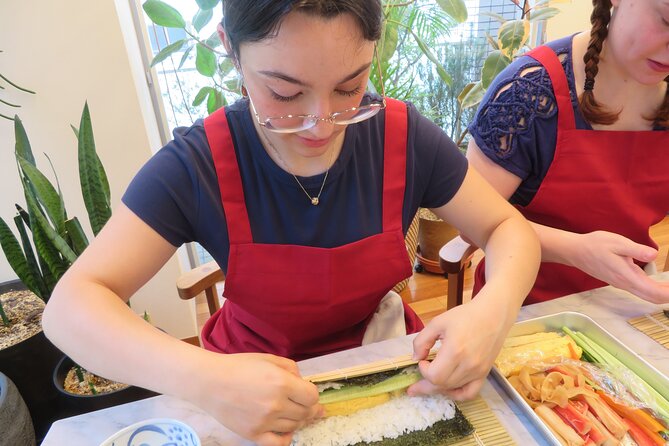
REVIEW · TOKYO TOURS
Cook Favorite Japanese Dishes with a Tokyo Mom
The best part of this Tokyo cooking class is that it focuses on food Japanese families actually eat at home. You begin with dashi, the basic soup stock made from scratch, then use it in a meal of sushi or onigiri, miso soup, vegetables, and one main dish.
I like the home-kitchen setting and the practical menu choices. You can make gyoza, teriyaki chicken, or miso-marinated fish, and the class also explains the food with pictures and short bits of background. I also like that Aki adjusts the lesson for both beginners and more experienced cooks.
The main thing to consider is the price: at $120 per person for about two and a half hours, this is not a cheap meal. You also need to reach the Shinjuku meeting point yourself, so it works best if you want a hands-on cultural activity, not simply a quick lunch.
In This Review
- Key points at a glance
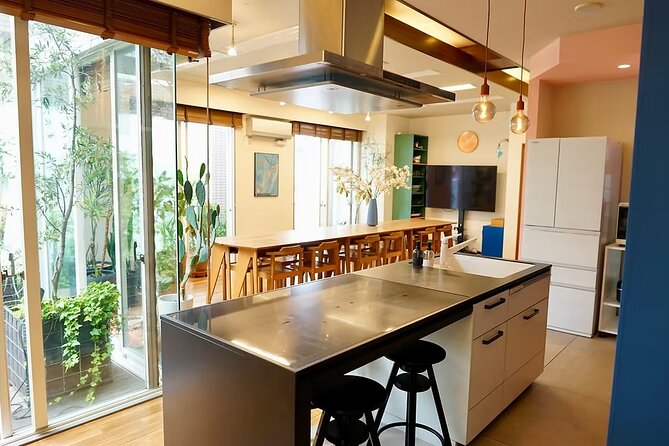
- Why the Tokyo home-kitchen setting matters
- Making dashi, the quiet foundation of the meal
- Choosing between norimaki and onigiri
- Picking your main dish: chicken, fish, or gyoza
- Seasonal vegetables and miso soup complete the meal
- Aki’s teaching style and what the class feels like
- The $120 price and what you receive
- Getting to the Shinjuku meeting point
- Who should book this cooking class
- Should you book Tokyo Mom’s Kitchen?
- FAQ
- How long does the cooking class last?
- Where does the activity start and end?
- Is transportation included?
- What dishes will I prepare?
- What main dishes can I choose from?
- Is a vegetarian option available?
- What is included in the price?
Key points at a glance
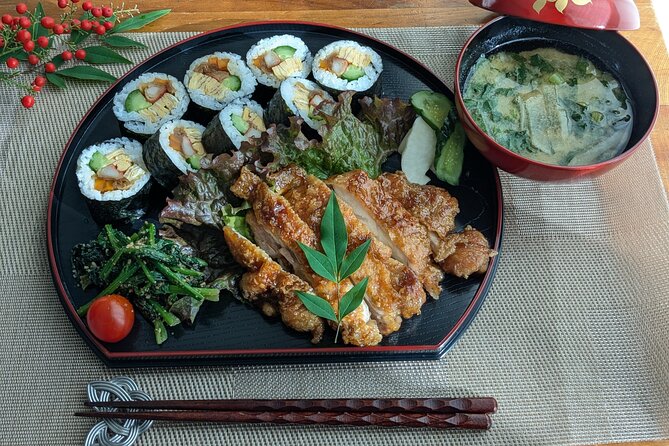
- Dashi from scratch: Learn the soup stock that gives Japanese home cooking its clean, savory base.
- Three main-dish choices: Pick teriyaki chicken, Saikyo-yaki fish, or pan-fried gyoza.
- Sushi or onigiri: Prepare a traditional norimaki roll, or substitute a rice ball if you prefer.
- Private group setting: Only your party takes part, making it easier to ask questions and work at your own pace.
- English-speaking host: Aki teaches each step with pictures, brief food background, and clear guidance.
- Useful take-home material: Ingredients, tools, an apron, and a digital recipe sheet are included.
Why the Tokyo home-kitchen setting matters
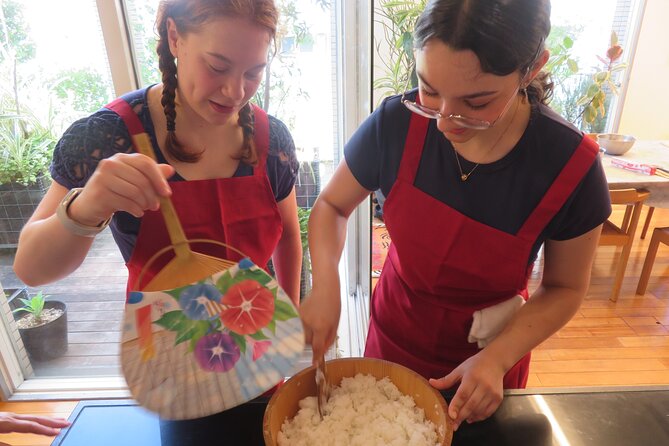
Many cooking classes in big cities are built for large groups and quick demonstrations. This one is designed around a family meal. That changes the pace and the feel of the session. You are not just watching someone assemble a polished dish. You are learning how separate parts of a Japanese meal fit together.
The setting also gives the food a useful context. Japanese home cooking often depends less on elaborate plating and more on balance: soup, rice, vegetables, and a small main dish working together. This class follows that pattern.
Aki’s teaching style appears suited to mixed skill levels. The lesson uses pictures and short explanations of the food being prepared, then gives you a chance to work through the steps yourself. If you are new to Japanese cooking, that structure should keep the process from feeling overwhelming. If you already cook, the focus on dashi and everyday technique gives you something more useful than a basic sushi demonstration.
The class is private, so your group is the only group taking part. That matters for a cooking lesson. You can ask why a particular ingredient is used, request another explanation, or take more time with a difficult step without worrying about holding up a room full of people.
Other Tokyo days people book alongside this one:
- Mt Fuji and Hakone 1-Day Bus Tour Return by Bullet Train
★ 5.0 · 26,383 reviews - 1-Day Tokyo Bus Tour
★ 5.0 · 14,250 reviews - Tokyo: TOKYO SKYTREE® Admission ticket
★ 4.5 · 11,192 reviews
Making dashi, the quiet foundation of the meal
The class begins with dashi made completely from scratch. This is one of the strongest reasons to choose the experience. Dashi is easy to overlook when you eat Japanese food in restaurants, but it is central to the taste of soups, sauces, and many home dishes.
You will learn how to create the stock without additives. The lesson presents dashi as a basic household skill, not a restaurant trick. That makes it practical: once you understand the method, you can use the same idea for miso soup and other Japanese dishes at home.
This opening step also gives the class a better rhythm. Instead of starting with a flashy dish, you begin with a fundamental technique. The soup stock can then support the rest of the meal, especially the miso soup.
You should expect a hands-on lesson rather than a lecture. All ingredients and kitchen tools are included, and an apron is provided. The digital recipe sheet is useful after the class, since dashi is the sort of technique you may want to repeat rather than simply remember.
Choosing between norimaki and onigiri
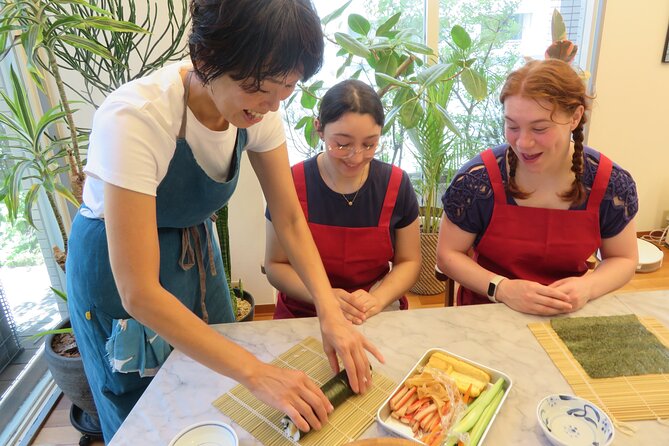
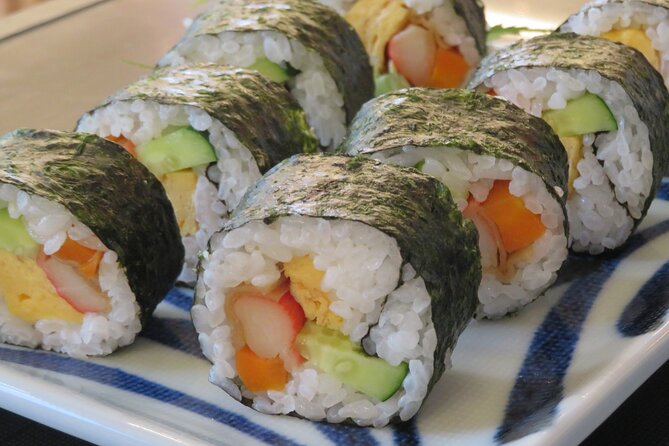
Every menu includes a Japanese rice preparation. The standard choice is norimaki, a rolled sushi made with rice and seaweed. This is a good option if you want to practice shaping and rolling, two skills that look easy until you try to keep the filling centered and the roll firm.
If you prefer something simpler, you can request onigiri instead. The rice ball substitution makes the class more flexible, especially if you are less interested in sushi rolling or want a dish that is easy to recreate at home.
The information provided does not specify the exact fillings or decoration, so you should not book expecting a particular type of sushi. The useful part is the technique and the place of rice in a Japanese home meal, not a restaurant-style sushi spread.
A class menu that includes sushi, gyoza, and miso soup can become quite busy in two and a half hours. Still, the format appears carefully chosen: one rice item, one main dish, vegetables, and soup. You get several kinds of preparation without turning the session into a marathon.
Picking your main dish: chicken, fish, or gyoza
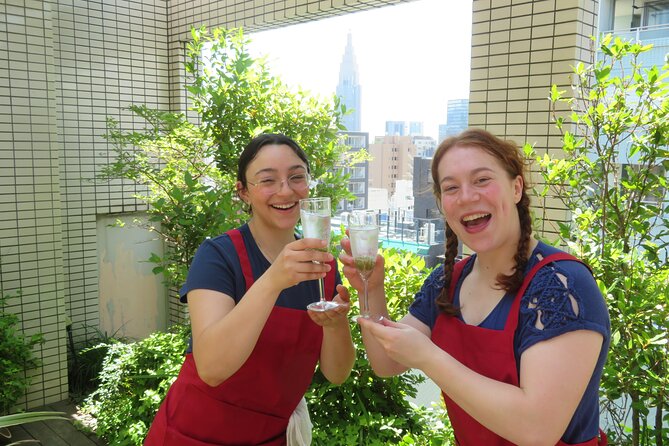
Your main-dish choice gives the class its most personal touch. You can choose one of three options.
Teriyaki chicken is the most familiar selection for many people. The dish uses a sweet and savory soy-based glaze, and the lesson shows how to build that flavor rather than simply heating a bottled sauce. Choose it if you want a straightforward Japanese comfort dish with ingredients you may already know.
Saikyo-yaki uses fish marinated in Saikyo-style miso before grilling. It offers a gentler, more delicate flavor than the bold glaze of teriyaki. Choose it if you want to learn a dish that may be less familiar outside Japan and are interested in how miso works as a marinade.
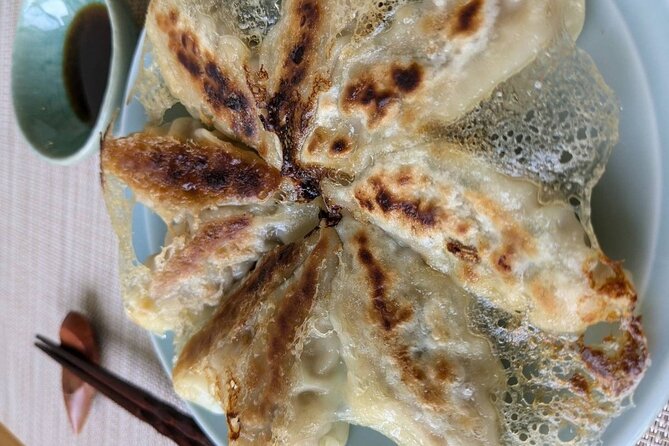
Gyoza brings a different kind of work to the table. You fill dumplings with ground pork and vegetables, fold them, and pan-fry them. This choice is especially good if you enjoy hands-on preparation. It also gives you a useful skill for cooking with friends or family back home.
A previous class with Aki included sushi, gyoza, and miso soup, and the cooking was described as engaging from start to finish. The specific praise focused on clear guidance through every step. That is important with gyoza, where folding can be the difference between a neat dumpling and a small pan full of filling.
You can request a vegetarian option. Make that request in advance so the host can plan the ingredients properly. The supplied information does not list the exact vegetarian menu, so ask what substitution will be available when you book.
Same city, a completely different kind of day:
- Tokyo: teamLab Planets TOKYO Digital Art Museum Entry Ticket
★ 4.6 · 9,779 reviews - Mt Fuji & Hakone Cruise, Drum Show Bullet Train 1 Day from Tokyo
★ 4.0 · 7,413 reviews - Tokyo: Shinjuku Food Tour (13 Dishes at 4 Local Eateries)
★ 5.0 · 6,603 reviews - Tokyo Mt Fuji 5th St & Hakone Cruise Bus Tour w/Bullet Train
★ 4.4 · 5,024 reviews
Seasonal vegetables and miso soup complete the meal
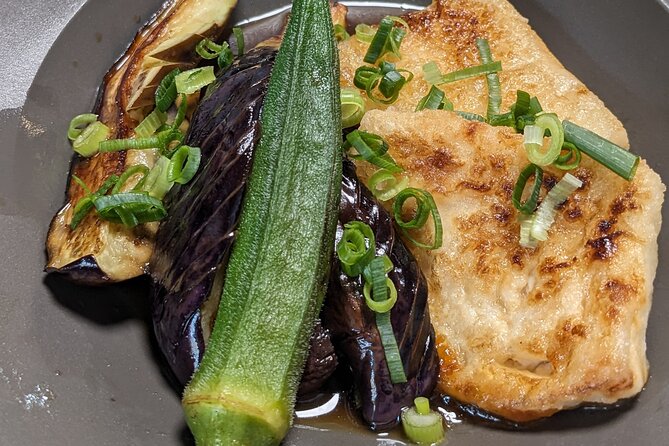
The seasonal vegetable dish adds balance to the menu. It is not just an extra side thrown onto the plate. Japanese home meals often use vegetables to offset the weight of rice and the main dish, and seasonal produce keeps the meal connected to the time of year.
The exact vegetable changes with the season, so you should expect some variation. That is a strength if you want a lesson tied to everyday Japanese cooking, though it may disappoint you if you want to plan around one specific vegetable.
Miso soup is the other constant. Because the class begins with homemade dashi, the soup serves as a clear example of how a few simple elements can create a satisfying dish. You will see the connection between the stock, the miso, and the rest of the meal rather than treating soup as an afterthought.
Together, the menu teaches a pattern you can repeat: rice, soup, vegetables, and a main dish. You leave with more than four isolated recipes. You get an outline for assembling a Japanese-style meal at home.
Aki’s teaching style and what the class feels like
Aki is the host named in the available class feedback. Her teaching is described as friendly and attentive, with room for both novice and experienced cooks. One useful detail is that she uses pictures and brief food background while teaching, so the class is not only a sequence of kitchen instructions.
That mix should suit you if you like to know why a dish is prepared a certain way. You may learn how a technique fits into Japanese family cooking, not just how to copy the motions.
The class also appears willing to adapt to personal tastes. Aki has adjusted menus for the people taking part, which is helpful when you have dietary needs or strong preferences. Still, flexibility should not be confused with unlimited choice. Your main dish must come from the listed options, and vegetarian cooking needs to be arranged ahead of time.
The class has received a five-star rating from all 16 listed ratings, with 100 percent recommending it. That is a small sample, so I would not treat it as proof that every session will be perfect. It does support the idea that the class’s strongest points are its warm teaching, clear instructions, and good food.
The $120 price and what you receive
At $120 per person, the class costs more than buying a casual Japanese meal. The price makes better sense when you count the full package: roughly two and a half hours of instruction, all cooking ingredients, kitchen tools, apron use, a private group, an English-speaking host, and a recipe PDF.
You are also paying for access to a home-style setting and for instruction in techniques that are not always explained in a restaurant. The dashi lesson alone gives the activity a stronger cooking focus than a simple sushi-making stop.
The value depends on what you want from Tokyo. If your main goal is to eat as cheaply as possible, this will not be the right choice. If you want a personal activity that combines a meal with practical cooking skills, the price is easier to justify.
It is also a good option for a small private group that wants a quieter activity. You are not paying for a large production or a staged show. The appeal is the chance to cook, ask questions, and eat what you prepare.
Getting to the Shinjuku meeting point
The activity starts and ends at アイ・ディール株式会社, 1-chōme-24-7 Shinjuku, Shinjuku City, Tokyo 160-0022, Japan. You must go directly to the venue because transportation is not included.
The location is near public transportation, but you should still allow time to find the exact address. Tokyo’s station areas can be confusing, and a cooking class is not the place to arrive breathless with an apron already feeling like a challenge.
The return to the same meeting point keeps the logistics simple. You can plan another Shinjuku activity afterward without arranging a second pickup. The class itself lasts about two hours and 30 minutes, so include your travel time to and from the venue when planning your day.
Confirmation normally arrives at booking. If you book within two days of the activity, confirmation may take up to 48 hours and depends on availability. Free cancellation is available if you cancel at least 24 hours before the start time. Changes or cancellations inside that window are not accepted for a refund.
Who should book this cooking class
I would choose this experience if you want to understand Japanese food through the home kitchen rather than through a restaurant menu. It is especially suitable for:
- Couples or families who want a private activity
- Beginners who prefer direct help at the counter
- Experienced home cooks interested in dashi and Japanese meal balance
- Anyone who wants to learn gyoza, teriyaki chicken, or miso-marinated fish
- People looking for an indoor activity that does not depend on good weather
It may be less suitable if you want a broad tour of Japanese cuisine. You will not cover many regional dishes or spend the session sampling restaurant specialties. The menu is focused and home-style.
You should also think about your food preferences. The class includes ingredients for meat, fish, rice, and vegetables, with a vegetarian option available by request. Since the exact substitutions are not listed, contact the host before booking if your diet is strict.
Should you book Tokyo Mom’s Kitchen?
Book it if you want a personal, useful cooking lesson and a meal that reflects everyday Japanese food. The private format, English instruction, homemade dashi, and choice of main dish give it more substance than a quick roll-your-own sushi activity.
The strongest reason to go is the combination of technique and context. You learn how to prepare several dishes, but you also see how soup, rice, vegetables, and a main dish form a balanced family meal. Aki’s use of pictures and short food explanations should make the class approachable without turning it into a long history talk.
Skip it if $120 feels too high for a two-and-a-half-hour activity, or if you would rather spend your Tokyo time eating in restaurants than cooking. For everyone else, especially a small group that values direct instruction, this is a warm and practical way to spend part of a day in Shinjuku.
FAQ
How long does the cooking class last?
The experience lasts approximately 2 hours and 30 minutes.
Where does the activity start and end?
It starts and ends at アイ・ディール株式会社, 1-chōme-24-7 Shinjuku, Shinjuku City, Tokyo 160-0022, Japan.
Is transportation included?
No. You must travel directly to the venue, and private transportation is not included.
What dishes will I prepare?
The menu includes norimaki or an onigiri substitute, one main dish of your choice, a seasonal vegetable dish, and miso soup. You also learn to make dashi from scratch.
What main dishes can I choose from?
You can choose teriyaki chicken, Saikyo-yaki fish, or gyoza.
Is a vegetarian option available?
Yes. A vegetarian option is available upon request.
What is included in the price?
The price includes all cooking ingredients, kitchen tools, apron rental, a digital recipe sheet in PDF format, and an English-speaking Japanese host.
Just added around Tokyo
- Private Memorable Tokyo Tour with English Speaking Driver★ 5.0 · 30 reviews
- Private Tokyo Custom Full-Day Tour by Chartered Vehicle★ 5.0 · 16 reviews
- Private Sightseeing to Mt Fuji and Hakone with English Driver★ 5.0 · 51 reviews
- Tokyo Photography Masterclass – Private Photography Lesson★ 5.0 · 25 reviews
- Private Mt. Fuji Day Trip from Tokyo with English-Speaking Driver★ 5.0 · 33 reviews
- 4 Day Tour – Mount. Fuji, Tokyo, Hakone, Kamakura and Yokohama★ 5.0 · 19 reviews
- Private Unforgettable Mt Fuji Tour with English Speaking Driver★ 5.0 · 142 reviews
- Private Tokyo Food Tour – A Journey Through Time Through Food★ 5.0 · 36 reviews
Tokyo Tours, compared.

Mt Fuji and Hakone 1-Day Bus Tour Return by Bullet Train
Read our review →


teamLab Planets TOKYO Digital Art Museum Entry Ticket
Read our review →
Mt Fuji & Hakone Cruise, Drum Show Bullet Train 1 Day from Tokyo
Read our review →
Shinjuku Food Tour (13 Dishes at 4 Local Eateries)
Read our review →
Tokyo Mt Fuji 5th St & Hakone Cruise Bus Tour w/Bullet Train
Read our review →