REVIEW · TOKYO TOURS
A One-of-a-Kind Sushi Experience in a Special Place of Japan
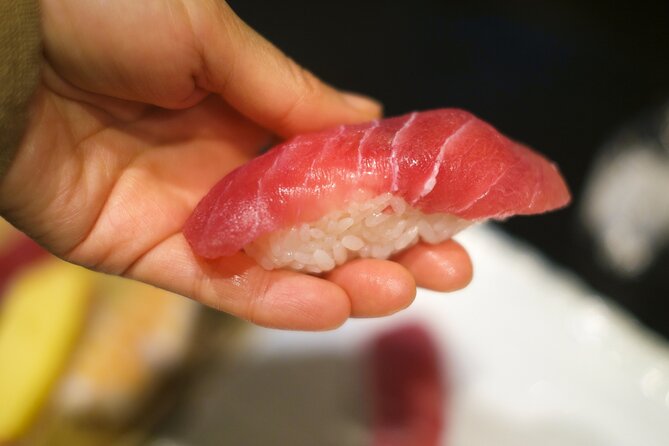
Making sushi inside Japan’s House of Representatives is the hook here. You are not simply sitting at a counter watching a chef work. You handle the knife, slice fresh fish from Toyosu Market, shape the sushi, then eat about eight pieces you made yourself. Chef Sasao, who has served sushi to Japanese politicians including the Prime Minister, leads this rare food-and-culture experience.
I like two things right away. First, the setting gives the meal a sense of place that a regular cooking class cannot match. Second, the English-speaking instruction is built for beginners, so you can learn at your own pace rather than worry about getting every piece right. The main consideration is the price: at $220 per person for roughly two hours, this is a special occasion activity, not a cheap lunch.
In This Review
- Key Details Before You Book
- Why the Government-Building Setting Matters
- Starting With Fish From Toyosu Market
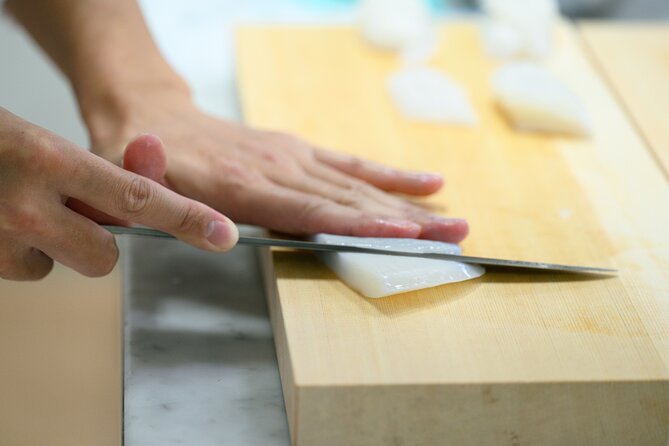
- Knife Skills, Fish Slicing, and Shaping Sushi
- Learning From Chef Sasao
- Eating the Sushi You Make
- A Good Choice for Friends and Families
- What Two Hours and $220 Really Buy You
- Meeting in Nagatachō
- The Most Common Concern: Getting It Right
- Booking, Cancellation, and Planning Tips
- Should You Book This Sushi Experience?
- FAQ
- How long does the sushi-making experience last?
- Where does the activity begin and end?
- What is included in the price?
- Is the class suitable for beginners?
- How many people can join the activity?
- Can I cancel for a full refund?
Key Details Before You Book
- Make sushi inside the House of Representatives: The activity takes place in a government building normally closed to the public.
- Use fish from Toyosu Market: Fresh sushi ingredients are sourced directly from Tokyo’s major seafood market.
- Learn with chef Sasao: The professional chef has prepared sushi for Japanese politicians, including the Prime Minister.
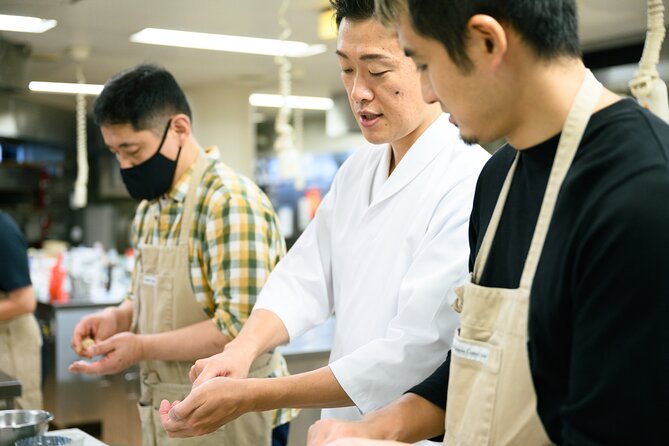
- Get hands-on instruction: You learn knife handling, fish slicing, sushi shaping, and the basics of the meal.
- Eat about eight pieces you make yourself: Lunch also includes miso soup or green tea.
- Plan around a two-hour visit: The maximum group size is 20, and the activity starts and ends at 2-chōme-2-2 Nagatachō.
Why the Government-Building Setting Matters
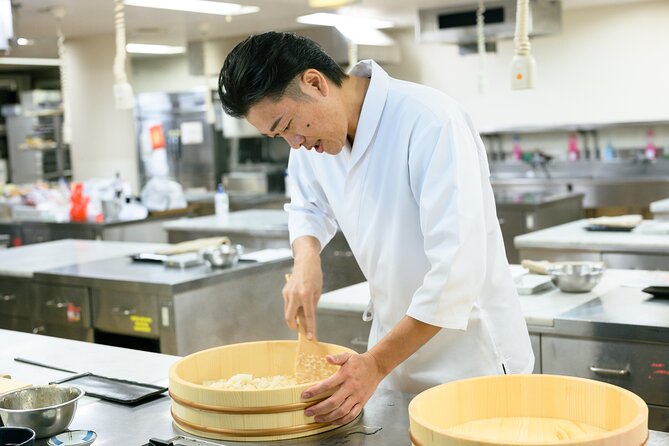
Tokyo has no shortage of sushi classes. What sets this one apart is the room itself. You enter the House of Representatives building in Nagatachō, the district associated with Japan’s national government, and take part in a food activity inside a place most visitors cannot normally access.
That setting adds a cultural layer to the meal. You are not only learning how sushi is shaped. You are also seeing a working part of Japan’s political world, at least in the limited way this activity allows. The experience does not promise a full political tour or access to every part of the building, so you should book it for the combination of location and food rather than expect a government sightseeing program.
I find this kind of setting especially useful for a repeat visitor. If you have already seen Tokyo’s famous temples, shopping streets, and observation decks, this gives you a different way to understand the city. It connects an everyday Japanese food tradition with one of the country’s most formal institutions.
The location also helps explain the higher cost. Part of the fee pays for the food and instruction, but the unusual venue is a major part of what you are buying. If you only want to eat good sushi, a restaurant will be more direct and likely less expensive. If you want a story to carry home, this activity offers something much harder to duplicate.
Other Tokyo days people book alongside this one:
- Mt Fuji and Hakone 1-Day Bus Tour Return by Bullet Train
★ 5.0 · 26,383 reviews - 1-Day Tokyo Bus Tour
★ 5.0 · 14,250 reviews - Tokyo: TOKYO SKYTREE® Admission ticket
★ 4.5 · 11,192 reviews
Starting With Fish From Toyosu Market
The class uses fresh sushi ingredients sourced directly from Toyosu Fish Market. Toyosu is one of Japan’s largest seafood markets, and that origin gives the lesson a useful focus. You can connect the fish on your plate with the supply chain behind Tokyo’s sushi culture.
The point is not just that the ingredients are fresh. You also get to work with them before eating them. That changes the way you look at sushi. A piece that arrives neatly formed at a restaurant can seem simple. Once you must slice fish and shape rice yourself, the precision becomes clear.
The available information does not specify the exact fish varieties or the full menu, so you should not book expecting a particular species. The confirmed meal is about eight pieces of sushi made by you, served with miso soup or green tea. That is enough food for a light lunch, but it is not presented as a large tasting menu.
I like this modest scale. Eight pieces give you room to practice without turning the class into a long kitchen session. The activity lasts about two hours, so the emphasis stays on learning and eating rather than spending half a day at a cooking school.
Knife Skills, Fish Slicing, and Shaping Sushi
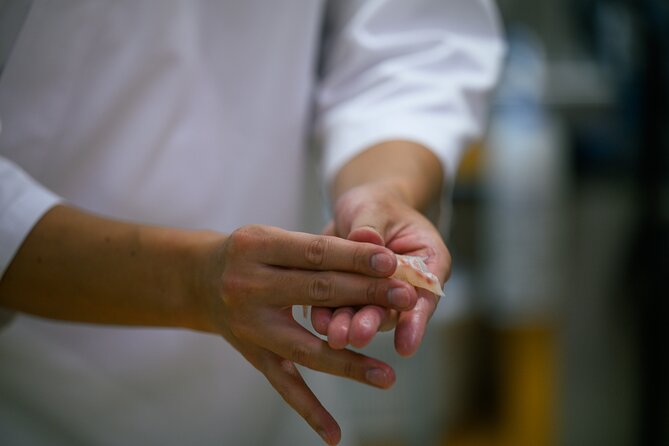
The English-speaking guide walks you through the basics, including how to handle a knife, slice the fish, and shape sushi. That order matters. You are not thrown straight into the final presentation. The lesson builds confidence through small steps.
Knife work may be the part that makes beginners most cautious. Sushi fish needs clean, controlled cuts, and the finished pieces depend on how the slices are handled. You will likely notice quickly that professional sushi preparation involves more care than simply cutting fish into pieces.
The shaping stage is where the class becomes playful. Your sushi may not look identical from one piece to the next, especially at the beginning. That is part of the appeal. You can see your technique improve as you make more pieces, and the uneven ones become evidence that you made lunch with your own hands.
The instruction is designed for first-time participants. You do not need to arrive with cooking experience, and the supplied feedback makes clear that people who feel unsure in a kitchen can still follow along. The guide’s role is not to show off. It is to keep the process clear enough that you can try each step yourself.
That distinction matters. A demonstration can be entertaining, but it leaves you watching someone else work. Here, you get the satisfaction and the small frustrations of doing it personally. You also come away with a better respect for the fine hand movements behind restaurant sushi.
Learning From Chef Sasao
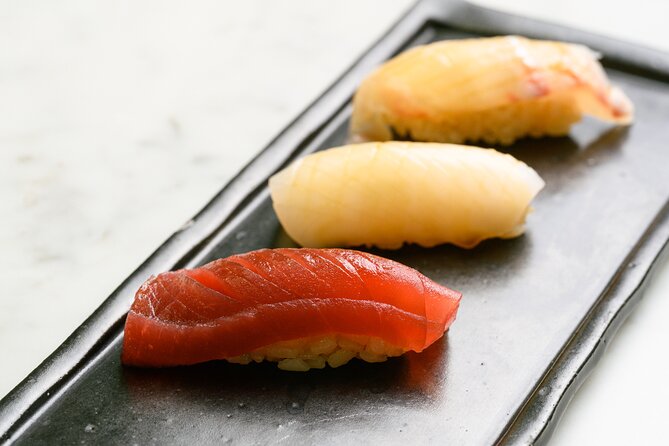
Chef Sasao brings an unusual credential to the class. He has served sushi to Japanese politicians, including the Prime Minister. That background gives the lesson a direct link to the building around you.
You should still keep expectations realistic. This is a beginner-friendly workshop, not professional chef training. In two hours, you will learn the basic handling and shaping of sushi, not master the full craft. The value comes from seeing how much control and care the work requires.
I like the way this can change your next sushi meal. After slicing fish and trying to form each piece, you may notice the balance of rice, fish, pressure, and shape more closely. Even a simple restaurant order can seem more impressive once you understand what goes into it.
The class also gives children and families a way to share an activity rather than simply sit down for lunch. The supplied information includes a parent-and-child experience filled with cooperation and laughter. That makes this a practical choice for families looking for something hands-on, though the material does not provide a specific minimum age or child policy, so check before booking with very young children.
Same city, a completely different kind of day:
- Tokyo: teamLab Planets TOKYO Digital Art Museum Entry Ticket
★ 4.6 · 9,779 reviews - Mt Fuji & Hakone Cruise, Drum Show Bullet Train 1 Day from Tokyo
★ 4.0 · 7,413 reviews - Tokyo: Shinjuku Food Tour (13 Dishes at 4 Local Eateries)
★ 5.0 · 6,603 reviews - Tokyo Mt Fuji 5th St & Hakone Cruise Bus Tour w/Bullet Train
★ 4.4 · 5,024 reviews
Eating the Sushi You Make
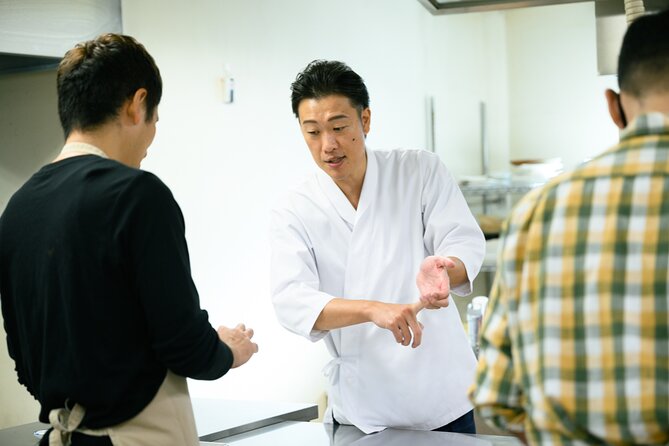
The best part comes at the end, when the food is no longer an exercise. You eat the sushi you prepared, with miso soup or green tea included.
That final meal has more meaning than a standard lunch because you have followed the process from ingredient to plate. The fish came from Toyosu, the rice was shaped by you, and the result gives you a direct way to judge your own progress. Even imperfect pieces can taste satisfying because the class has shown you what they required.
One useful lesson is that making sushi can sharpen your palate. Handling the ingredients and learning about preparation may make the usual restaurant version seem more detailed. You may pay closer attention to the fish, the rice, and the balance between them.
Still, keep the lunch portion in perspective. About eight pieces is a reasonable light meal, but you may want another meal later if you have a large appetite. The activity is built around participation and cultural learning, with lunch as the delicious payoff.
Miso soup or green tea rounds out the meal without distracting from the sushi. The choice is a small but fitting finish, giving you two familiar Japanese accompaniments in a simple setting.
A Good Choice for Friends and Families
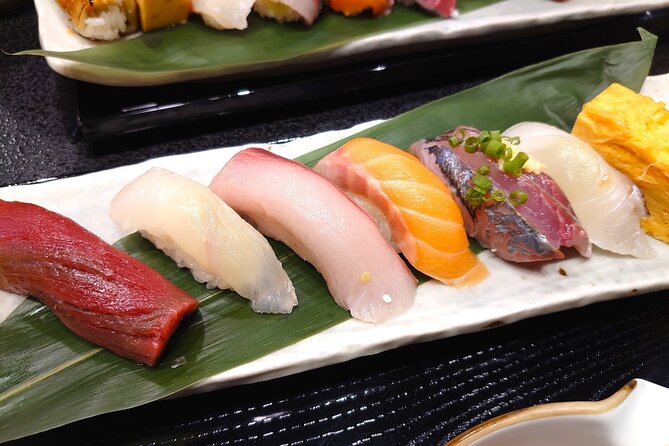
This works best when you enjoy doing something together. Friends can compare how their sushi turns out, and families can share the process across generations. The handmade results are individual, so the activity has a natural sense of humor without requiring anyone to be an expert.
It is also a good fit for visitors who want more than passive sightseeing. You will not simply take photographs of Japanese culture. You will use your hands, follow instructions in English, and eat the result.
Solo visitors can enjoy it too, particularly if they like food classes and meeting other people in a small group. The maximum is 20 participants, so the group may be larger than an intimate private lesson. That size can create a social atmosphere, but it also means the experience is not fully tailored to one person.
The mention of group discounts makes this worth checking for families or friend groups. The exact discount is not provided, so compare the final booking price rather than assuming a fixed percentage. A mobile ticket is included as a useful convenience, especially if you are moving around Tokyo with your phone as your main travel tool.
What Two Hours and $220 Really Buy You
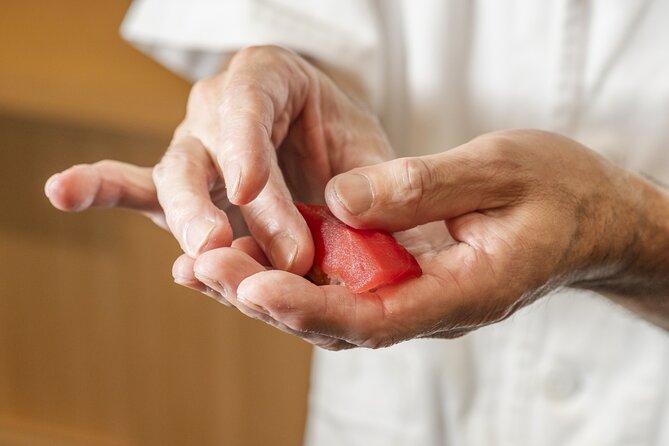
The listed price is $220 per person. That is a serious sum for a two-hour activity, particularly when the meal consists of about eight pieces of sushi rather than a long restaurant course.
The strongest value comes from the combination of four elements:
- A normally restricted government location
- Directly sourced Toyosu Market ingredients
- Instruction from professional chef Sasao and an English-speaking guide
- A meal you prepare and eat yourself
Remove the building and the instruction, and the price would be harder to justify as lunch alone. Keep all four together, and the fee makes more sense as a premium cultural activity. You are paying for access, teaching, ingredients, and a memorable setting.
I would compare it with the cost of other special activities in Tokyo rather than with the price of a sushi meal. If your budget is tight, spend the money on a good neighborhood restaurant and seek out a less costly cooking class. If you want one carefully chosen experience that combines food and an unusual location, this has a clear reason for its price.
The two-hour length is another value question. It is long enough to feel substantial, but short enough to fit around other Tokyo plans. Since the activity begins and ends at the meeting point, you can schedule it without losing a whole day. No hotel pickup or drop-off is included, so you handle your own transportation.
Meeting in Nagatachō
The meeting point is 2-chōme-2-2 Nagatachō, Chiyoda City, Tokyo 100-0014. The location is near public transportation, which is important in central Tokyo, but private transportation is not included.
Plan to arrive with enough time to find the building and meeting point. Government buildings can feel less casual than a shopfront cooking studio, and you will want to avoid arriving at the last second. Your mobile ticket should be ready, and your booking confirmation is issued at the time of reservation.
The activity returns to the same meeting point at the end. That makes the schedule simple. You can continue sightseeing nearby or connect to another part of Tokyo using public transit.
The group maximum is 20 people. That is small enough to keep the class focused, though it is not the same as a private lesson. Group discounts may help if you are booking with friends or family.
The Most Common Concern: Getting It Right
The clearest emotional hurdle is fear of failure. Sushi looks simple because the finished piece is small and neat. The class reveals that the neatness takes practice.
That is also where the experience earns its keep. You get to improve piece by piece rather than being judged on a perfect first attempt. The instruction is described as careful and supportive, and the experience is intended for beginners.
Do not expect every piece to look like it came from a high-end sushi counter. That is not the goal. The goal is to understand the basic movements, gain confidence with the ingredients, and enjoy a meal that carries your fingerprints.
If you are uncomfortable handling a knife or raw fish, consider that before booking. The activity specifically includes knife handling and fish slicing, so those are central parts of the lesson, not optional extras. The information provided does not detail dietary substitutions, allergy arrangements, or accessibility features, so ask the provider, JAPAN SHUSHI WORKS, before paying if any of those issues affect your choice.
Booking, Cancellation, and Planning Tips
You can cancel for a full refund up to 24 hours before the local start time. Cancellations or changes made less than 24 hours in advance are not accepted for a refund, so leave some room in your Tokyo schedule.
I would place this activity on a day when you are not rushing between major sights. The class includes several stages, from instruction to preparation to lunch, and it deserves your attention. It could also work well near the end of a trip, when you can look back on your time in Japan while making one last meal by hand.
Bring a curious attitude rather than a need for perfect presentation. The more you accept the handmade results, the more fun the class becomes. You are there to learn what sushi chefs do, not to replace one in two hours.
Should You Book This Sushi Experience?
Book it if you want a hands-on Japanese food activity with a setting you cannot normally visit. It is especially suited to first-time cooks, families, friends, and anyone who values an unusual cultural memory over a quick meal.
Think twice if $220 feels too high for a two-hour class or if you are mainly looking for a large sushi lunch. The portion is about eight pieces, transportation is your responsibility, and the group can include up to 20 people.
For the right person, the strongest payoff is not just eating fresh Toyosu fish. It is understanding the work behind sushi, learning from chef Sasao, and sitting inside Japan’s national political center with a meal you shaped yourself. That is a distinctive Tokyo experience, and one with a clear story to tell when you get home.
FAQ
How long does the sushi-making experience last?
The activity lasts approximately two hours.
Where does the activity begin and end?
It begins at 2-chōme-2-2 Nagatachō, Chiyoda City, Tokyo 100-0014, Japan, and ends back at the same meeting point.
What is included in the price?
The price includes cooking equipment, fresh sushi ingredients sourced directly from Toyosu Fish Market, an English-speaking sushi lesson, lunch of about eight pieces of sushi you make yourself, and miso soup or green tea.
Is the class suitable for beginners?
Yes. The English-speaking guide teaches the basics, including knife handling, slicing fish, and shaping sushi. The activity is designed so first-time participants can take part with confidence.
How many people can join the activity?
The maximum group size is 20 participants. Group discounts are available.
Can I cancel for a full refund?
Yes. You can cancel at least 24 hours before the local start time for a full refund. Cancellations or changes made less than 24 hours before the start time are not accepted for a refund.
Just added around Tokyo
- Private Memorable Tokyo Tour with English Speaking Driver★ 5.0 · 30 reviews
- Private Tokyo Custom Full-Day Tour by Chartered Vehicle★ 5.0 · 16 reviews
- Private Sightseeing to Mt Fuji and Hakone with English Driver★ 5.0 · 51 reviews
- Tokyo Photography Masterclass – Private Photography Lesson★ 5.0 · 25 reviews
- Private Mt. Fuji Day Trip from Tokyo with English-Speaking Driver★ 5.0 · 33 reviews
- 4 Day Tour – Mount. Fuji, Tokyo, Hakone, Kamakura and Yokohama★ 5.0 · 19 reviews
- Private Unforgettable Mt Fuji Tour with English Speaking Driver★ 5.0 · 142 reviews
- Private Tokyo Food Tour – A Journey Through Time Through Food★ 5.0 · 36 reviews
Tokyo Tours, compared.
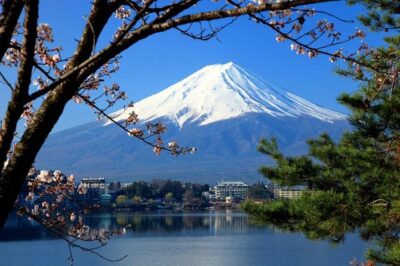
Mt Fuji and Hakone 1-Day Bus Tour Return by Bullet Train
Read our review →
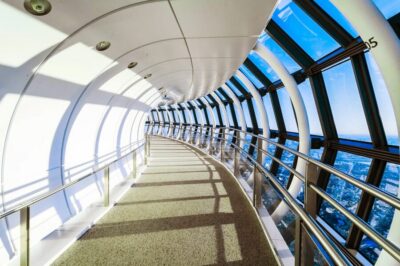

teamLab Planets TOKYO Digital Art Museum Entry Ticket
Read our review →
Mt Fuji & Hakone Cruise, Drum Show Bullet Train 1 Day from Tokyo
Read our review →
Shinjuku Food Tour (13 Dishes at 4 Local Eateries)
Read our review →
Tokyo Mt Fuji 5th St & Hakone Cruise Bus Tour w/Bullet Train
Read our review →