
REVIEW · SAPPORO TOURS
Mondo’s most popular plan! Experience making soba noodles and the king of Japanese cuisine, tempura, in Sapporo!
Making soba from buckwheat flour and water is the heart of this Sapporo experience. Taku leads you through mixing, stretching, and cutting the dough, then you sit down to eat your noodles with tempura prepared by the restaurant team. I like the hands-on noodle work and the chance to learn the proper Japanese way to eat soba.
I also like the small, personal setting. The activity is private to your group, and Taku and his partner create a friendly atmosphere that works well for children. The main consideration is that you make the soba, but you do not make the tempura. It is prepared for you, so check your expectations before booking.
In This Review
- Key points at a glance
- Turning buckwheat flour into noodles
- Taku’s friendly English instruction
- Eating your noodles with tempura
- Cold sauce, warm sauce, and soba-yu
- Why Hokkaido soba matters
- A small private setting near Miyanosawa
- Is $85.79 a fair price?
- Who should book this experience?
- Practical details before you reserve
- Should you book Mondo’s soba class?
- FAQ
- Where does the soba-making experience take place?
- How do I reach the restaurant by public transportation?
- Is parking available?
- How long does the activity take?
- What steps are included in making the soba?
- Do I make the tempura myself?
- Is the activity conducted in English?
- Can children take part?
- Can dietary requirements be accommodated?
- What is the cancellation policy?
Key points at a glance
- Traditional soba from scratch: Mix buckwheat flour, stretch the dough, and cut the noodles yourself.
- Tempura comes with the meal: Enjoy artisan-made tempura with your soba, including seafood and vegetables when available.
- Taku teaches in English: Instructions cover both the noodle-making process and Japanese soba etiquette.
- A private, family-friendly activity: Only your own group takes part, and small children can participate.
- Near Miyanosawa Station: The restaurant is about a five-minute walk from the Sapporo Subway Tozai Line station.
- Plan for up to 1 hour and 15 minutes: The noodle work takes about 30 minutes, followed by cooking and eating.
Turning buckwheat flour into noodles
Soba looks simple when it arrives in a bowl. The noodles are thin, plain, and often served with little more than dipping sauce and toppings. Making them is another matter. The dough needs the right balance of water and flour, then careful handling to produce noodles that hold together.
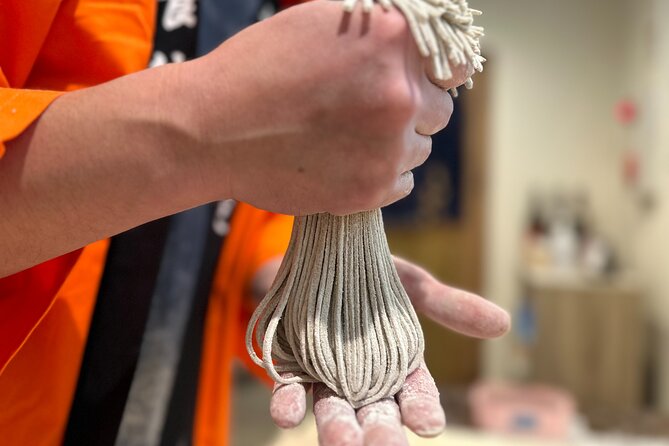
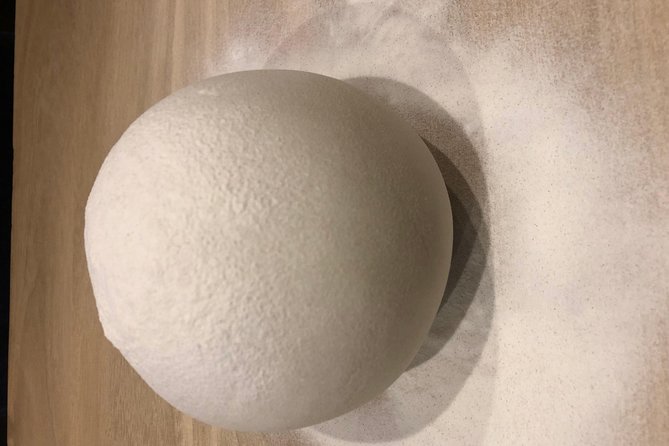
At Mondo, you begin by mixing buckwheat flour. You then knead the mixture into dough, stretch it out, and cut it into noodles with a traditional soba knife. This is not a cooking demonstration where you sit and watch. You get your hands into the dough and take part in the work.
The full noodle-making portion lasts about 30 minutes. That is enough time to give you a real feel for the process without turning the activity into a long technical class. I like this balance. You learn the basic method, make something with your own hands, and still have time to enjoy a full meal afterward.
Your noodles may not come out perfectly even. That is part of the fun, and it also helps you understand the skill involved in a Japanese soba shop. Cutting noodles to a consistent width takes practice. The finished bowl has more meaning when you know how much care goes into getting those neat strands right.
Other Sapporo days people book alongside this one:
- Sapporo Bar Hopping Food Tour
★ 5.0 · 232 reviews - Hokkaido Seasonal: Lake Toya & Noboribetsu Jigokudani Valley
★ 4.7 · 173 reviews - Sapporo Private Tour with a Local – Highlights & Hidden Gems
★ 5.0 · 91 reviews
Taku’s friendly English instruction
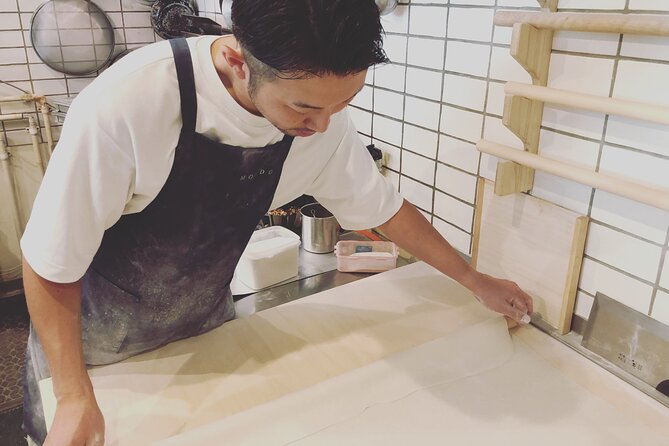
The experience is conducted in English, with Taku guiding the class. He explains each step in a clear, easy-to-follow way and keeps the mood light with humor. That matters in a hands-on class, since dough can become stressful if you feel rushed or unsure of what to do next.
Taku’s partner also helps with the experience and meal. The atmosphere is intimate rather than formal. For a small group, the setting can feel almost like being welcomed into a local home, though you are still in a working handmade soba restaurant.
This is especially useful for families. Children can take part in mixing, stretching, and cutting, and the process is simple enough for young participants to enjoy. One family included a 10-year-old who took part in the entire activity, and another child particularly enjoyed seeing the noodles come together.
You should know that English support is available during the activity, but the restaurant cannot provide English assistance by phone. If you need to ask a question before arrival, contact the provider by email through VIRTOR instead.
Eating your noodles with tempura
Once the noodles are prepared, the restaurant cooks them for you. You then eat your own soba with tempura made by a Japanese food craftsman.
The tempura is not part of the hands-on class. You do not mix the batter or fry the shrimp and vegetables yourself. This point is worth stressing because the name of the experience can give the impression that you will make both dishes. The practical format is soba-making followed by a prepared tempura meal.
That arrangement makes sense for safety and timing. Deep-frying seafood and vegetables requires hot oil, careful control, and kitchen equipment. Mondo lets you focus on the soba while the restaurant prepares the tempura properly.
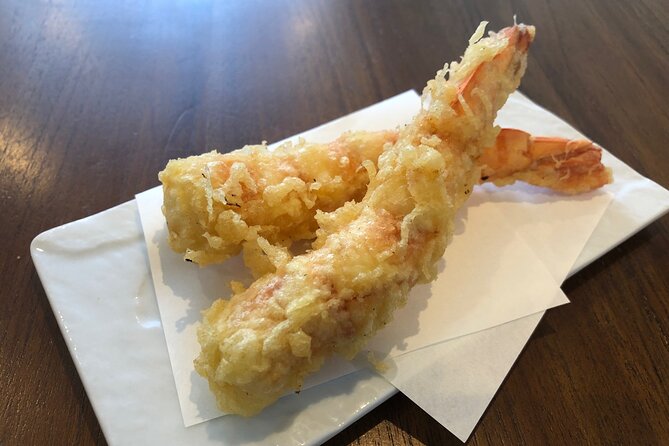
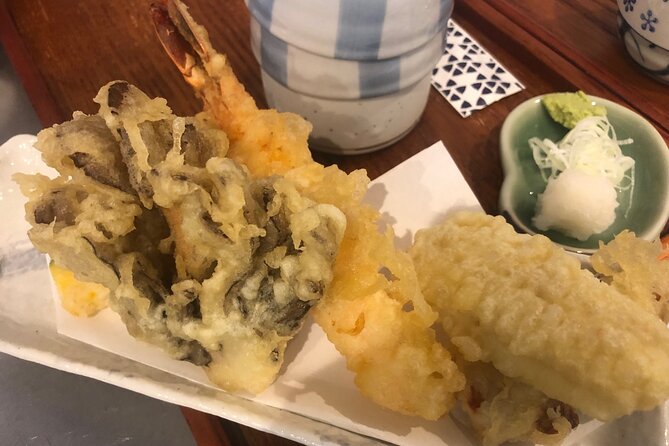
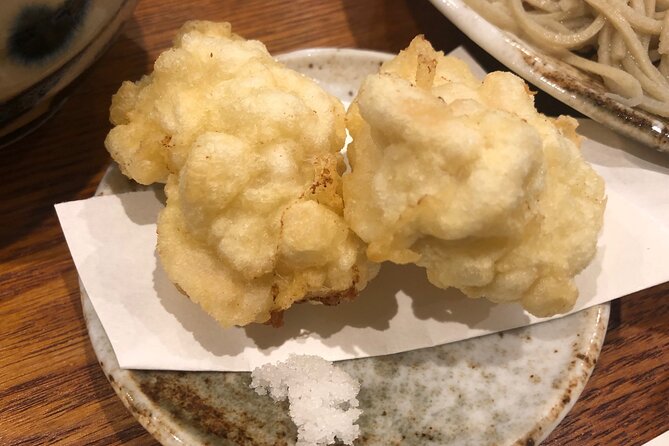
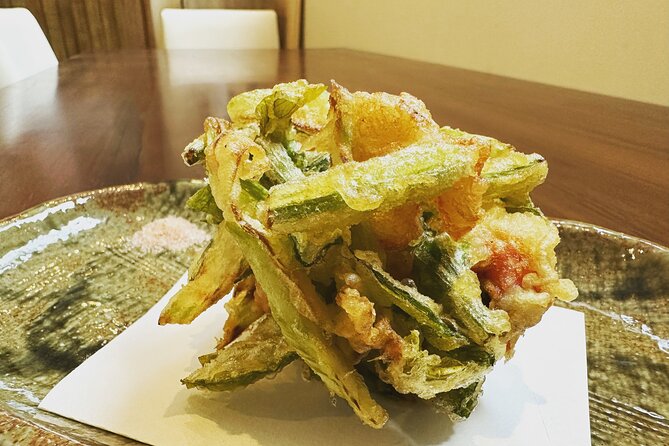
The tempura may include shrimp, scallops, eggplant, seasonal vegetables, and other local ingredients. The exact selection can vary, so do not book expecting a fixed list. The crisp batter and savory ingredients pair naturally with soba, giving the meal more variety than noodles alone.
This pairing also reflects a familiar Japanese food tradition. Soba and tempura are commonly eaten together, and the activity explains how the two dishes complement each other. The noodles offer a clean, earthy buckwheat flavor, while the fried ingredients bring richness and crunch.
Cold sauce, warm sauce, and soba-yu
You can try your noodles with two styles of soba sauce, one cold and one warm. This is a useful part of the meal because the temperature and serving style change the character of the noodles.
Cold soba is often eaten by dipping the noodles into sauce. Warm soba gives you a softer, more comforting bowl. The staff explains how Japanese people eat soba, so you are not left guessing how to handle the noodles or sauce.
The meal finishes with soba-yu, the cloudy water left from cooking the noodles. In Japan, it is commonly added to the remaining dipping sauce and enjoyed as a warm final drink. This small custom is easy to miss at a regular restaurant, so learning it here gives the meal a satisfying cultural finish.
You will also learn practical eating habits, including how to use the sauces and how to finish the dish. The instruction is not a long lecture on Japanese food history. If you want a detailed class on regional cuisine or traditional knife skills, this may feel limited. If you want clear guidance that helps you enjoy soba correctly, it delivers more.
Same city, a completely different kind of day:
- Sapporo: Sumo Show Experience with Japanese food & Photo
★ 4.9 · 81 reviews - Popular in SapporoExperience authentic hand-made soba at a real soba shop!
★ 5.0 · 77 reviews - 【Private Car】Asahiyama Zoo, Blue Pond, Shirahige Falls, Ningle Terrace (from Sapporo)
★ 5.0 · 60 reviews - Sapporo 6hr Private Tour with Government Licensed Guide
★ 5.0 · 57 reviews
Why Hokkaido soba matters
Hokkaido is one of Japan’s best-known soba-producing areas. Its climate and soil support buckwheat farming, and the Tokachi and Furano regions are especially known for soba production.
Hokkaido soba is valued for its savory flavor and chewy texture. The activity gives you a direct way to connect the noodle on your plate with the local food culture. You are not simply ordering a famous Japanese dish. You are handling the basic ingredients and seeing how the texture begins with the dough.
Soba has been part of Japanese food culture since the Edo period, beginning around the 1600s. The activity does not pretend to turn you into a professional noodle craftsman in half an hour. Instead, it gives you a practical taste of a long-running tradition and shows why handmade soba takes skill.
That local connection is one of the strongest reasons to choose this over another standard cooking class in Sapporo. The experience stays focused on one important Japanese food rather than trying to cover sushi, ramen, tempura, and several side dishes in one rushed session.
A small private setting near Miyanosawa
Mondo is in western Sapporo at 9-chōme-17-28 Hassamu 6 Jō, Nishi Ward. From Miyanosawa Station on the Sapporo Subway Tozai Line, it is about a five-minute walk.
The activity ends at the same place where it begins. If you are driving, the restaurant has four parking spaces in front of the shop. Space is limited, so do not assume a large car park is available.
The location is not in central Sapporo’s main sightseeing zone. That means you will need to add subway travel and a short walk to your schedule. On the other hand, the setting gives you a look at a local neighborhood and a small working restaurant rather than another experience designed around the busiest visitor area.
Finding the shop may take a little attention. The entrance is not always easy to spot, so allow time to locate the address. Arriving early is sensible, especially since late arrival can disrupt the start time for other participants. If you cannot arrive before the scheduled start, the booking may be treated as a no-show.
The experience is private to your group. The activity requires at least two people, but group customers can contact the shop directly about arrangements and possible discounts. A small party of three or five should find the format especially comfortable.
Is $85.79 a fair price?
At $85.79 per person, this is not a bargain meal. You are paying for instruction, ingredients, a private activity, your handmade soba, tempura, and the time of the restaurant team.
The value is strongest if you want a personal food experience rather than a quick lunch. You spend about 30 minutes actively making noodles and up to 1 hour and 15 minutes on the whole visit. The private format also means you are not sharing the class with a large crowd.
The price is harder to justify if you expected to make tempura as well. You only prepare the soba, while the restaurant makes the tempura. One lower-rated experience also found the activity too limited for the cost, especially because there was no extended discussion of culinary history or technique.
I would compare this with the cost of a standard soba meal plus what you value hands-on instruction at. If you already plan to eat soba in Sapporo and want to learn how it is made, the added experience can make the price reasonable. If you mainly want a filling meal, ordering soba at a restaurant will cost less.
Who should book this experience?
I would recommend Mondo to families, couples, and small groups looking for something different from Sapporo’s usual food stops. Children can participate, and the process is active without requiring advanced cooking skills.
It also suits anyone curious about Japanese food traditions. You learn how buckwheat flour becomes noodles, how soba is served, and how tempura fits into the meal. The class gives you useful context without demanding a full day.
This may not be the right choice for you if you need a fully vegan menu unless you arrange it ahead of time. Vegan and halal accommodations may be possible with advance contact, but you should not rely on same-day requests. One party also found that the lack of a vegan option kept two people from joining.
You should also skip it if your main goal is learning tempura technique. You will eat tempura, but you will not prepare it. Finally, a very late or uncertain arrival is risky because the start time is firm.
Practical details before you reserve
Confirmation is provided when you book. You do not need to bring special equipment or prepare anything in advance.
Service animals are allowed, and the restaurant is near public transportation. The activity is offered in English, but questions before the visit should be sent by email through VIRTOR rather than by phone.
The cancellation policy is simple: cancel at least 24 hours before the local start time for a full refund. Cancellations or changes made within 24 hours are not accepted for a refund.
The activity has a 4.8 rating from 71 reviews, with 96 percent recommending it. The strongest praise focuses on the friendly teaching, clean preparation area, fun noodle-cutting work, tasty tempura, and the satisfaction of eating noodles you made yourself.
Should you book Mondo’s soba class?
Book it if you want to spend part of your Sapporo visit making a traditional food with a small local team. Taku’s patient instruction, the private setting, and the final meal make this more personal than a simple restaurant stop.
Go in knowing exactly what you are buying: a hands-on soba class with prepared tempura, not a two-part cooking lesson. For families and small groups who value participation, the price can be worthwhile. For strict vegans, people seeking a full tempura class, or anyone focused only on inexpensive food, another option may serve you better.
FAQ
Where does the soba-making experience take place?
It takes place at Mondo, 9-chōme-17-28 Hassamu 6 Jō, Nishi Ward, Sapporo, Hokkaido 063-0826, Japan.
How do I reach the restaurant by public transportation?
The restaurant is about a five-minute walk from Miyanosawa Station on the Sapporo Subway Tozai Line.
Is parking available?
Yes. There are four parking spaces in front of the shop.
How long does the activity take?
The complete experience takes about 1 hour and 15 minutes. The actual soba-making portion lasts about 30 minutes, followed by tasting and the meal.
What steps are included in making the soba?
You mix the buckwheat flour, stretch the dough, and cut the soba noodles.
Do I make the tempura myself?
No. The restaurant prepares the tempura, and you eat it with the soba noodles you made.
Is the activity conducted in English?
Yes. The experience is conducted in English, but the restaurant cannot provide English support by phone or other means before the activity.
Can children take part?
Yes. Even small children can enjoy the soba-making activity.
Can dietary requirements be accommodated?
Halal and vegan arrangements may be possible, but you must contact the shop in advance. The information does not promise that every request can be handled.
What is the cancellation policy?
You can receive a full refund if you cancel at least 24 hours before the experience start time. Cancellations or changes made less than 24 hours before the start time are not refunded or accepted.
Just added around Sapporo
- Snowshoe Hike Tour from Sapporo include hotel p/up & drop off★ 5.0 · 16 reviews
- Wagashi traditional japanese sweets class★ 5.0 · 49 reviews
- Sapporo Sumo Show Experience with Japanese Food and Photo★ 4.5 · 38 reviews
- Full Day Private Skiing / Snowboarding Tour in Sapporo★ 5.0 · 30 reviews
- Snowshoeing and Onsen Adventures in a Winter Wonderland -Sapporo.★ 5.0 · 30 reviews
- Sapporo 4hr Private Tour with Government Licensed Guide★ 5.0 · 42 reviews
- Sapporo 6hr Private Tour with Government Licensed Guide★ 5.0 · 57 reviews
- Authentic Sapporo: Nijo Market Seafood Lunch & Local History Tour★ 5.0 · 13 reviews
Sapporo Tours, compared.

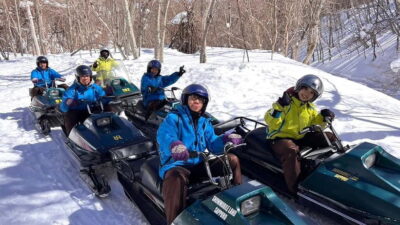
Hokkaido Seasonal: Lake Toya & Noboribetsu Jigokudani Valley
Read our review →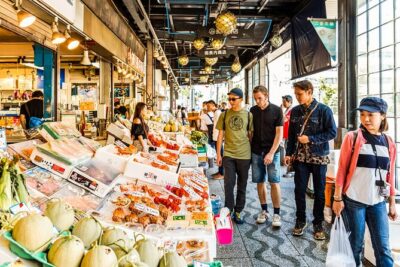
Sapporo Private Tour with a Local – Highlights & Hidden Gems
Read our review →
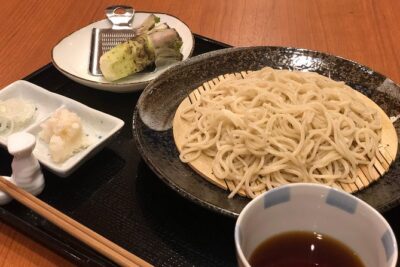
Popular in SapporoExperience authentic hand-made soba at a real soba shop!
Read our review →
Sapporo 6hr Private Tour with Government Licensed Guide
Read our review →
Browse the lists this tour appears in