
REVIEW · PRIVATE GUIDED TOURS WITH DRIVER
Aomori Full-Day Private Trip with Government-Licensed Guide
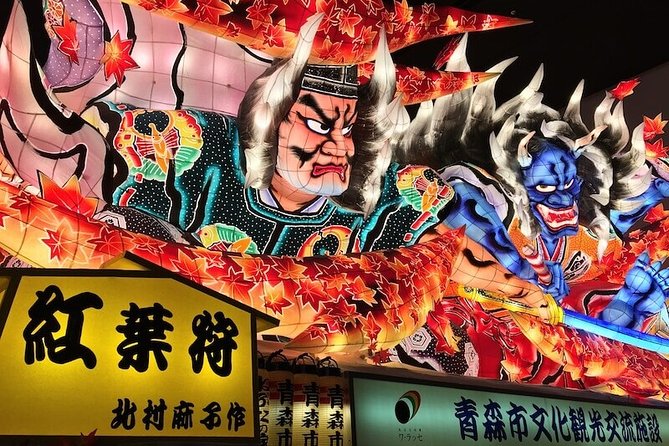
Aomori’s best story is told through its oversized Nebuta floats and its ancient Jomon ruins, and this private tour lets you connect both in one day. I like the choose-your-own itinerary, which helps you focus on art, archaeology, local culture, or a mix. I also like the chance to work with guides such as Kaz, Tomo, Rocky, and Tomohiko Kudo, who have offered personal touches including apple tasting, local food, and help with festival seating.
The main catch is that six hours does not cover every listed stop. You choose three or four sights, and entrance fees, lunch, and transportation are extra. Since the tour is described as a walking experience, you should confirm the route and meeting point before booking, especially if you want to reach sites outside central Aomori.
In This Review
- Key points to know before booking
- Why this private Aomori day works
- Wa Rasse and the giant Nebuta floats
- Kyodokan for local objects and early Japan
- Aomori Contemporary Art Center and Tadao Ando’s setting
- Munakata Shiko Memorial Museum of Art
- Aomori Museum of Art and its unusual white building
- Sannai-Maruyama and the Jomon settlement
- How to build your three or four stops
- Walking, transport, and timing
- What $154.84 per person really buys
- Guide quality and the importance of communication
- Who should book this Aomori tour?
- Should you book it?
- FAQ
- How long does the Aomori private tour last?
- How many sights can I visit?
- Is private transportation included?
- Are entrance tickets included?
- Can I visit Hirosaki on this tour?
- What is the cancellation policy?
Key points to know before booking
- Choose three or four sights: You can shape the day around Nebuta, Jomon archaeology, contemporary art, or local history.
- Wa Rasse is the cultural anchor: Full-size festival floats, sound, video, and photographs explain why Nebuta is central to Aomori.
- Sannai-Maruyama adds ancient context: Reconstructed foundations and Jomon remains give the region a story far older than modern Japan.
- This is a private walking tour: Only your party participates, but private transportation is not included.
- The guide can make or break the day: Past guides named Kaz, Tomo, Rocky, and Tomohiko Kudo have received very different assessments, so ask who is assigned.
- The price rewards personal attention: At $154.84 per person, the value is strongest for families or small groups who will use the guide’s flexibility.
Why this private Aomori day works
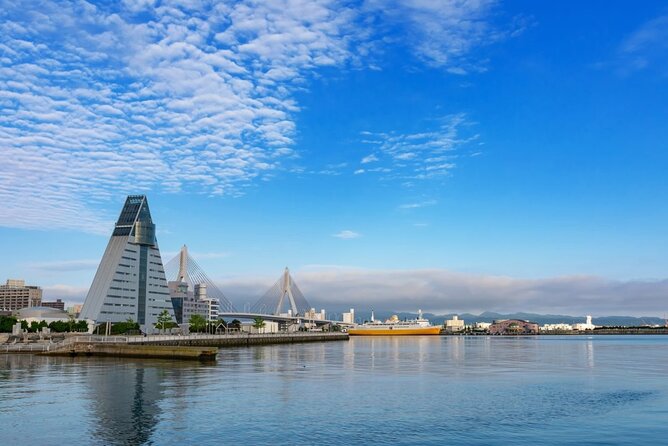
Aomori is easy to overlook. Many people arrive by train, see a few modern buildings near the station, and move on. That misses the point. The city is a gateway to northern Japan, with Edo-period street planning, postwar rebuilding, major contemporary architecture, and a deep connection to the Nebuta Festival.
I like this tour because it does not force every participant through the same fixed route. You can spend the day on art museums, focus on the Jomon period, or pair Wa Rasse with Sannai-Maruyama for a clear look at Aomori’s past and present. A private guide can also adjust the pace for your family, answer questions as they arise, and help with small local discoveries.
Past guiding styles have varied. Kaz has helped shape plans through WhatsApp before the day, and one particularly strong experience included local apples, lunch, Seiryuji Temple, and help finding accessible seating for the Nebuta Festival. Tomo has added a playful touch by meeting cruise passengers in costume, while Kudo-san has been praised for his connection to Aomori and his work in city promotion.
That personal element is the reason to choose this over a standard group outing. You are paying for a person who can interpret the city and respond to your interests, not simply for a checklist of buildings.
The advertised score is 4.8 from 33 ratings, with 94 percent recommending the experience. That is a strong record, but it is not perfect. One booking went badly after a guide suffered a medical emergency, and the agency acknowledged a communication delay. Another detailed complaint described poor time control, missed stops, rushed meals, and incorrect information. Those incidents do not cancel the many positive experiences, but they make one point clear: confirm the plan and guide details ahead of time.
More private guided tours with driver in Japan:
- Tokyo 6hr Private Tour with Government-Licensed Guide
★ 5.0 · 3,902 reviews - Tokyo 4hr Private Tour with Government-Licensed Guide
★ 5.0 · 1,394 reviews - Kyoto 6hr Private Tour with Government-Licensed Guide
★ 5.0 · 1,369 reviews
Wa Rasse and the giant Nebuta floats
For many people, Nebuta Museum Wa Rasse will be the day’s essential stop. It is near Aomori Station and is devoted to the city’s famous summer festival, held from August 2 through 7.
Inside, you can see five large floats from the previous festival. These are not small models or ordinary museum pieces. The scale helps you understand the work involved in creating figures that move through Aomori’s streets during the festival. Video installations, photographs, and sound add the noise and motion that a silent display cannot provide.
I would begin here if you know little about Nebuta. A good guide can explain the festival’s figures, construction, parade setting, and place in local life before you encounter the event itself. If you visit during festival season, ask about the current parade schedule rather than relying on an old plan. Festival dates and street activity matter greatly to a short day.
Allow about one hour. The entrance ticket is not included, and the guide’s entry fee is covered only for sights included in the expected route. Ask in advance how your chosen sites affect guide admission costs.
One warning is worth taking seriously: festival explanations must be accurate. Nebuta has a layered cultural background, and a guide who cannot explain its meaning or current events will weaken the visit. Confirm that your guide is prepared to discuss the festival, especially if it is your main reason for coming to Aomori.
Kyodokan for local objects and early Japan
The Aomori Prefectural Kyodokan, also called the Aomori Prefectural Folk Museum, gives the day a more traditional and local focus. Its collection includes Jomon-period pottery, tools, miniature reconstructions of huts, and material connected with early life in the region.
This is a good choice if you prefer objects and explanation to large modern buildings. The displays can help you understand what you will later see at Sannai-Maruyama. Rather than treating archaeology as a distant subject, the museum gives you household items and reconstructed spaces to consider.
Allow about one hour. Admission is extra. Since the tour permits only three or four stops, I would pair Kyodokan with Sannai-Maruyama if early Japanese culture interests you. If art is your priority, this museum may be less rewarding than one of the Aomori art centers.
Aomori Contemporary Art Center and Tadao Ando’s setting
The Aomori Contemporary Art Center sits on the grounds of Aomori Public College and was designed by architect Tadao Ando. Its building and water feature are part of the experience, blending with the surrounding setting rather than acting as a plain box for exhibits.
This stop suits you if you enjoy modern design and art that responds to its location. The building itself gives your guide something useful to interpret, especially if you want to understand how present-day Aomori presents its cultural identity.
The practical issue is time and routing. It is one of six possible stops, and the tour includes no private vehicle. Confirm how you will reach it and whether transportation charges apply. Allow about an hour, not including any transit.
I would not combine this with every other museum unless you are comfortable moving quickly. A private day feels most useful when you give each chosen place enough time for questions and conversation.
A few more Japan trips to weigh up
- From Tokyo: Mount Fuji Full-Day Sightseeing Trip
★ 4.5 · 4,970 reviews - Mount Fuji Full-Day Private Tour from Tokyo (Customizable)
★ 4.9 · 1,470 reviews - Hiroshima / Miyajima Full-day Private Tour with Government Licensed Guide
★ 5.0 · 1,298 reviews - Tokyo Private Full-Day Tour by Car or Van
★ 5.0 · 684 reviews
Munakata Shiko Memorial Museum of Art
The Munakata Shiko Memorial Museum presents work by Aomori-born woodblock artist Munakata Shiko, who lived from 1903 to 1975. His prints are the reason to choose this museum, particularly if you want to see the work of an artist closely tied to northern Japan.
The museum offers a more focused art visit than the larger Aomori Museum of Art. It can fit well into a day for people who want local identity expressed through an individual artist rather than through broad historical displays.
Allow about one hour, with admission extra. Because only three or four sites fit into the tour, decide if Munakata’s prints matter more to you than contemporary art at ACAC or the Aomori Museum of Art.
Aomori Museum of Art and its unusual white building
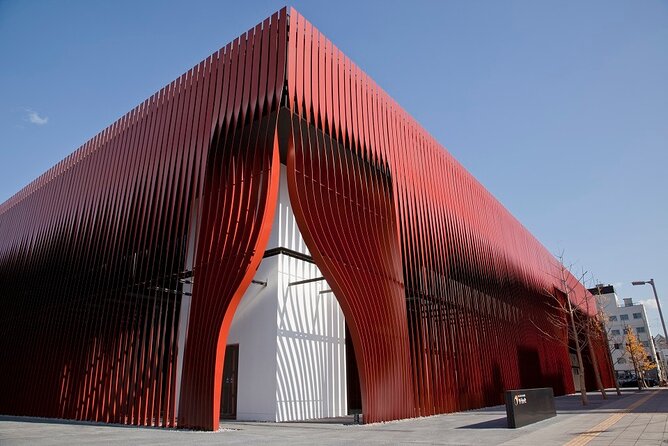
The Aomori Museum of Art is close to Sannai-Maruyama and was designed by architect Jun Aoki. Its white cubic form was planned to work with the archaeological setting nearby, making it an appealing pairing for a day that connects old and new.
The museum is a strong choice if your interests are broad. You can look at modern art, then move on to the ancient settlement at Sannai-Maruyama. That contrast is one of the best ideas in the suggested route.
Allow one hour, with admission extra. Ask your guide what is currently on display, since a museum visit can feel very different depending on the exhibition. If your time is tight, combining this with Sannai-Maruyama is more logical than crossing the city for several unrelated stops.
Sannai-Maruyama and the Jomon settlement
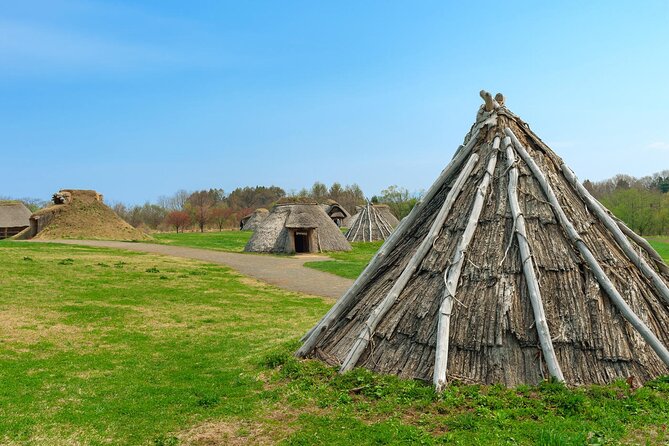
Sannai-Maruyama is likely the most important stop for understanding Aomori beyond its famous festival. The site reveals the reconstructed foundations of a Jomon-era settlement. It was first discovered in 1992 and later declared a special national historic landmark.
The value here is not just seeing old ground. Reconstructed foundations help you picture a settlement that would otherwise be difficult to read. Your guide can connect the remains with the pottery, huts, and tools displayed at Kyodokan.
One past guide, Kaz, has been praised specifically for explaining the excavation, culture, and history of Sannai-Maruyama. That is exactly where a licensed local guide can earn the fee. Without context, foundations can look like lines in the earth. With explanation, they become evidence of how people organized daily life many centuries ago.
Plan on about an hour, and remember that admission is not included. The site is close to the Aomori Museum of Art, so these two make an efficient combination. If archaeology is your priority, choose both and add Wa Rasse only if the timing works.
How to build your three or four stops
The tour gives you freedom, but freedom needs a plan. I would choose from one of these combinations:
- Aomori essentials: Wa Rasse, Sannai-Maruyama, and the Aomori Museum of Art.
- Early Japan: Kyodokan, Sannai-Maruyama, and Wa Rasse.
- Art-focused day: Wa Rasse, ACAC, Munakata Shiko Memorial Museum, and the Aomori Museum of Art.
- A lighter cultural route: Wa Rasse, one art museum, a local meal, and time for questions or a market visit if your guide confirms it.
The published tour permits three or four sites from the expected list. Extra stops mentioned in individual plans, such as a fish market, Utoh Shrine, Japan lacquerware shops, Seiryuji Temple, or Hirosaki attractions, should not be treated as guaranteed inclusions.
Hirosaki is specifically excluded from this experience, even though some past outings connected with the guide service included Hirosaki Castle or Fujita Memorial Gardens. If you want Hirosaki, book a separate trip rather than assuming the guide can add it.
Walking, transport, and timing
The experience lasts about six hours and is described as a walking tour. You meet the guide on foot within a designated area of Aomori city, and private transportation is not included. Transportation fees, entrance tickets, lunch, and personal expenses are also separate.
This matters because the six possible stops are not one compact museum cluster. A walking route may work well for central sights, but reaching ACAC, the Aomori Museum of Art, or Sannai-Maruyama may require public transportation or another paid option. Confirm the meeting place, route, and expected transit before the day begins.
I would also agree on priorities at the start. If a museum has a long line or the weather changes, you need to know which stop can be dropped without disappointment. A private guide can adjust the day, but six hours still has a hard limit.
Past experiences show how quickly time disappears when a cruise ship arrives late, lunch takes longer than expected, or a guide tries to keep too many stops. A sensible plan with three strong visits is better than nine rushed ones.
What $154.84 per person really buys
At $154.84 per person, this is not a cheap way to see Aomori’s buildings. The cost makes the most sense for a small group that values a private English-speaking guide and wants help choosing the right three or four sights.
For two people, the total is substantial. For a family or larger private party, the per-person price can feel more reasonable, especially when the guide can adjust explanations, walking speed, meal timing, and interests for your group alone. Group discounts are offered, though the exact savings are not stated.
The price does not cover the parts of the day that often add up in Japan: admission tickets, lunch, and local transport. Budget for those separately. The guide’s entry fees are covered only at sights listed in the expected stops, so ask before adding anything else.
The strongest value comes from preparation. Message the provider or guide with your interests, mobility needs, arrival details, and must-see site. Kaz’s advance WhatsApp planning shows how useful this can be. You may get a much better day by agreeing on a clear route before meeting.
Guide quality and the importance of communication
The guides named in past experiences include Kaz or Kazumi, Rocky Tanaka, Tomo or Tomohiko Kudo, and Fuji-san. You are not guaranteed a particular person unless the booking process confirms it, so ask who will lead your tour.
The best guide experiences described here share several traits: personal preparation, strong English communication, pride in Aomori, flexibility, and useful local connections. One guide helped find bargain used kimonos. Another arranged accessible Nebuta seating for a family member with mobility issues. Apple tasting, local food, temple music, and festival details also appeared in individual days.
Do not assume every guide will offer every extra. Treat those as examples of what personal guiding can add, not promised features.
I would send three questions before booking:
- Which guide is assigned?
- Which three or four stops do you recommend for my interests?
- How will we move between central Aomori and the outlying museums and archaeological site?
That simple exchange can prevent confusion about tickets, buses, walking distance, and timing.
Who should book this Aomori tour?
I would choose this experience if you have one day in Aomori and want help making sense of the city rather than simply collecting photographs. It suits first-time visitors, families, cruise passengers, museum fans, and anyone who wants a private pace.
It is especially useful if you are unsure how to connect Wa Rasse with Sannai-Maruyama and the art museums. A guide can provide the thread between festival culture, archaeology, local art, and modern architecture.
You may want another option if you prefer a fixed schedule, included transportation, or guaranteed admission costs. It is also a poor fit if your main goal is Hirosaki, since Hirosaki cannot be added to this tour.
Most travelers can participate, and service animals are allowed. The tour is private, but the walking format means you should discuss mobility needs in advance. Free cancellation is available until 24 hours before the start time. Changes or cancellations inside that window are not accepted for a refund.
Should you book it?
Book this tour if personal guiding is more important to you than an all-inclusive price. Pick Wa Rasse and Sannai-Maruyama as your foundation, then add the Aomori Museum of Art, Kyodokan, ACAC, or the Munakata Shiko Memorial Museum according to your interests.
I would book with a written plan, confirmed meeting point, named guide, and clear agreement about transportation. The strong score and many warm accounts show what this tour can deliver, while the serious negative experience shows why preparation matters.
For a well-organized private day, $154.84 per person can be fair value. For a rushed route with extra tickets and transit added on, it becomes expensive. Choose fewer sights, ask direct questions, and let the guide give you time to understand Aomori.
FAQ
How long does the Aomori private tour last?
The experience lasts approximately six hours.
How many sights can I visit?
The tour includes a customizable selection of three or four sites from the expected stops list.
Is private transportation included?
No. Private transportation is not included, and transportation fees are separate. The experience is described as a walking tour with an on-foot meeting within a designated area of Aomori city.
Are entrance tickets included?
No. Entrance fees are separate. The guide’s entry fees are covered only for sights listed under the expected stops.
Can I visit Hirosaki on this tour?
No. Hirosaki cannot be visited as part of this experience.
What is the cancellation policy?
You can cancel at least 24 hours before the start time for a full refund. Cancellations or changes made less than 24 hours before the start time are not accepted for a refund.
Just added around Japan
- Private Memorable Tokyo Tour with English Speaking Driver★ 5.0 · 30 reviews
- Private Tokyo Custom Full-Day Tour by Chartered Vehicle★ 5.0 · 16 reviews
- Private Sightseeing to Mt Fuji and Hakone with English Driver★ 5.0 · 51 reviews
- Tokyo Photography Masterclass – Private Photography Lesson★ 5.0 · 25 reviews
- Private Mt. Fuji Day Trip from Tokyo with English-Speaking Driver★ 5.0 · 33 reviews
- 4 Day Tour – Mount. Fuji, Tokyo, Hakone, Kamakura and Yokohama★ 5.0 · 19 reviews
- Private Unforgettable Mt Fuji Tour with English Speaking Driver★ 5.0 · 142 reviews
- Private Tokyo Food Tour – A Journey Through Time Through Food★ 5.0 · 36 reviews
Private Guided Tours with Driver, compared.
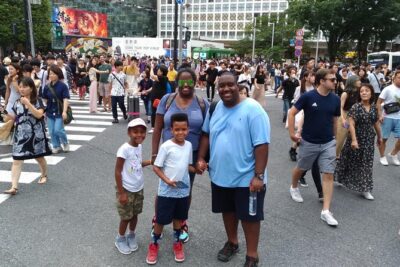
Tokyo 4hr Private Tour with Government-Licensed Guide
Read our review →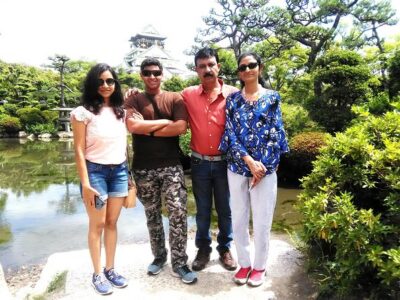
Kyoto 6hr Private Tour with Government-Licensed Guide
Read our review →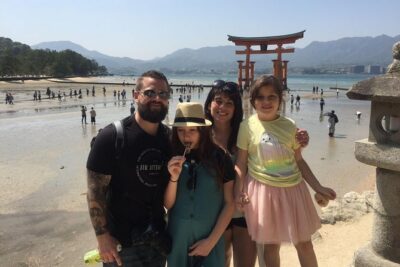
Hiroshima / Miyajima Full-day Private Tour with Government Licensed Guide
Read our review →
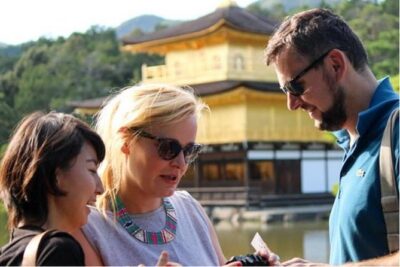
Kyoto 4hr Private Tour with Government-Licensed Guide
Read our review →
Mt. Fuji Day Trip from Tokyo with English Speaking Driver Guide
Read our review →
Hiroshima City 4hr Private Walking Tour with Licensed Guide
Read our review →Browse the lists this tour appears in