
REVIEW · MOUNT FUJI DAY TRIPS
Mount Fuji Sightseeing Private tour w English speaking chauffeur
Mount Fuji is best seen from several angles, and this private day trip gives you plenty of them. You can pair famous viewpoints with quiet shrines, mountain ponds, a lava cave, and traditional village buildings, all without managing trains and buses across the Fuji Five Lakes area. The private car is the real advantage.
I like the freedom to adjust the timing and choose which stops matter most to you. I also like the personal touch: John, one of the chauffeurs, is praised for being friendly, informative, flexible, and helpful with photos. The main drawback is simple: eight possible stops cannot all receive a full hour during an 8 to 10-hour day that begins in Tokyo, so you will need to prioritize.
In This Review
- Key points to know before booking
- Why a private Mount Fuji day trip makes sense
- Oshino Hakkai and its eight clear ponds
- Arakura Fuji Sengen Shrine and Chureito Pagoda
- Saiko Iyashi no Sato Nenba, a traditional village by Lake Saiko
- Narusawa Ice Cave beneath the forest
- Kitaguchi Hongu Fuji Sengen Jinja and the spiritual side of Fuji
- Shiraito Falls, a graceful natural finish
- Oishi Park and the northern view across Lake Kawaguchiko
- Lake Yamanaka, the closest lake view
- Can you really visit all eight stops?
- Weather, photos, and the risk of a cloudy Fuji
- Who gets the best value from this tour?
- Should you book the Mount Fuji private tour?
- FAQ
- What is the start time for the Mount Fuji private tour?
- How long does the experience last?
- How many people can join the private tour?
- Are admission fees included?
- Is hotel pickup available?
- What happens if bad weather cancels the tour?
Key points to know before booking
- Private transport from Tokyo: Your group travels with an English-speaking chauffeur rather than joining a large bus.
- Eight possible Fuji-area stops: The route can include ponds, shrines, lakes, waterfalls, a traditional village, and a lava cave.
- Flexible planning: You can adjust the timing and add destinations according to your interests.
- Strong personal service: John is singled out for his warm manner, local explanations, flexibility, and help with taking photos.
- Good value for a group: The listed price is $428.28 for up to four people, making the per-person cost much lower when shared.
- Weather matters: Mount Fuji views are not guaranteed, and the experience can be canceled in poor weather with a choice of another date or a full refund.
Why a private Mount Fuji day trip makes sense
Mount Fuji is close enough to visit from Tokyo, but the best sights are spread across a wide area. A public transport day can involve several train and bus connections, then more walking between viewpoints. A private vehicle removes much of that friction.
You are picked up at 8:00 am, then driven toward the Fuji area with your own group. The tour lasts about eight to ten hours, depending on the route and timing. That gives you a useful full day, though the long distance between Tokyo and Mount Fuji means this is not a slow village stroll.
I like this format for families, couples, and small groups who do not all want the same thing. One person can care about photographs, another about shrines, and someone else can be keen on caves or waterfalls. Your chauffeur can help shape the day instead of forcing everyone through a fixed schedule.
The private setup also helps with small practical matters. You can spend longer at a favorite viewpoint, shorten a stop that does not interest you, or adjust the order of the sights. John is praised for making the day feel comfortable and companionable, while still explaining the places you pass and visit.
The tradeoff is cost. At $428.28 per group of up to four, the price works out to about $107 per person before any separate admission fees. For four people, that is a fair price for private transport and a full day outside Tokyo. For one or two people, it becomes a more expensive outing, though you are paying for privacy and flexibility rather than just a seat on a bus.
The details allow vehicles for groups of up to six, with different car sizes available. Since the headline price is stated for up to four people, confirm the correct vehicle and price for a group of five or six before booking.
More mount fuji day trips in Tokyo:
- Mt Fuji and Hakone 1-Day Bus Tour Return by Bullet Train
★ 5.0 · 26,383 reviews - Mt Fuji & Hakone Cruise, Drum Show Bullet Train 1 Day from Tokyo
★ 4.0 · 7,413 reviews - Tokyo Mt Fuji 5th St & Hakone Cruise Bus Tour w/Bullet Train
★ 4.4 · 5,024 reviews
Oshino Hakkai and its eight clear ponds
Oshino Hakkai is a gentle first stop in the Fuji Five Lakes region. The village is known for eight ponds, formed by water flowing through the area from Mount Fuji. The setting is calmer than a major city attraction, with traditional buildings, small paths, and water at the center of the visit.
You get about an hour here, and admission is free. This is a good place to begin because it gives you a close, grounded view of the area instead of only a distant mountain panorama.
I would use this stop for photographs and a short walk. The ponds are especially useful when Fuji itself is partly hidden, since the village and water still give you something to see. If the day is tightly timed, this may be one of the easier stops to shorten because the main attraction is compact.
Arakura Fuji Sengen Shrine and Chureito Pagoda
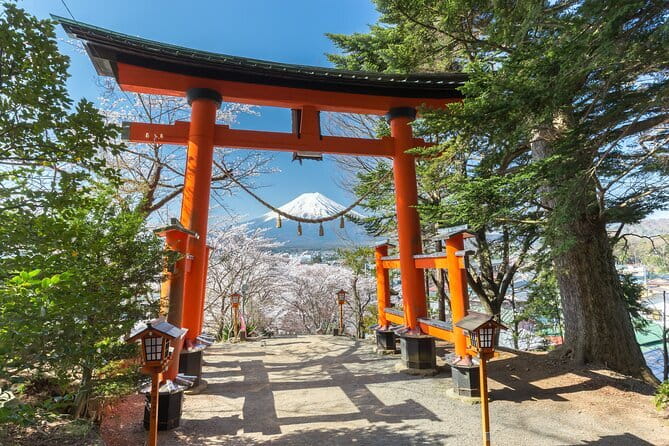
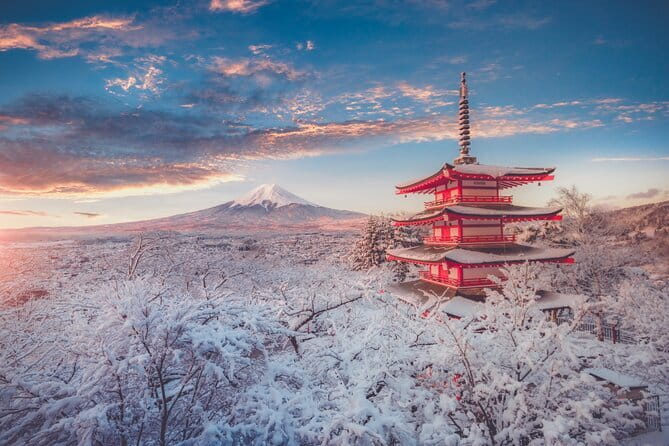
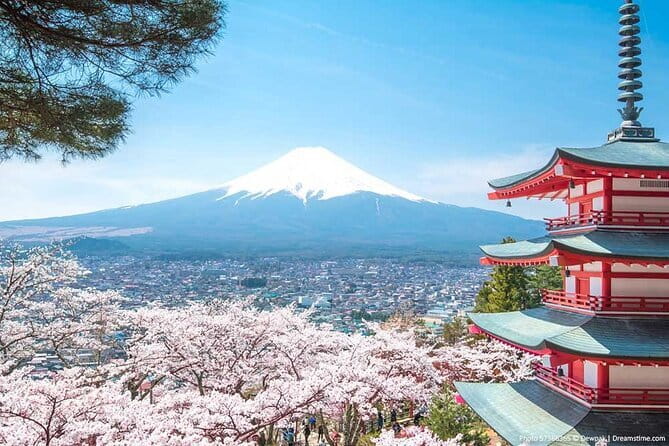
The Arakura Fuji Sengen Shrine is home to the Chureito Pagoda, one of the most recognizable viewpoints associated with Mount Fuji. The five-story pagoda sits on a mountainside, with Fuji rising behind it when conditions cooperate.
The pagoda was built in 1963 as a peace memorial. Its famous composition brings together Japanese architecture, mountain scenery, and seasonal color. It is the kind of image many people have in mind when they first picture a Fuji visit.
You have about an hour here, and there is no admission fee. Allow for the uphill approach and the stairs, especially if you want the classic viewpoint rather than only the shrine grounds. The tour data says most people can participate, but it does not promise step-free access, so anyone with mobility concerns should ask about the route before booking.
This is likely to be one of the most photo-focused parts of the day. John is specifically praised for helping with photos, which matters here because the best composition may take a little patience and positioning. Fuji visibility can change quickly, so do not treat one perfect view as guaranteed.
Saiko Iyashi no Sato Nenba, a traditional village by Lake Saiko

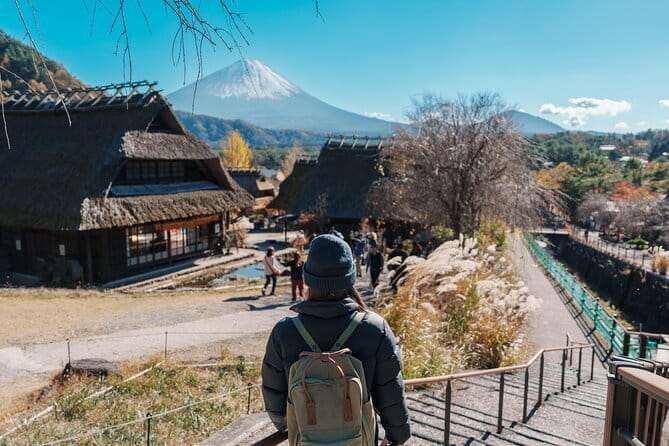
Saiko Iyashi no Sato Nenba is a reconstructed traditional village beside Lake Saiko. Its buildings and setting offer a change of pace from lookout points. You can focus on older Japanese village design while keeping the possibility of a Mount Fuji view in the background.
The village has a seasonal character. Spring brings cherry blossoms, while other times of year offer different colors and conditions. Admission is not included, so plan for an additional cost if this stop remains in your route.
I like this choice for anyone who wants more than a photograph of Fuji. It gives the day a cultural side, with architecture and village atmosphere rather than a succession of scenic overlooks. The possible drawback is time. If you are determined to visit all eight listed stops, this paid visit may receive less attention than it deserves.
A few more Tokyo trips to weigh up
- Tokyo Private Sightseeing Tour by Car- English speaking chauffeur
★ 5.0 · 1,004 reviews - Tokyo Private Tour by Vehicle with English-Speaking Chauffeur
★ 5.0 · 504 reviews - Mt FUJI Day Tour with Private Car and English Speaking Guide
★ 5.0 · 433 reviews - Private Car Tour to Mt. Fuji Lake Kawaguchiko or Hakone
★ 5.0 · 360 reviews
Narusawa Ice Cave beneath the forest
Narusawa Ice Cave was formed by a Mount Fuji eruption more than a thousand years ago. It lies near Lake Saiko within Aokigahara Forest, and its interior remains icy cold even during summer.
This is one of the more unusual stops on the route. Instead of looking at Fuji from outside, you are seeing the underground effects of its volcanic activity. The cave is a good pick if you enjoy natural features and want a break from temples and viewpoints.
Admission is not included. The information provided describes the cave as cold year-round, but it does not give specific details about stairs, passage width, or access conditions. Ask the operator if anyone in your group has mobility concerns or dislikes enclosed spaces.
I would not add the ice cave simply to say you checked another box. Choose it because the volcanic setting interests you. On a short day, it competes directly with the traditional village and the lake viewpoints for your time.
Kitaguchi Hongu Fuji Sengen Jinja and the spiritual side of Fuji
Kitaguchi Hongu Fuji Sengen Jinja is a Shinto shrine in Fujiyoshida that has served as a spiritual gateway to Mount Fuji for more than 1,000 years. It is dedicated to Konohanasakuya, a deity connected with Mount Fuji.
This stop shifts the focus from scenery to worship and tradition. Shrines such as this help explain why Mount Fuji has long mattered as more than a mountain to admire. You can take a quieter pause here, notice the shrine architecture, and consider the religious role of the mountain.
Admission is free, and about an hour is suggested. I would keep this stop if you want a more balanced day. Without a shrine or temple, a Fuji trip can become a simple string of photo stops. With it, you get more cultural context.
Shiraito Falls, a graceful natural finish
Shiraito Falls is near Fujinomiya in Shizuoka Prefecture. Water spills in broad, delicate streams over the rock face, creating one of the area’s most appealing natural sights. The falls are recognized as one of Japan’s most beautiful.
The stop is free and planned for about an hour. It gives you a different kind of scenery from the wide lake views: close water, rock, sound, and forest surroundings. If Mount Fuji is hidden by cloud, Shiraito Falls still works as a destination in its own right.
Its location is also a practical reminder that the tour covers a broad area. The more distant stops you choose, the more time you spend in the car. Ask your chauffeur to explain the expected driving time before committing to both Shiraito Falls and the northern Fuji Five Lakes sights.
Oishi Park and the northern view across Lake Kawaguchiko

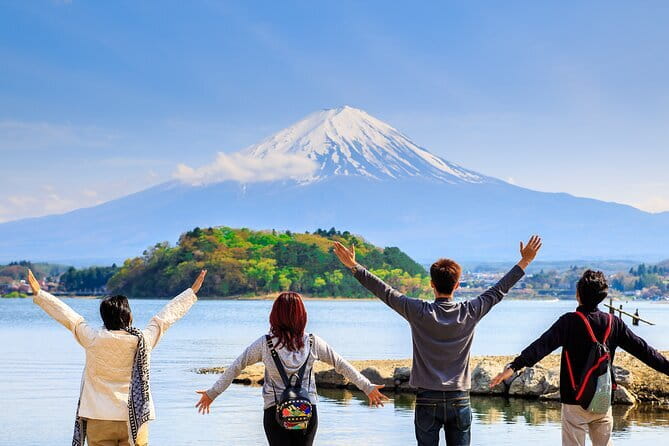
Oishi Park sits on the northern shore of Lake Kawaguchiko and is known for gardens and views toward Mount Fuji. It is one of the most straightforward places to appreciate the relationship between the lake and the mountain.
This is a strong choice for photographs because the open setting lets you frame Fuji with the water and planted areas. Seasonal gardens add interest even when the mountain is not visible. Admission is free, and the suggested visit lasts about an hour.
I would put Oishi Park high on the list for a first Fuji day. It is easy to understand, scenic, and not dependent on a cave visit or a long cultural explanation. The only caution is that popular viewpoints can feel less peaceful than the smaller shrine stops, particularly if several groups arrive at once.
Lake Yamanaka, the closest lake view
Lake Yamanaka is the largest of the Fuji Five Lakes and sits at a high elevation. It is also the closest of the five lakes to Mount Fuji, giving it some of the strongest mountain views when the air is clear.
A one-hour stop lets you enjoy the lake without turning the visit into a full waterside excursion. The open view can be especially rewarding after the tighter spaces of the ice cave or the shaded shrine grounds.
Lake Yamanaka and Lake Kawaguchiko offer different moods. Kawaguchiko has the garden setting of Oishi Park, while Yamanaka gives you a broader lakefront perspective and a closer position relative to Fuji. If you have limited time, ask your chauffeur which lake best fits the weather and your preferred photographs.
Can you really visit all eight stops?
The route presents eight possible stops, each with about an hour attached. That would already require eight hours on site, before the drive from Tokyo, the return journey, meals, traffic, and parking. Since the full experience lasts about eight to ten hours, you should not assume that every stop is included in a single day.
The tour is described as customizable, which is good news. Treat the stops as a menu rather than a promise to complete everything. A practical plan might include:
- Two or three major viewpoints, such as Chureito Pagoda, Oishi Park, and Lake Yamanaka.
- One cultural stop, such as Kitaguchi Hongu Fuji Sengen Jinja or Saiko Iyashi no Sato Nenba.
- One nature stop, such as Oshino Hakkai, Narusawa Ice Cave, or Shiraito Falls.
Your ideal mix depends on the group. For a first visit, I would favor Chureito Pagoda, Oshino Hakkai, Oishi Park, and one shrine. For a group that already knows Tokyo and wants unusual scenery, I would trade one viewpoint for Narusawa Ice Cave or Shiraito Falls.
Weather, photos, and the risk of a cloudy Fuji
Mount Fuji is the star, but it does not always appear on schedule. The tour requires good weather, and if poor conditions cause cancellation, you are offered another date or a full refund.
That policy is useful, but it does not mean a clear mountain view is guaranteed on a day when the tour operates. Cloud can cover Fuji while the lakes, shrines, ponds, and falls remain perfectly worthwhile. I would choose a flexible itinerary that still works if the mountain disappears.
John’s help with photos is a useful extra, especially at Chureito Pagoda and the lake viewpoints. The strongest photo opportunities come from several stops, so you are not relying on one lookout alone. Still, if your only goal is a clear, full view of Fuji, check the forecast and keep your schedule flexible.
Who gets the best value from this tour?
I would recommend this tour most strongly to a small group that wants comfort and control. Four people sharing the listed group price receive much better value than one person paying alone. Families also benefit because a private car makes it easier to adjust the pace.
It suits you if:
- You want private transport between Tokyo and the Fuji area.
- You prefer an English-speaking chauffeur to a large group tour.
- You want to combine scenery, shrines, and cultural sites.
- You care about getting help with group photographs.
- You want to adjust the route rather than follow one fixed sequence.
It is less suitable if you want a slow, specialized visit to one lake or shrine. It is also not the best fit if your budget is very tight, since public transport can cost less even if it takes more planning.
The 100 percent recommendation rate and five-star average across 29 ratings point to a strong service record, especially around the chauffeur experience. The most repeated praise goes to John’s friendliness, integrity, flexibility, local explanations, and ability to make the day feel personal. Those qualities matter more here than a scripted speech because the route involves choices and changing weather.
Free cancellation is available up to 24 hours before the 8:00 am start for a full refund. Changes or cancellations inside that window are not accepted for a refund. Confirmation is provided at booking, and the experience is near public transportation, though the main appeal is the included pickup and private vehicle.
Should you book the Mount Fuji private tour?
Book it if you want to see several sides of Mount Fuji in one day and can share the cost with a small group. The combination of private transport, English-language help, flexible stops, and photo assistance gives you more control than a standard sightseeing bus.
Before paying, decide which three or four places matter most. Do not expect to give all eight stops a full hour within an 8 to 10-hour day. Confirm the vehicle and price if you have five or six people, ask about access at the pagoda and ice cave, and keep an open mind about the weather.
For four people who want a comfortable day outside Tokyo, this is a sensible and personal way to approach Mount Fuji. For solo visitors or anyone satisfied with one fixed viewpoint, the price is harder to justify.
FAQ
What is the start time for the Mount Fuji private tour?
The stated start time is 8:00 am.
How long does the experience last?
The tour lasts approximately eight to ten hours.
How many people can join the private tour?
The listed price of $428.28 covers a group of up to four people. Multiple car sizes are available for groups of up to six, so larger groups should confirm the exact vehicle and price.
Are admission fees included?
Some stops are free, including Oshino Hakkai, Arakura Fuji Sengen Shrine, Kitaguchi Hongu Fuji Sengen Jinja Shrine, Shiraito Falls, Oishi Park, and Lake Yamanaka. Admission to Saiko Iyashi no Sato Nenba and Narusawa Ice Cave is not included.
Is hotel pickup available?
Pickup is offered, and the tour provides transfers between Tokyo and the Mount Fuji area.
What happens if bad weather cancels the tour?
If the experience is canceled because of poor weather, you are offered a different date or a full refund. You can also cancel up to 24 hours before the start time for a full refund.
Just added around Tokyo
- Private Memorable Tokyo Tour with English Speaking Driver★ 5.0 · 30 reviews
- Private Tokyo Custom Full-Day Tour by Chartered Vehicle★ 5.0 · 16 reviews
- Private Sightseeing to Mt Fuji and Hakone with English Driver★ 5.0 · 51 reviews
- Tokyo Photography Masterclass – Private Photography Lesson★ 5.0 · 25 reviews
- Private Mt. Fuji Day Trip from Tokyo with English-Speaking Driver★ 5.0 · 33 reviews
- 4 Day Tour – Mount. Fuji, Tokyo, Hakone, Kamakura and Yokohama★ 5.0 · 19 reviews
- Private Unforgettable Mt Fuji Tour with English Speaking Driver★ 5.0 · 142 reviews
- Private Tokyo Food Tour – A Journey Through Time Through Food★ 5.0 · 36 reviews
Mount Fuji Day Trips, compared.
Mt Fuji and Hakone 1-Day Bus Tour Return by Bullet Train
Read our review →
Mt Fuji & Hakone Cruise, Drum Show Bullet Train 1 Day from Tokyo
Read our review →
Tokyo Mt Fuji 5th St & Hakone Cruise Bus Tour w/Bullet Train
Read our review →
Mt. Fuji Tour, Hakone Ropeway, Owakudani, Lake Ashi
Read our review →
Mt Fuji Top 5 Spots Day Tour: Arakurayama Park,Oshino Hakkai
Read our review →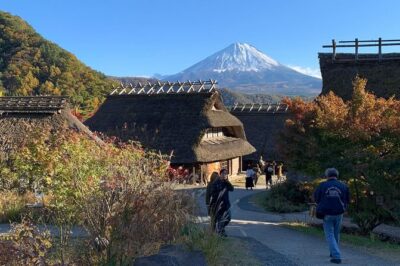
Private Tour to Mt. Fuji and Hakone (Fully Licenced Operator)
Read our review →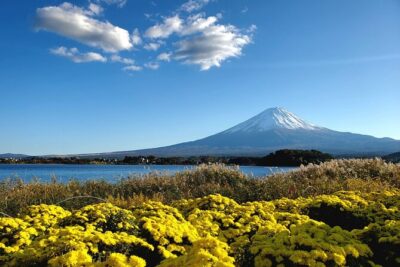
Mount Fuji Full-Day Private Tour from Tokyo (Customizable)
Read our review →Browse the lists this tour appears in