
REVIEW · MOUNT FUJI DAY TRIPS
From Tokyo: Mt Fuji, Arakurayama and Kawaguchi Lake Day Trip
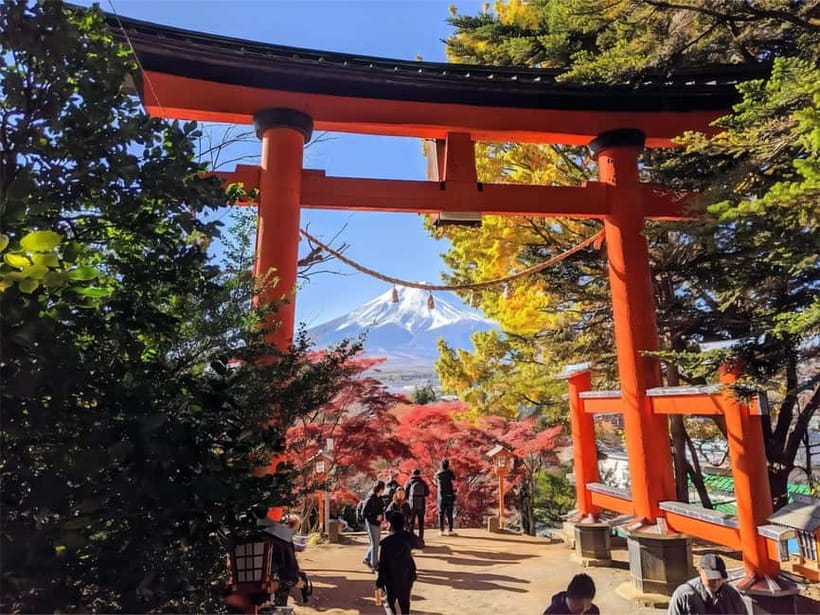
Mt Fuji is the star, but this day trip gives you several different ways to meet the mountain. You climb to Chureito Pagoda, walk beside the springs of Oshino Hakkai, and finish around Lake Kawaguchi, where Fuji can appear behind flowers, autumn leaves, or the famous LAWSON sign. Guide Hikari is especially good at keeping the bus lively and the meeting times clear.
I like the excellent value at $55, since round-trip transport from Tokyo would otherwise take planning and can cost more once local connections add up. I also like the range of stops: this is not just one lookout, but a full day of villages, shrines, small shops, and classic Fuji photo points. The catch is traffic and crowds, plus a fairly brisk schedule. On a cloudy day, Fuji may hide, and the 397 stairs are no small task.
In This Review
- Five things to know before you book
- Why this Fuji tour works from Tokyo
- The climb to Arakurayama and Chureito Pagoda
- Fujiyoshida’s Hikawa Clock Shop street
- Oshino Hakkai and the spring-fed village
- The LAWSON Lake Kawaguchi photo stop
- Lake Kawaguchi, Oishi Park, and the autumn alternative
- How the guide shapes the day
- Price, group size, and what you receive
- Weather, crowds, and the Fuji gamble
- Who should book this day trip?
- Should you book it?
- FAQ
- Where does the tour meet in Tokyo?
- How long does the tour last?
- What languages are available?
- Is the tour suitable for children?
- Is the tour suitable for elderly visitors?
- What happens if Mt Fuji is covered by clouds?
- Are meals included?
- Can I bring food and drinks on the bus?
- Which park is visited during autumn foliage season?
- When will I return to Tokyo?
Five things to know before you book
- Chureito Pagoda requires 397 steps: The view is superb, but take your time and wear shoes with a good grip.
- Hikari is a frequently praised guide: He is known for clear instructions, humor, photo help, and useful stories in English and Chinese.
- Oshino Hakkai is more than a photo stop: You can taste spring water, buy local treats, and browse small gift shops.
- The final stop changes with the season: Oishi Park is used most of the year, while Maple Corridor replaces it from about October 30 to November 20.
- Traffic can reshape the day: The normal return is around 6:00 to 6:30 PM, but busy periods can push arrival in Tokyo as late as 8:00 PM.
- This is a sightseeing circuit, not a mountain hike: You see Fuji from several viewpoints, but you do not climb the mountain.
Why this Fuji tour works from Tokyo
Mt Fuji is close enough to visit from Tokyo, but not always easy to reach in one clean trip. You can take trains and buses on your own, yet the connections require attention, and popular viewing areas are spread across the Fuji Five Lakes region.
This tour handles the long transfer by air-conditioned bus. The drive to the Fuji area takes about 105 minutes, and the return ride takes about the same time before traffic is added. That leaves you free to watch the scenery, listen to the guide, or rest instead of changing transport.
The meeting point is Tokyo Station’s Marunouchi North Exit, near the taxi stand. It is a sensible place to start because the station is served by many train lines, but Tokyo Station is large, so give yourself extra time to find the correct exit. The operator sends the guide’s phone number, more meeting instructions, and the bus license plate the evening before, usually around 7:00 or 8:00 PM.
The tour runs for about 10 hours. You may finish the sightseeing portion around 4:30 PM and reach Tokyo around 6:00 to 6:30 PM. Another timing estimate aims for Tokyo Station around 5:00 to 5:30 PM, but the practical point is simple: do not schedule an important evening activity. Traffic around Fuji and Tokyo can be severe during holidays and peak foliage periods.
More mount fuji day trips in Japan:
- Mt Fuji and Hakone 1-Day Bus Tour Return by Bullet Train
★ 5.0 · 26,383 reviews - Mt Fuji & Hakone Cruise, Drum Show Bullet Train 1 Day from Tokyo
★ 4.0 · 7,413 reviews - Tokyo Mt Fuji 5th St & Hakone Cruise Bus Tour w/Bullet Train
★ 4.4 · 5,024 reviews
The climb to Arakurayama and Chureito Pagoda
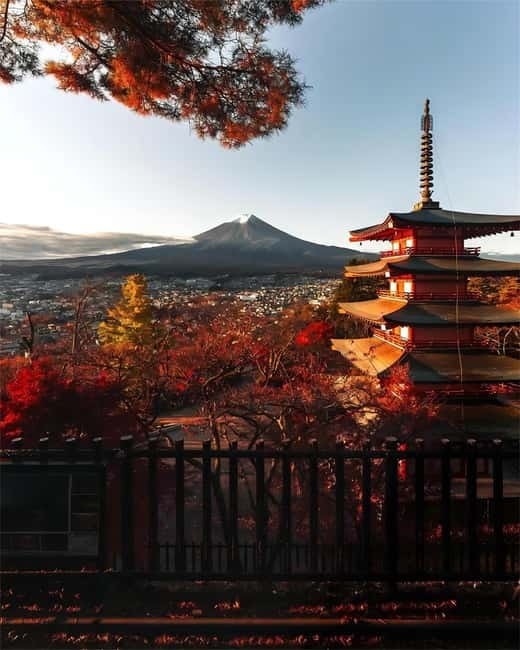
Arakurayama Sengen Park is the emotional high point of the day for many people. The famous view combines Mt Fuji, red pagoda roofs, and the city below, creating one of Japan’s most recognizable scenes.
Reaching the viewpoint means climbing 397 steps to Chureito Pagoda. You do not need to race. The tour allows about an hour at Arakurayama Sengen Park and another 45 minutes around the pagoda, but crowds can make the photo area slow. In spring, cherry blossoms frame the view. Summer brings green hills, autumn adds red and gold leaves, and winter can give you snow around the pagoda and Fuji.
The setting is beautiful, but this is also the most physically demanding stop. The site may be difficult for some older visitors, and the experience is not recommended for people over 75. Families can manage it, but children and anyone with limited mobility should take regular breaks. Comfortable shoes and weather-appropriate clothing are essential.
The guide can help you understand where to stand for photos and how to keep the group moving. Hikari is often singled out for taking good pictures and explaining the stops without making the ride feel like a lecture. That personal help matters here, since the best viewpoint can be crowded and the available time is limited.
Fujiyoshida’s Hikawa Clock Shop street
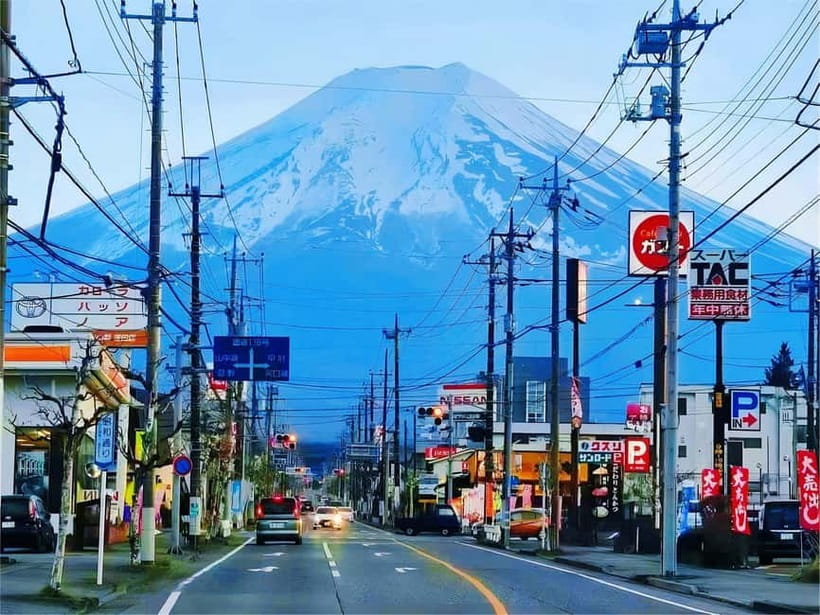
After the pagoda, the tour pauses in Fujiyoshida near Hikawa Clock Shop. The appeal is visual and very specific: the street is aligned so Mt Fuji appears at the end of the road, creating a framed view that looks almost arranged for a camera.
You get about 20 minutes here. That is enough for photographs and a short walk, but not a long neighborhood visit. The stop works best as a quick change of mood after the uphill pagoda visit. Instead of looking at Fuji from a distant park, you see how the mountain shapes an ordinary town street.
Keep in mind that views depend on the weather and sight lines. If clouds cover Fuji, the street remains pleasant, but the main reason for stopping is reduced. The guide’s timing also matters. Several people praised guides for reaching photo spots before the biggest crowds, so stay close and follow the departure time.
Oshino Hakkai and the spring-fed village
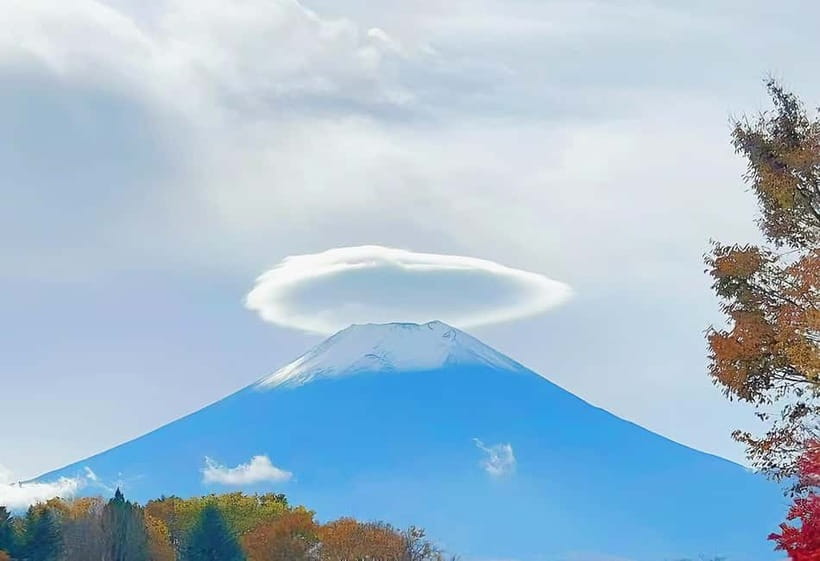
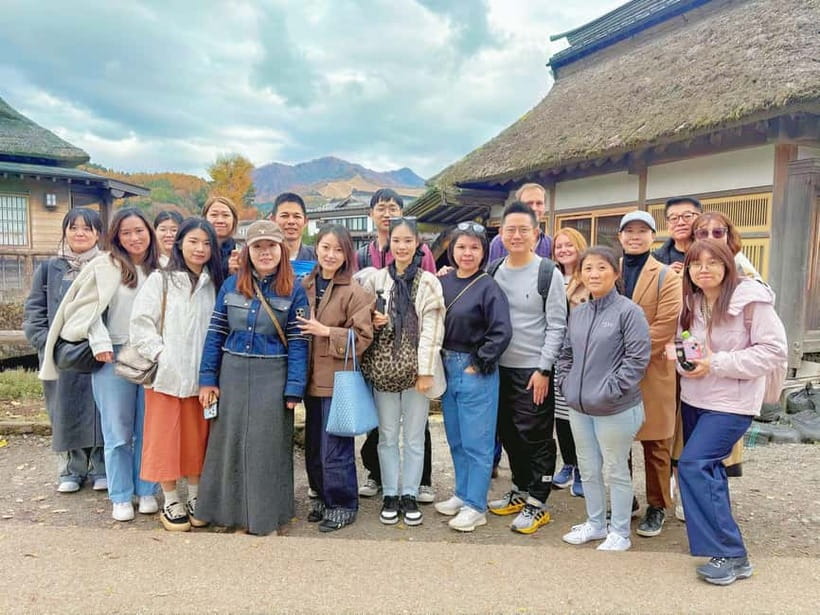
Oshino Hakkai gives the tour its strongest local flavor. The village is known for eight springs formed by snowmelt from Mt Fuji. Clear water, small channels, traditional-looking buildings, food stalls, and souvenir shops create a slower stop than the pagoda.
You have about 80 minutes here, the longest stop on the route. You can see the springs, taste the sweet spring water, browse local gifts, and sample regional snacks. Tofu with pickled miso and kusamochi are two specialties to look for. Kusamochi is a green rice cake filled with sweet red bean paste.
Bring some cash. Several food stalls have limited card payment, and lunch is not included. You may bring your own food, but food and drinks are not allowed inside the vehicle. The tour does not provide meals, so plan to buy something at Oshino Hakkai or carry lunch for the walking portions.
This is also the stop where you can slow down and look beyond the standard Fuji photograph. The springs connect the village to the mountain in a direct, practical way. You are seeing water that began as snow on Fuji, then moved through the ground before appearing here. The guide can add local stories and explain customs, but you also have time to explore independently.
Crowds are a real consideration. Oshino Hakkai is popular, and the narrow areas around the springs can feel tight at busy times. Still, the combination of water, food, and village streets makes it a worthwhile break from the day’s lookout points.
A few more Japan trips to weigh up
- 1-Day Tokyo Bus Tour
★ 5.0 · 14,250 reviews - PERFECT KYOTO 1-Day Bus Tour
★ 5.0 · 13,518 reviews - Peaceful Hiroshima & Miyajima UNESCO 1 Day Bus Tour
★ 5.0 · 5,309 reviews - Kyoto: Fushimi Inari, Kinkakuji, Bamboo Grove 1 Day Bus Tour
★ 4.8 · 4,316 reviews
The LAWSON Lake Kawaguchi photo stop
The LAWSON stop is short, modern, and intentionally made for photographs. From the right angle, the familiar convenience-store sign sits in front of Mt Fuji. It is a curious meeting of ordinary Japanese daily life and one of the country’s grandest sights.
You get about 20 minutes. That is enough to take pictures and buy ice cream, a hot snack, or a drink. Do not expect a long café break. This is a quick stop, and the store may be crowded with other people trying to capture the same composition.
I find the contrast part of the fun. Fuji viewing does not always need to happen at a temple or flower garden. Sometimes the mountain appears behind a convenience store, a reminder that local life continues beneath the postcard view.
Lake Kawaguchi, Oishi Park, and the autumn alternative
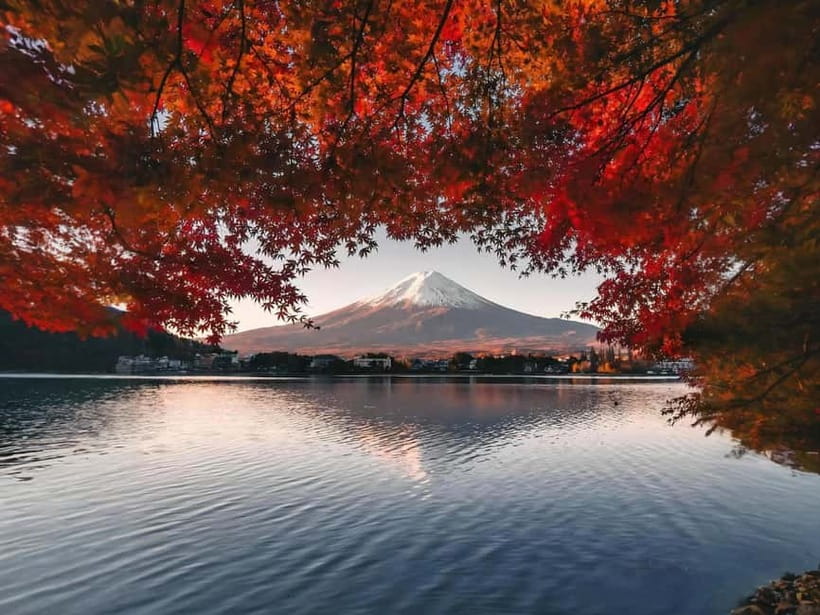
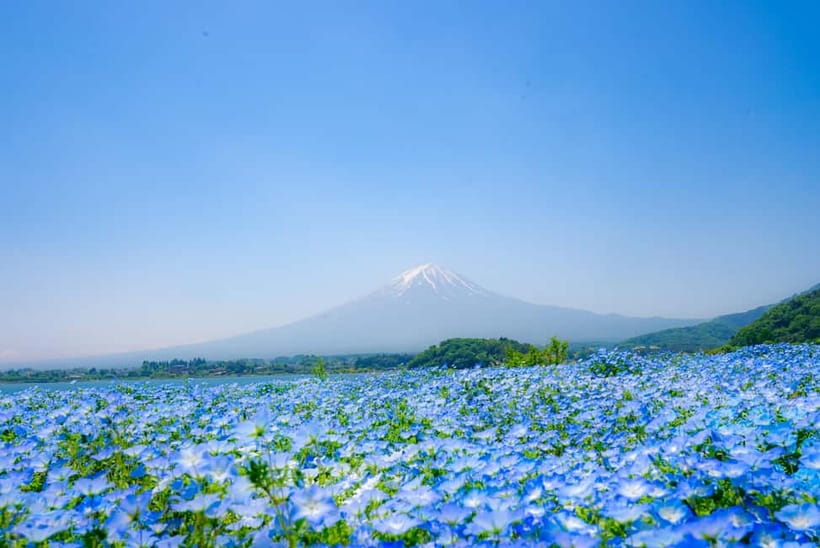
The final major stop is Lake Kawaguchi, one of the best-known Fuji viewing areas. You have about 50 minutes, enough for a walk, photos, and a close look at the changing seasonal displays.
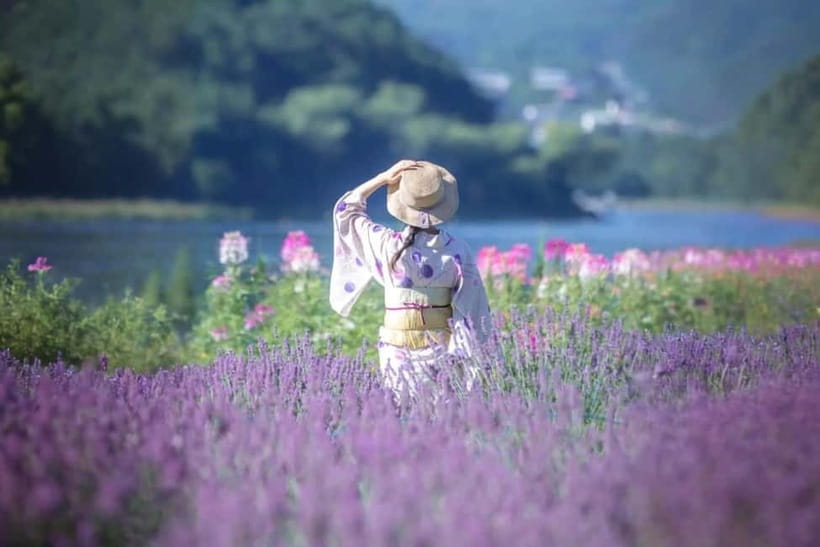
For most of the year, the tour visits Oishi Park. The park is known for flower fields that may include lavender, begonia, cosmos, and Japanese blood grass. The color and planting change through the year, so the same stop can feel different in spring, summer, or early autumn. Fuji may appear beyond the flowers, but the park remains pleasant even when clouds cover the peak.
From approximately October 30 to November 20, the route changes to Maple Corridor. The corridor offers a tunnel of autumn leaves with views toward Mt Fuji. This seasonal swap makes sense: the maple trees are the main attraction during that short foliage window, while Oishi Park offers more interest during the rest of the year.
The schedule gives you enough time to enjoy the area, but not enough for a full lakeside outing. You will not have time for every park path or a long meal. Think of it as a final scenic pause before the return bus.
How the guide shapes the day
A day with several stops can easily become a string of hurried arrivals and confusing departure times. The guide makes a big difference. Hikari receives the strongest praise in the supplied feedback, with frequent comments about his humor, warm manner, useful facts, and clear instructions.
His role is practical as much as entertaining. He gives exact times for returning to the bus, points out photo locations, helps with pictures, and can adjust the order of stops to avoid some traffic. He has also explained information in both English and Chinese on some departures. English, Chinese, and Japanese guides are available, but an English guide should be requested at least 72 hours ahead, especially in high season.
Other guides, including Nick, Louis, Echo, and Carter Sasaki, have also led departures. Guide assignments can vary, so do not assume Hikari will be available unless the provider confirms it. Still, the repeated praise for clear communication and friendly energy suggests that guiding is a major strength of this experience.
Stay with your group. If you miss the bus, it can leave without you, and you may need to pay for a taxi to catch up at the next stop. That is not a minor inconvenience in the Fuji area, where distances are long and public transport may not line up with the tour.
Price, group size, and what you receive
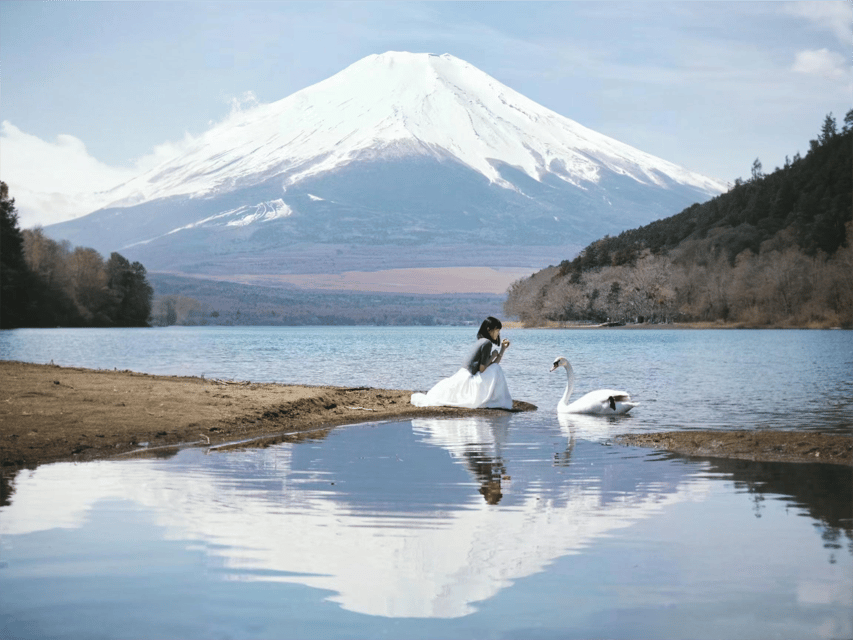
At $55 per person, this is a strong transport deal. The price includes the round-trip air-conditioned bus and a guide, which removes the work of arranging transport between Arakurayama, Oshino Hakkai, and Lake Kawaguchi.
Food, drinks, and admission tickets are not included. Most of the named stops function as outdoor viewing areas, but you should still budget for snacks, lunch, and any optional paid entry you choose. Bring cash for Oshino Hakkai, where some stalls do not accept cards.
The standard tour may be a shared small-group departure. A private option is also available, but it is not simply the same $55 experience with fewer people. The private-car price is a base cost for 10 hours, while extra requests and additions are discussed after purchase. For a family or group, the extra cost may be worthwhile because you can agree on timing and spend longer at a favorite stop.
The shared format suits solo visitors and couples who want simple transport and a chance to meet other people. It costs less, but you must accept the group timetable. The private option is better for families with young children, photographers, or anyone who values flexible stops.
Weather, crowds, and the Fuji gamble
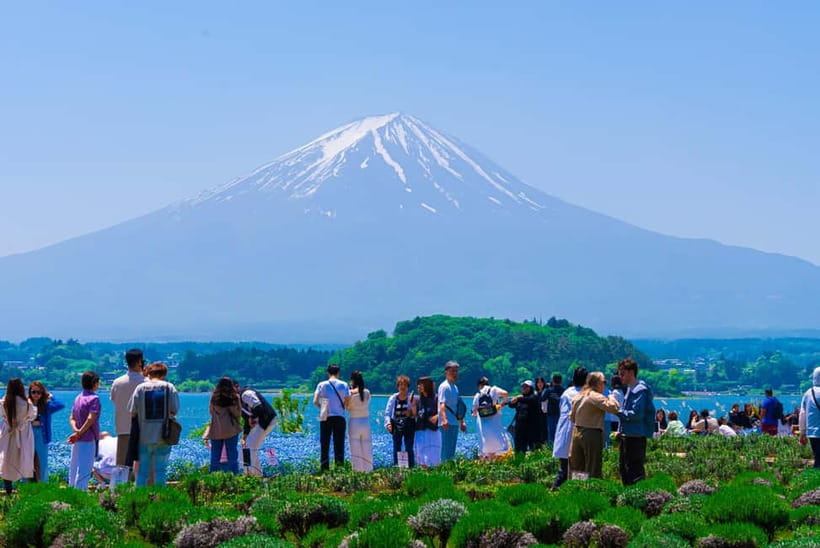
No day trip can promise a clear view of Mt Fuji. Clouds and fog can cover the mountain, sometimes only part of the day. One useful feature of this route is its variety: Oshino Hakkai, the town street, the pagoda, the lake, and the parks remain worthwhile even when Fuji disappears.
That said, the tour’s main purpose is to see the mountain, so weather risk should shape your expectations. Winter often offers crisp air and snow views, while spring brings cherry blossoms. Autumn foliage can be beautiful but brings heavier demand and slower roads. Summer may offer flowers and greenery, but cloud cover can still interfere.
Crowds affect the experience at Chureito Pagoda, LAWSON, Oshino Hakkai, and Lake Kawaguchi. The schedule can shift by 15 to 45 minutes during busy periods so the guide can avoid the worst congestion. The stops remain included, but the time at each one may change.
Who should book this day trip?
I would choose this tour if you want to see the main Fuji photo locations without renting a car or sorting out several regional buses. It is especially useful for a first visit to Japan, a short Tokyo stay, solo visitors, and families who prefer a fixed plan.
It suits people who enjoy photographs, short walks, local snacks, and scenic viewpoints. It is less suitable if you want a quiet, slow day at one lake, a serious hike, or a long meal in each village.
Older visitors and anyone with mobility concerns should think carefully about the 397-step climb. The tour is family-friendly, and children under three can join free without occupying a seat, but the operator must be told in advance. Large luggage is not suitable because bus storage is limited.
Book with a flexible evening. During holiday periods, including September 28 to October 7, roads around Tokyo and Fuji can be very slow. You may return around 6:00 PM on a smooth day, but an arrival near 8:00 PM is possible during the busiest periods.
Should you book it?
Book this tour if your goal is maximum Fuji scenery for a low price, with transport and a guide taking care of the complicated parts. The route has a good mix of iconic photographs, village food, seasonal color, and lake views.
Skip it if you dislike group schedules, crowds, or long bus rides. Also skip it if the pagoda stairs would make the day uncomfortable. For most visitors, though, the combination of Arakurayama, Oshino Hakkai, and Lake Kawaguchi offers a practical first look at Mt Fuji, and a lively guide such as Hikari can turn a tight schedule into a genuinely enjoyable day.
FAQ
Where does the tour meet in Tokyo?
Meet at Tokyo Station Marunouchi North Exit, at 1-chōme-9-1 Marunouchi, Chiyoda City, near the taxi stand. The provider sends additional meeting details and the vehicle license plate the evening before.
How long does the tour last?
The activity lasts about 10 hours. The drive to the Fuji area takes about 105 minutes, with a similar return drive before traffic delays.
What languages are available?
Guides may speak English, Chinese, or Japanese. Request an English-speaking guide at least 72 hours ahead, especially during peak periods.
Is the tour suitable for children?
Yes, it is family-friendly. Children under three can join free without occupying a seat, but you should inform the provider in advance for children aged two or younger.
Is the tour suitable for elderly visitors?
The tour may be difficult for some elderly visitors because Chureito Pagoda requires a 397-step climb. It is not suitable for people over 75.
What happens if Mt Fuji is covered by clouds?
The mountain may not be visible because of weather. You still visit Oshino Hakkai, Arakurayama Sengen Park, Lake Kawaguchi, and other scenic locations, which offer things to see even in poor visibility.
Are meals included?
No. Meals, snacks, and drinks are not included. You can buy local foods at Oshino Hakkai or bring your own lunch for the walking portions.
Can I bring food and drinks on the bus?
Food and drinks are not allowed in the vehicle. Large bags and luggage are also discouraged because storage space is limited.
Which park is visited during autumn foliage season?
From approximately October 30 to November 20, the tour visits Maple Corridor instead of Oishi Park. At other times, the route generally finishes at Oishi Park.
When will I return to Tokyo?
The tour aims to return around 5:00 to 5:30 PM in one timing estimate, while the usual plan places arrival around 6:00 to 6:30 PM. Traffic and weather can delay the return, and during peak periods you may arrive as late as 8:00 PM.
Just added around Japan
- Tokyo: Customizable Private Guided Walking Tour★ 4.5 · 129 reviews
- Private Harajuku Omotesando Architecture Tour★ 4.9 · 18 reviews
- Tokyo: Guided Helicopter Ride★ 4.9 · 24 reviews
- Tokyo: Guided Walking Tour of Tsukiji Market with Lunch★ 4.4 · 24 reviews
- Tokyo: Private Personalized Local Food Tour★ 4.5 · 101 reviews
- Tokyo GINZA: KONPARU Japanese Cabaret Show with Drink★ 4.8 · 38 reviews
- Tokyo: Guided Walking Tour of Tsukiji Market with Breakfast★ 4.4 · 134 reviews
- Tokyo: Gotokuji Cat Temple, Shinjuku Cat Cafe & 3D Cat Tour★ 4.9 · 38 reviews
Mount Fuji Day Trips, compared.
Mt Fuji and Hakone 1-Day Bus Tour Return by Bullet Train
Read our review →
Mt Fuji & Hakone Cruise, Drum Show Bullet Train 1 Day from Tokyo
Read our review →
Tokyo Mt Fuji 5th St & Hakone Cruise Bus Tour w/Bullet Train
Read our review →
Mt. Fuji Tour, Hakone Ropeway, Owakudani, Lake Ashi
Read our review →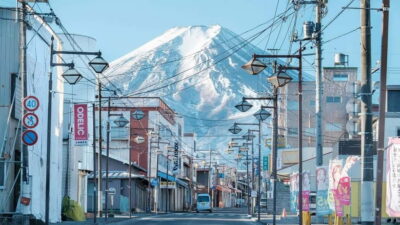
Mt Fuji Top 5 Spots Day Tour: Arakurayama Park,Oshino Hakkai
Read our review →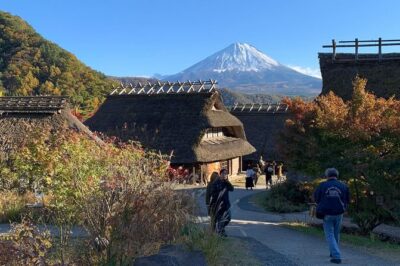
Private Tour to Mt. Fuji and Hakone (Fully Licenced Operator)
Read our review →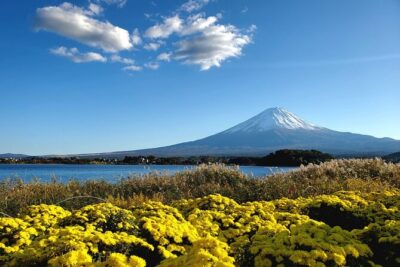
Mount Fuji Full-Day Private Tour from Tokyo (Customizable)
Read our review →Browse the lists this tour appears in