
REVIEW · SHIRAKAWA-GO VILLAGE TOURS
From Kanazawa: Shirakawa-go, Gokayama and Wood Carving Village
The best part of this day is the mix: thatched mountain villages, a working wood-carving town, and a hands-on paper craft. You get more than a quick photo stop at Shirakawa-go, and the smaller Ainokura visit gives you a quieter look at old rural Japan.
I like the relaxed temple stop in Inami and the washi workshop, where you make three postcard-sized pieces to take home. I also like that the guide handles the long rural drive and adds context along the way. The main drawback is the pace: nine hours is a full day, Shirakawa-go can be crowded, and a small minibus may feel tight.
In This Review
- Key points to know before booking
- Why this Kanazawa day trip works
- Inami, where wood carving shapes the town
- Ainokura Village and the old gassho-zukuri roofs
- Making three postcards from Japanese washi
- Shirakawa-go, the famous final village
- What the guide adds to a long day
- Transport, timing, and comfort
- Who will get the most from this tour
- Is $202.17 good value?
- My recommendation
- FAQ
- Where does the tour begin?
- Where does the tour end?
- How long does the experience last?
- What departure time should I expect?
- Is transportation included?
- Is lunch included?
- What is included in the price?
- How many people can join the tour?
- Can I make my own souvenir?
- Is the paper-making activity available around New Year?
- Can I cancel for a full refund?
Key points to know before booking
- Four very different stops: See Inami wood carving, Zuisenji Temple, Ainokura Village, washi paper-making, and Shirakawa-go in one day.
- A quieter start: Inami and Ainokura usually feel less hectic than Shirakawa-go, giving you time to look closely and take photos.
- A real handmade souvenir: Make three small washi postcards after choosing paper inserts for your design.
- A full transport package: Round-trip transportation from Kanazawa, an English-speaking guide, and listed admission fees are included.
- Small-group limits: The tour accepts no more than 17 people, though the vehicle can still feel cramped when the group is large.
- Seasonal caution: From December 28 through January 5, Inami shops and Gokayama facilities may close, and the paper-making activity is unavailable.
Why this Kanazawa day trip works
Kanazawa is a rewarding city, but its historic streets and gardens can fill your schedule quickly. This tour gives you a completely different day, sending you into the mountains and rural communities of Toyama Prefecture.
At $202.17 per person, it is not a cheap outing. Still, the price covers transportation for roughly nine hours, an English-speaking guide, entry to Zuisenji Temple, a guided visit in Inami, admission and guidance at Shirakawa-go, and the paper-making activity. Add the time and effort required to connect these places independently, and the cost can make sense.
You pay for access to several places that do not fit neatly into a simple train route. You also avoid the headache of driving mountain roads or working out local connections. Lunch is not included, so keep part of your budget for a meal.
The schedule is active but not built around strenuous walking. One stop includes a climb to a viewpoint in Ainokura, and snow or rain can make that walk harder. A small group helps the day feel personal, but the maximum group size is 17, and the minibus may be snug.
More Shirakawa-go Village Tours in Kanazawa
Inami, where wood carving shapes the town
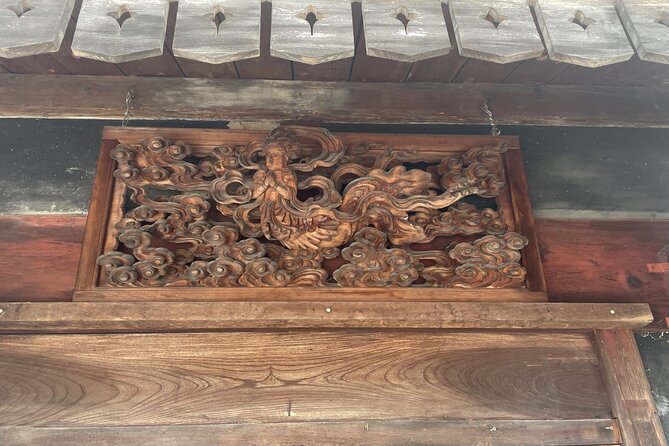
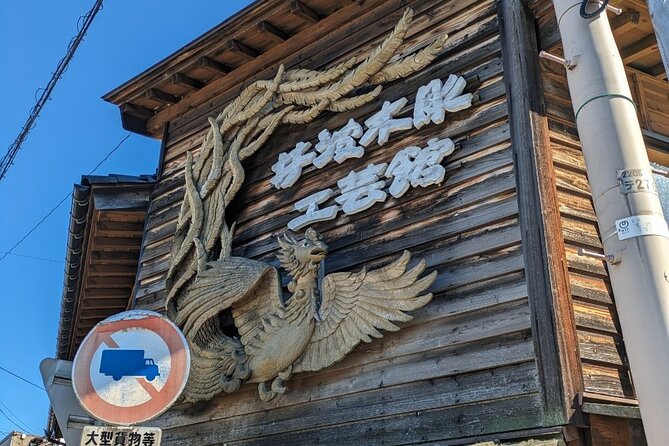
The first stop is Inami, a small town known for wood carving. Instead of seeing one isolated craft shop, you walk along the main street and find carved work woven into the town itself. The appeal is in the details: doors, signs, decorative pieces, and other creations show how the craft belongs to everyday local life.
This is a good first stop because it has a calmer rhythm than Shirakawa-go. You can look closely without feeling pushed through a large crowd. If you like traditional arts, Inami gives you a stronger sense of process and place than a standard souvenir shop.
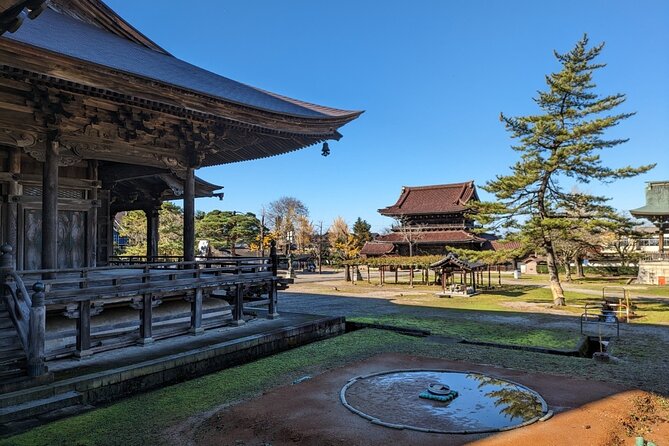
The walk continues to Zuisenji Temple, with admission included. The temple is one of the most praised parts of the day, especially for its quiet atmosphere and carved decoration. The woodwork here helps connect the town’s craft tradition with its religious buildings.
You get about two hours in Inami. That is enough time for the main street and temple, though not enough for a slow, independent exploration of every shop. Store hours may vary, and the town has a major closure issue around New Year. From December 28 through January 5, many Inami wood-carving stores are closed.
Ainokura Village and the old gassho-zukuri roofs
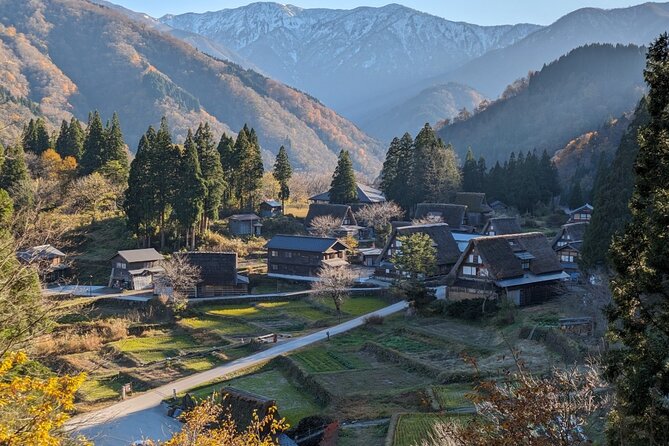
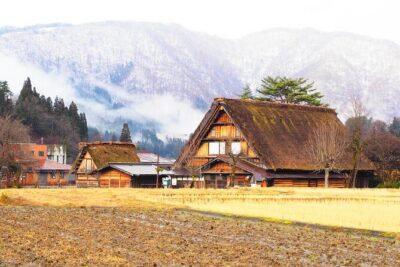
From Inami, the tour continues to Gokayama and Ainokura Village. This is the first major thatched-roof village, and you have about an hour to walk around, take photographs, and follow your guide to good viewpoints.
The village is known for its gassho-zukuri houses. Their steep thatched roofs were built to handle the heavy snow of the mountain region. The shape is instantly recognizable, but the setting gives it meaning: these homes were designed for a demanding climate and built as part of a working community.
Ainokura is smaller and less commercial than Shirakawa-go. That difference matters. You can spend time looking at the roof lines, paths, and surrounding hills without the same level of commercial activity you find later in the day.
One useful tip is to take the viewpoint walk if conditions allow. The climb is short enough for many people, but winter snow and wet weather can make it slippery or tiring. The view from above is one of the reasons to keep your camera ready, though the exact conditions depend on the day.
The one-hour stop is also the tour’s most obvious time limit. You will get a good introduction, but not a slow village visit. If you want to enter every house, browse at length, or sit for a long meal, this schedule will feel brief.
Making three postcards from Japanese washi
The paper-making stop lasts about 30 minutes and adds a welcome hands-on element. You choose paper inserts to place into your design, then make your own sheet with guidance at the workshop.
Afterward, the paper dries for about 10 to 15 minutes. The finished souvenir is a set of three postcard-sized pieces. It is simple, practical, and far more memorable than buying another mass-produced trinket.
I like this activity because it is not just a demonstration. You take part, make choices, and leave with something connected to the region. Families and teenagers are likely to enjoy the short format, and it gives everyone a break from walking and sightseeing.
Do not expect a long craft class. Thirty minutes goes quickly, and the result is a small souvenir rather than a large artwork. The paper-making experience is also unavailable during the December 28 to January 5 period because facilities may close for New Year.
Same city, a completely different kind of day:
- Kanazawa: Kenrokuen Tea Ceremony Experience
★ 4.8 · 1,139 reviews - Kanazawa Half Day Tour (Private Guide)
★ 5.0 · 361 reviews - Kanazawa Full Day Tour (Private Guide)
★ 5.0 · 323 reviews - World Heritage Shirakawa-go Perfect Guided Tour from Kanazawa
★ 5.0 · 220 reviews
Shirakawa-go, the famous final village
The final major stop is Shirakawa-go, the best-known village on the route. The tour begins at an observation point, then heads into the village for an explanation of its history and traditional homes.
The viewpoint is where the classic image comes together: steep thatched roofs, compact houses, and mountains around the settlement. Weather can change the mood completely. On a clear day, you may get the full postcard view. In rain, fog, or snow, the village can feel more atmospheric, but paths may be wet and visibility limited.
Inside the village, the guide explains how the homes were built and used. You also enter one traditional house, which makes the stop more useful than simply photographing rooftops from the outside. Seeing the interior helps you understand the scale and structure of gassho-zukuri living.
You have about two hours here. That gives you time for the viewpoint, the village walk, photographs, and some browsing. It does not give you unlimited freedom, so listen carefully to the meeting instructions. Rural roads and a fixed return time leave little room for getting lost.
Shirakawa-go is also the busiest part of the day. Large buses can arrive, and the village may feel surprisingly commercial for a place presented as a historic rural community. That does not erase its appeal, but you should arrive expecting a famous heritage site, not an untouched village.
The contrast with Ainokura is useful. Gokayama offers a smaller, quieter setting, while Shirakawa-go gives you the grander and more famous view. Seeing both in one day lets you compare them rather than treating either one as the whole story.
What the guide adds to a long day
The quality of the guide can shape this experience. Guides who have led the tour include Daniel, Garrett, Mike, Lee, Ellie, and Mohamed, though you cannot assume a particular person will be assigned to your date.
Daniel has been especially praised for clear instructions, comfort breaks, and making time for questions. Garrett has been valued for explaining the sites in a lively way and speaking slowly for international groups. Mike has helped with practical matters such as train tickets and has made the history and culture easier to follow.
That range matters because this is not a tour where every stop comes with a long formal presentation. Much of the day involves walking, looking, riding, and asking questions. A good guide turns the drive between places into useful context and helps you use short stops well.
The experience can vary. At least one assessment described the day as mainly transportation with limited explanation and noted that no water was supplied. The guide’s attitude also matters, so if you want a strong interpretive tour, it is sensible to confirm what language support and guiding style are available when booking.
Transport, timing, and comfort
The tour begins and ends at Kanazawa Station. That is convenient if you are staying in Kanazawa and want a simple meeting point near public transportation.
The total duration is about nine hours. Since the route covers several rural areas, a meaningful part of the day is spent in transit. That is the trade-off for seeing Inami, Gokayama, and Shirakawa-go without arranging several separate journeys.
Transportation is provided throughout. Some departures have used a small van for groups of around eight, while the stated maximum is 17 people. A smaller group can make the day feel almost private, but a full vehicle may feel cramped, especially on the longer stretches.
There are comfort breaks and food opportunities, but lunch is your responsibility. You may find a traditional floor-seated restaurant around Gokayama, so plan for a meal that may be more local and informal than a quick station lunch.
The tour is suitable for most people, but the mountain viewpoints and winter conditions deserve attention. Cold rain and snow have affected the experience for some departures. Wear shoes suited to wet paths, and bring layers if you are visiting outside summer.
From June 1, the advertised departure time is 8:30 a.m. Check your booking details for the exact time, especially if your visit falls outside that period.
Who will get the most from this tour
I would choose this day trip if you want rural Japan without renting a car. It suits first-time visitors who want to see the famous thatched villages but also care about traditional arts and local craft.
It is particularly good for:
- Families with older children or teenagers who will enjoy making paper
- First-time visitors to Kanazawa who want one day outside the city
- Anyone interested in temples, traditional homes, and handmade crafts
- Photographers who want both a famous viewpoint and a quieter village
- People who prefer a guided route over complicated regional transport
I would think twice if you dislike long vehicle days or need a slow pace. You move through four main stops, and each has a set time. Shirakawa-go can be busy, and the tour cannot guarantee the solitude suggested by some photographs.
It is also less suitable for a holiday-period visit if the wood-carving shops and washi workshop are important to you. Around New Year, Shirakawa-go is mostly open, but Inami and Gokayama may have closures.
Is $202.17 good value?
The price is best judged against what it replaces. You are not buying a single attraction ticket. You are paying for a full day of transportation from Kanazawa, an English-speaking guide, several guided visits, temple admission, the Shirakawa-go entry, and a craft activity.
The value improves if you want to see all three areas in one day. Independent travel may give you more control, but it requires planning and may not let you combine the stops as easily. The tour also protects you from spending your day studying bus schedules or navigating mountain roads.
The value is weaker if you mainly want Shirakawa-go. In that case, a simpler visit may cost less and give you more time there. This tour earns its price through variety, not through a long stay at one village.
Remember to budget for lunch and personal purchases in Inami or Gokayama. Transportation is included, but meals and accommodation are not.
My recommendation
I recommend this tour if you want a broad, well-organized day beyond Kanazawa. Inami’s carving tradition and Ainokura’s smaller scale give the day more substance than a standard Shirakawa-go bus trip, while the paper activity adds something you can actually do.
Book it with realistic expectations. You will see a lot, but you will not have hours to wander each village. Choose a clear-weather date if photographs matter most, pack for rain or snow, and check the New Year closure period before paying.
For a first visit to the region, the combination is hard to match in one day. For a slow, deeply independent exploration, use the tour as an introduction and return another time with more hours.
FAQ
Where does the tour begin?
The tour begins at Kanazawa Station in Kanazawa, Japan.
Where does the tour end?
The activity ends back at the meeting point at Kanazawa Station.
How long does the experience last?
The tour lasts approximately nine hours.
What departure time should I expect?
From June 1, the tour starts at 8:30 a.m. Check the booking details for the exact time of your departure.
Is transportation included?
Yes. Transportation to and from Shirakawa-go and all other destinations on the route is included.
Is lunch included?
No. Lunch is not included, so you should plan to pay for your own meal.
What is included in the price?
The price includes transportation, an English-speaking guide, entry to Zuisenji Temple, guided visits in Inami and Shirakawa-go, and the Japanese paper-making activity.
How many people can join the tour?
The tour has a maximum group size of 17 people. Some departures may be smaller, depending on bookings.
Can I make my own souvenir?
Yes. At the washi workshop, you choose paper inserts, make your own paper, and receive three postcard-sized pieces after around 10 to 15 minutes of drying.
Is the paper-making activity available around New Year?
No. From December 28 through January 5, the paper-making experience is unavailable because many Inami and Gokayama facilities close during that period.
Can I cancel for a full refund?
Yes. You can receive a full refund if you cancel at least 24 hours before the local start time. Cancellations or changes made within 24 hours are not refunded or accepted.
Just added around Kanazawa
- Taste of Kanazawa (Food tasting in Omicho Market & Higashi Chaya)★ 5.0 · 58 reviews
- Kanazawa: Sushi & Japanese Cooking Class at a Historic School★ 5.0 · 66 reviews
- Photoshoot session by professional photographer in Kanazawa★ 5.0 · 42 reviews
- Takayama and Shirakawago/Photoshoot by professional photographer★ 5.0 · 67 reviews
- Shirakawago & Kanazawa from Kanazawa★ 5.0 · 51 reviews
- Kanazawa private 1 day/Photoshoot by professional photographer★ 5.0 · 33 reviews
- Private Tour of Shirakawago from Kanazawa (Half Day)★ 5.0 · 24 reviews
- Kanazawa private half day/Photoshoot by professional photographer★ 5.0 · 38 reviews
Shirakawa-go Village Tours, compared.
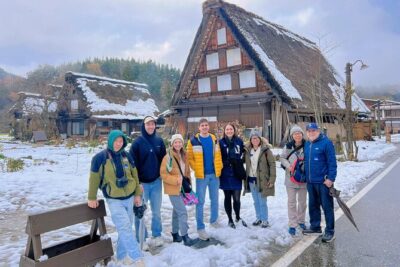
World Heritage Shirakawa-go and Experience Tours from Kanazawa
Read our review →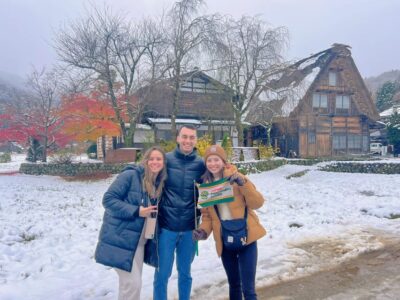
World Heritage Shirakawa-go Morning Guided Tour
Read our review →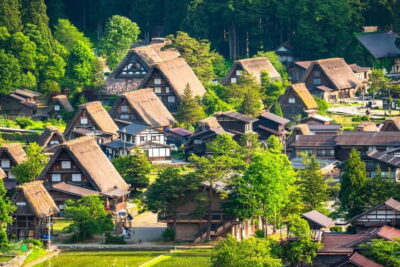
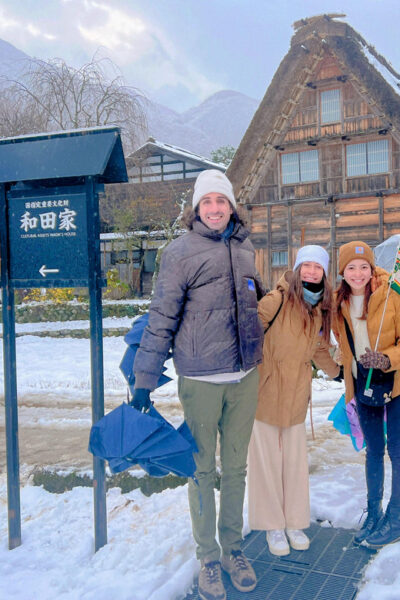
World Heritage Shirakawa-go & Two Local Experience
Read our review →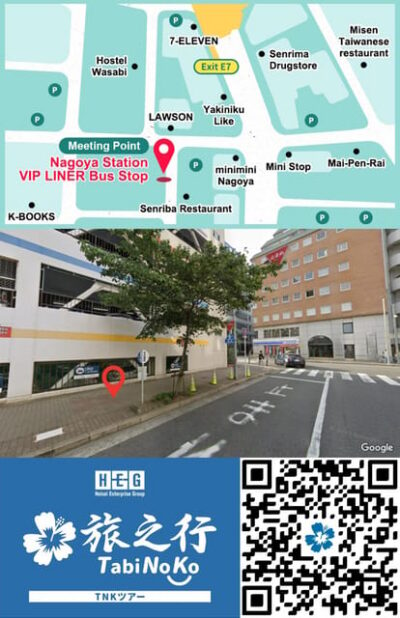
[One-day bus tour departing from Kanazawa Station] Shirakawa-go and Gokayama – Two World Heritage Villages Enjoyable Bus Tour
Read our review →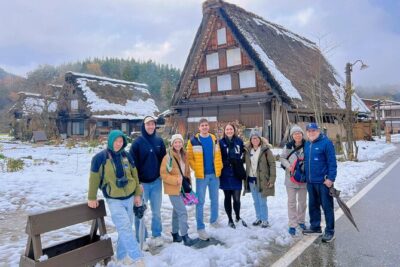
World Heritage Shirakawa-go Perfect Guided Tour from Kanazawa
Read our review →Browse the lists this tour appears in