
REVIEW · MOUNT FUJI DAY TRIPS
Tokyo: Full-Day Tour of the Six Majestic Spots of Mt Fuji
Mount Fuji is the star here, but the best moments come from seeing it in different settings: reflected beside swans at Hirano Beach, framed behind a red pagoda, and rising beyond flower fields at Lake Kawaguchi. This is a photo-heavy day with little guesswork once you leave Tokyo.
I like the variety, especially the morning lake reflection and the traditional springs at Oshino Hakkai. I also like the price: at $45, transport, a driver, and a guide make this a useful deal for visitors who want several Fuji-area sights without arranging trains and local buses.
The main catch is weather. Fuji may hide behind clouds for much of the day, and weekend traffic can stretch the schedule. The tour still offers villages, water, flowers, and mountain-country views, but you should not book it only for one perfect Fuji photograph.
In This Review
- Six useful things to know before you go
- Why this Tokyo to Mt Fuji day trip works
- Hirano Beach and Fuji’s morning mirror
- The straight road to Higashikawa Clock Shop
- Arakurayama Sengen Park and the pagoda climb
- Oshino Hakkai’s eight clear springs
- The Lawson stop and the famous Fuji-facing street
- Oishi Park and the changing flower calendar
- Guides, transport, and the pace of the day
- Weather, crowds, and the risk of missing Fuji
- Who will get the most from this tour
- Should you book the Mt Fuji six-stop tour?
- FAQ
- How much does the Tokyo Mt Fuji tour cost?
- Where does the tour start and finish?
- Is hotel pickup and drop-off included?
- Can I see Mount Fuji clearly on this tour?
- What should I bring?
- Is the tour wheelchair-accessible?
- Can I cancel for a refund?
Six useful things to know before you go
- Hirano Beach is a morning stop for a reason: calm water gives you the best chance of catching Fuji’s reflection, with swans along the shore.
- The pagoda view requires steps: Arakurayama Sengen Park is the least accessible stop, even though the other listed attractions are easier to reach.
- Oshino Hakkai adds culture to the photo circuit: its eight clear springs and thatched buildings give the day more substance than a string of viewpoints.
- Oishi Park changes with the calendar: tulips, moss phlox, lavender, begonias, and autumn maples take turns framing Fuji.
- Guide quality can shape the day: Tim, Agnes, and Sakuragi have been praised for clear explanations, help with photographs, and practical suggestions.
- Build in patience: weekend traffic, crowded sights, early closures, and cloud cover can force changes to the route.
Why this Tokyo to Mt Fuji day trip works
This is a full-day escape from Tokyo built around six very different stops. You are not simply driven to one lookout, given ten minutes, and sent home. The route moves from a quiet lakeshore to a picture-perfect street, a famous pagoda, mountain springs, a convenience store, and a flower park.
That variety matters. If Fuji disappears into cloud, you still have Japanese village scenery, clear spring pools, seasonal gardens, and small-town streets to enjoy. If the mountain appears, each stop gives you a different composition.
At $45 per person, I consider the tour good value for a visitor who wants convenience. An air-conditioned vehicle, driver, and guide are included, and the trip returns to its meeting point. You pay separately for meals, drinks, personal expenses, luggage charges if applicable, and insurance.
The trade-off is control. You cannot linger at one viewpoint all day, and the meeting point depends on the option you book. This is a shared sightseeing day rather than a private photographic excursion.
More mount fuji day trips in Tokyo:
- Mt Fuji and Hakone 1-Day Bus Tour Return by Bullet Train
★ 5.0 · 26,383 reviews - Mt Fuji & Hakone Cruise, Drum Show Bullet Train 1 Day from Tokyo
★ 4.0 · 7,413 reviews - Tokyo Mt Fuji 5th St & Hakone Cruise Bus Tour w/Bullet Train
★ 4.4 · 5,024 reviews
Hirano Beach and Fuji’s morning mirror
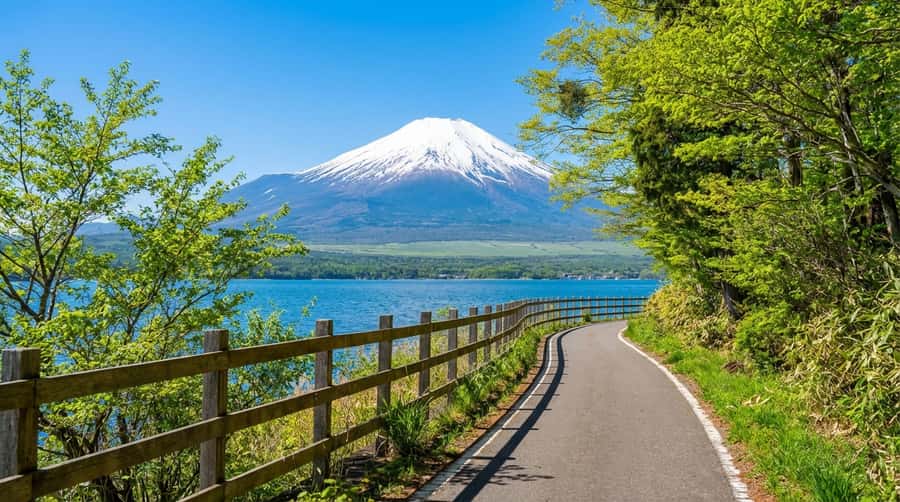
The day’s most time-sensitive stop is Hirano Beach, on the northeastern side of Lake Yamanaka. It is a gravel shore, not a polished resort promenade, and that is part of its appeal. From the water’s edge, you can try to frame Mount Fuji and its reflection together.
The reflection is most likely in the morning, when the lake can be calmer. That is why an early departure makes sense. Later wind, changing light, or cloud can break up the mirror effect.
Resident swans add another pleasing detail. You may be able to photograph them near the shore, giving your Fuji pictures a little life beyond the standard mountain postcard. I would bring a phone or camera with plenty of battery and keep your expectations sensible. A reflection depends on weather and water conditions, not on the tour’s schedule.
This stop also sets the tone for the day. You get open space, cold-looking mountain air, and a view that feels less manufactured than a formal observation deck. Wear shoes that can handle gravel and dress for an early start.
The straight road to Higashikawa Clock Shop
Higashikawa Clock Shop is less about shopping than composition. A quiet, straight road points toward Fuji, creating the famous Sky Ladder Town effect. The road appears to run directly toward the mountain, though you never actually reach it.
The scene works because it is simple. The road, buildings, utility lines, and distant peak form a clean visual corridor. It feels more like a film set than a major attraction, especially when the street is calm.
This is a short photographic stop, so you will want to be ready when you arrive. If clouds cover Fuji, the street itself remains attractive, but the central illusion loses much of its force. The visit is also a reminder that the most memorable Fuji views do not always come from a grand lookout.
Arakurayama Sengen Park and the pagoda climb
Arakurayama Sengen Park offers the image many people associate with Fuji: a red five-story pagoda in the foreground, the mountain behind it, and seasonal color filling the frame. In spring, cherry blossoms can surround the view. In autumn, red and gold leaves change the mood.
The route from Shimoyoshida Station is short in distance, but the pagoda viewpoint involves a climb up stone steps. Take your time. This is the one stop where the physical effort is clearly part of the experience, and it is not suitable for wheelchair users.
At the top, the view is broad and dramatic, but it can also be crowded. You may need patience for a clear photograph. The reward is a carefully layered scene: pagoda, town, trees, and Fuji rising beyond them.
I like that the stop includes more than a quick photograph. Afterward, you can spend time in the village below and possibly settle with a coffee. The lower area provides a calmer pause after the steps.
People with limited mobility, high blood pressure, or concerns about strenuous activity should consider this stop carefully. The tour information also lists the experience as unsuitable for pregnant women and people over 70 years old.
A few more Tokyo trips to weigh up
- From Tokyo: Mount Fuji Full-Day Sightseeing Trip
★ 4.5 · 4,970 reviews - Mount Fuji Full-Day Private Tour from Tokyo (Customizable)
★ 4.9 · 1,470 reviews - Tokyo Private Full-Day Tour by Car or Van
★ 5.0 · 684 reviews - From Tokyo: Must-Visit Mount Fuji Highlight Full-Day Tour
★ 4.7 · 532 reviews
Oshino Hakkai’s eight clear springs
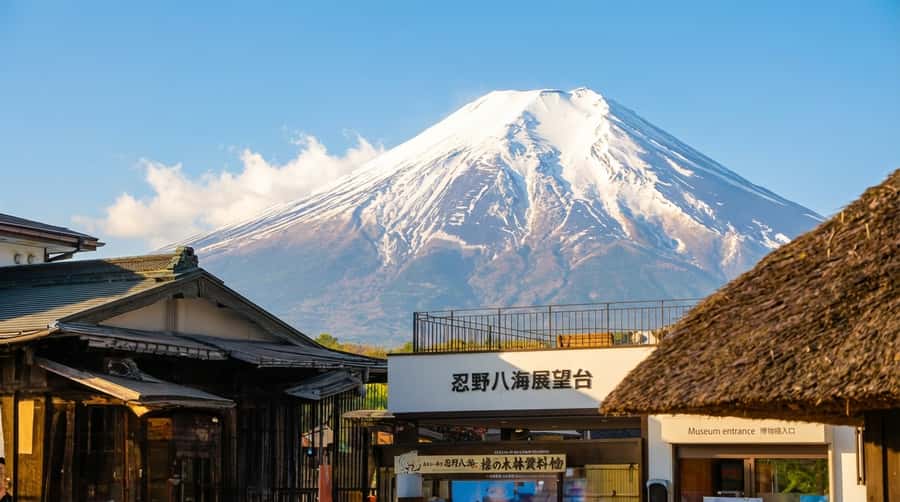
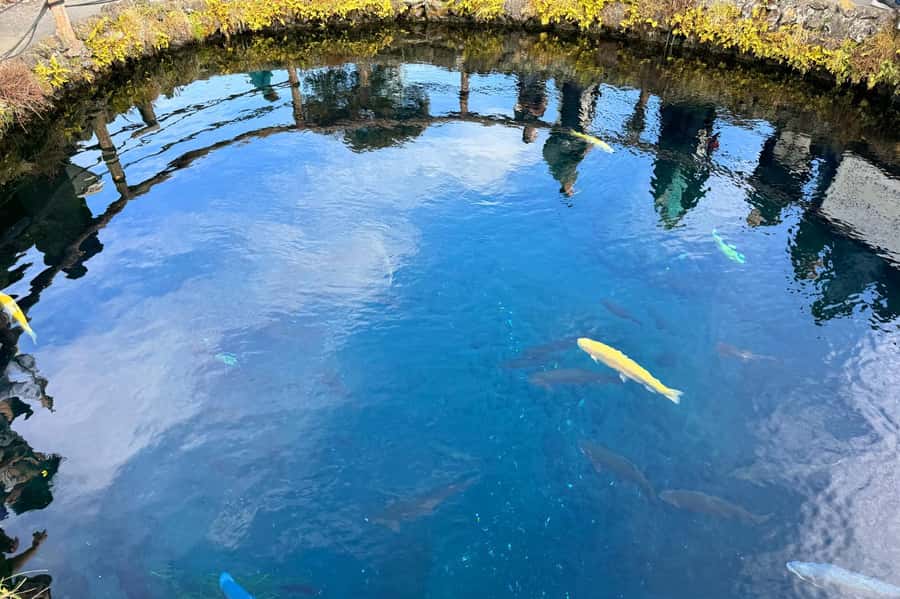
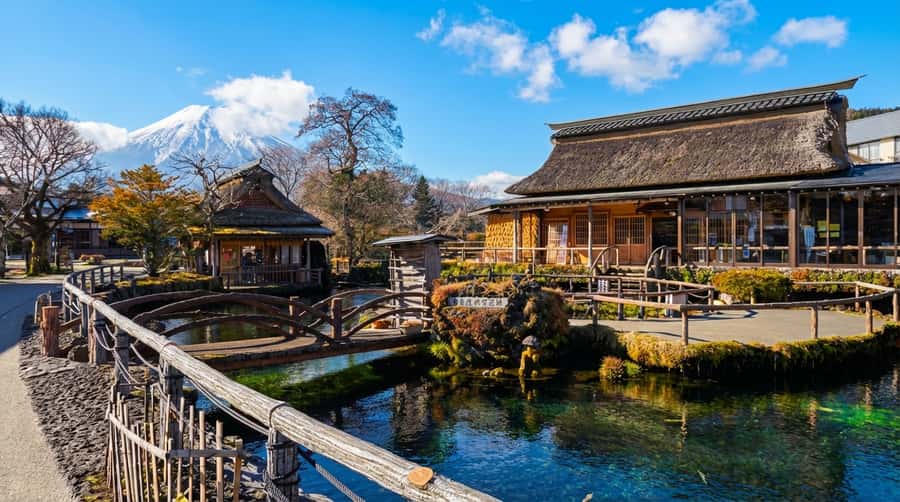
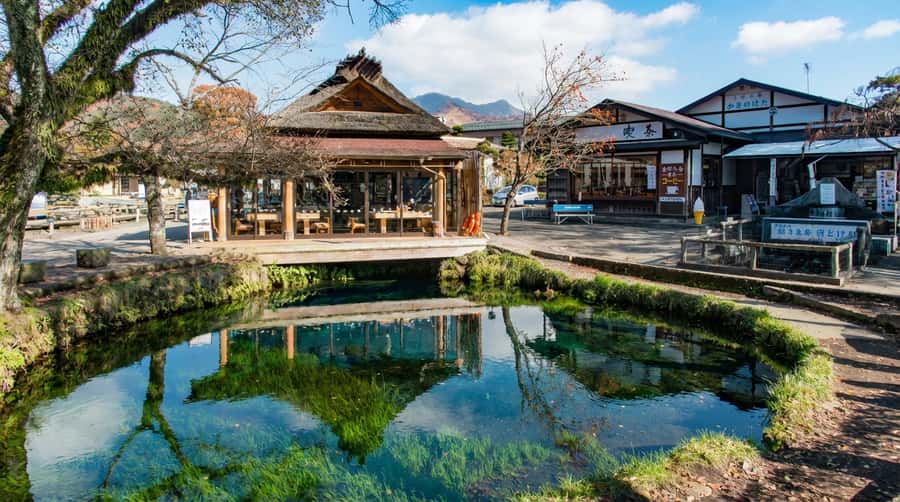
Oshino Hakkai gives the day its strongest cultural and natural contrast. The area is known for eight springs fed by melted snow from Mount Fuji. Their clear, blue-green water is the main draw, but the traditional thatched-roof buildings and wooden bridges make the setting feel like a village rather than a simple photo stop.
You can walk between the spring pools, look into the unusually clear water, and take in the mountain backdrop when visibility allows. The pools are small, so the appeal comes from the detail: water, stone, wood, old-style roofs, and carefully maintained paths.
This is also a good place to slow down. After the more obvious Fuji viewpoints, Oshino Hakkai gives you something to look at even when the summit is hidden. I find that valuable because mountain tours can become repetitive when every stop depends on the same view.
Crowds can gather here, especially during busy seasons. Keep your pace flexible and watch your belongings in close areas. Food and drinks are not included, so this may be a sensible place to arrange your own meal if the schedule allows.
The Lawson stop and the famous Fuji-facing street
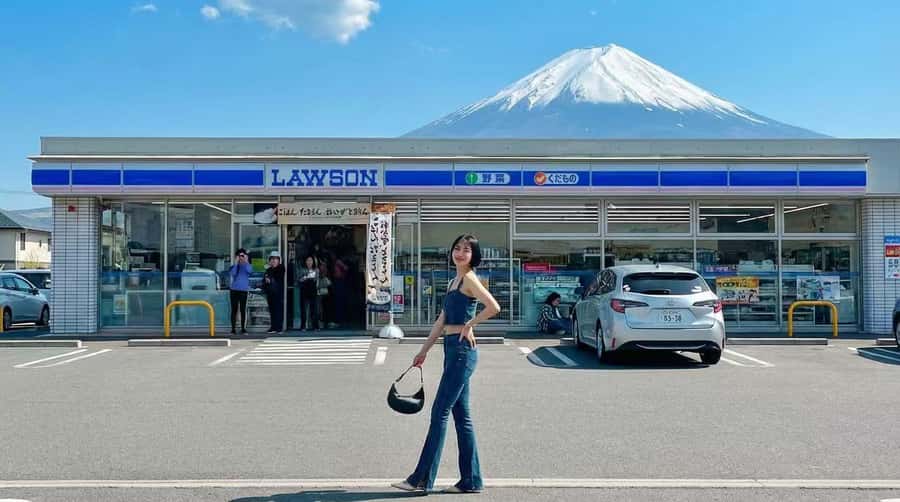
The Lawson convenience store is an odd but very modern addition to the day. Its plain storefront and Fuji-facing position have made it a popular phone-photo location. The appeal is the contrast between an ordinary Japanese convenience store and one of the world’s most recognizable mountains.
You can grab a quick snack separately and take a few photographs. Do not expect a long cultural visit. This is a brief stop built around a familiar Japanese brand and a very specific composition.
The location can be crowded, and you should follow local instructions when taking pictures. The stop works best as a quick change of pace between larger sights. It also gives you a taste of how everyday Japanese places can become part of internet-famous travel photography.
Oishi Park and the changing flower calendar
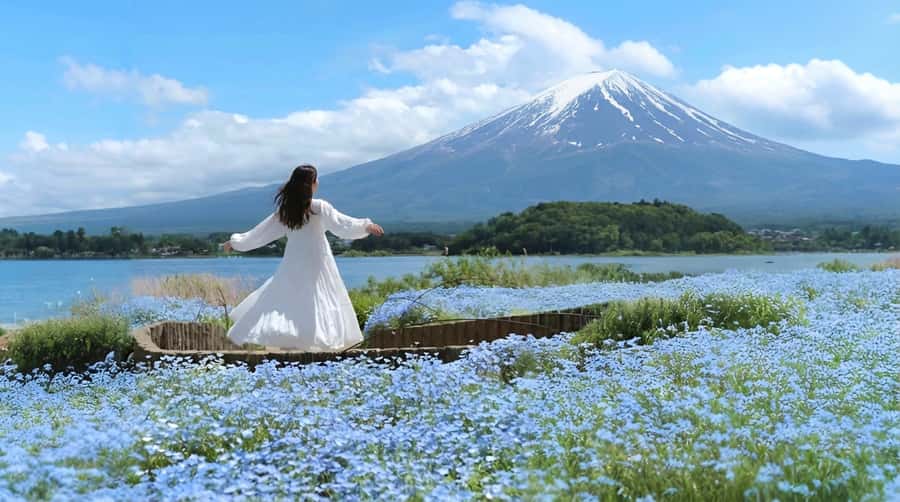
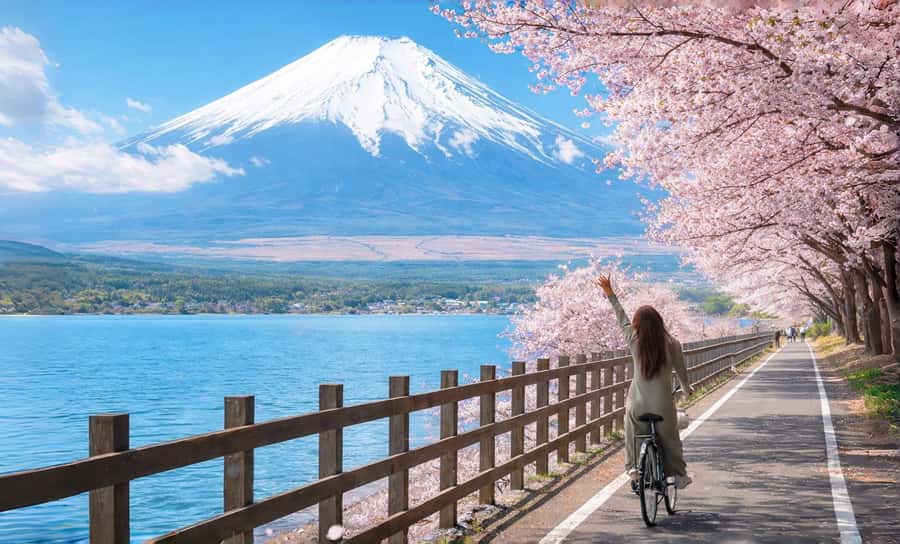
At Lake Kawaguchi, Oishi Park pairs Fuji with broad flower beds and open lake views. The flowers change through the year, so the same tour can look quite different depending on your travel date.
The seasonal pattern provided for the park is:
- April brings tulips, daffodils, and rapeseed flowers.
- May is known for moss phlox, which can form a low carpet of color.
- June and July bring lavender during the Kawaguchiko Herb Festival period.
- August through October features begonias.
- November brings scarlet maple leaves.
Flower timing can shift slightly with weather. If a particular bloom is the reason you are booking, check current conditions before you go. You may find flowers past their best or not yet fully open.
Oishi Park is one of the day’s easiest places to enjoy without rushing. The lake, garden beds, and mountain create a broad view rather than a single framed shot. If Fuji is hidden, the flowers and water still give you something worthwhile.
Guides, transport, and the pace of the day
The trip uses an air-conditioned vehicle, with a driver and guide included. Small daily groups may operate with the driver also serving as guide. In that case, English commentary can be limited, and no commentary is given while the vehicle is moving.
The tour supports Chinese and English, and multilingual service may be provided when international visitors share the vehicle. This means you should not assume a long, single-language lecture throughout the day. Some passengers found explanations clear and helpful, while others had trouble understanding every word.
The strongest guide experiences reported for this outing include Tim, Agnes, and Sakuragi. Tim was praised for energy, useful information, and personal attention. Agnes helped make the day enjoyable and suggested an authentic lunch and kimono experience. Sakuragi was noted for explaining the route clearly in both English and Chinese. Will was described as kind and friendly.
These details matter because the guide can help you use short stops well. A guide may also take photographs, explain where to stand, or help when you need practical assistance. One passenger received support with stomach pain and help finding medicine, a reminder that attentive staff can matter more than polished narration.
The vehicle experience is less consistent. Most comments describe clean, comfortable, punctual transport, but one passenger reported that the air-conditioning did not work. Another found the bus speaker volume uncomfortably loud. I would treat these as possible annoyances rather than guaranteed problems, but they are worth knowing before committing to a long day.
You cannot eat or drink inside the vehicle. Wear comfortable clothing and shoes, and avoid carrying large luggage unless you arrange it ahead of time and pay any required extra charge.
Weather, crowds, and the risk of missing Fuji
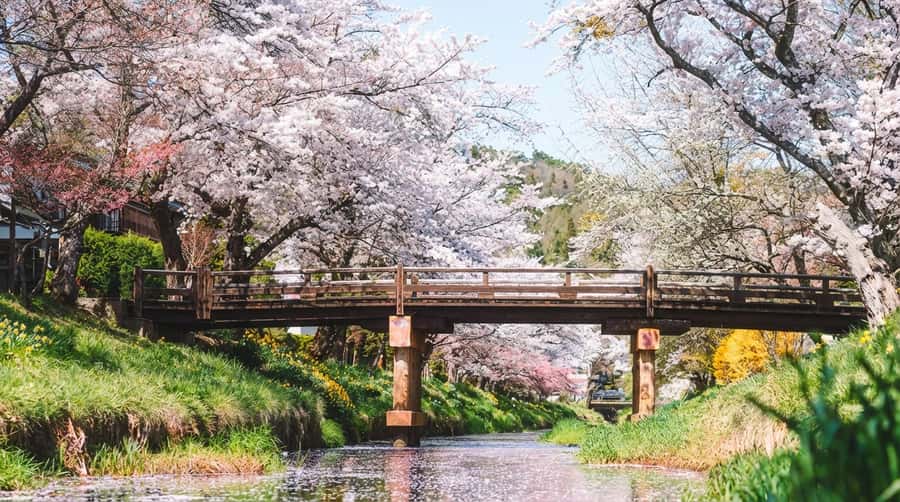
Fuji visibility is never guaranteed. Cloud can cover the mountain at one stop and reveal it later, or hide it for the entire day. One passenger had a disappointing view in August but still enjoyed the cooler break from Tokyo and the villages. Another saw Fuji appear in the middle of the day after missing it earlier.
That is the right attitude for this trip. Book it for the whole mix, with Fuji views as a major bonus. Morning offers the best chance for a lake reflection, but it does not guarantee a clear summit.
Weekends and holidays bring heavier traffic. Attractions can also close early, and weather may force the operator to switch stops. No refund is given for changes caused by traffic or weather. I would not schedule a same-day flight, Shinkansen connection, or evening activity after this tour.
The meeting point cannot be changed on the day of departure. If you need a change, give notice at least two days ahead. Late arrivals and no-shows are not refunded, so allow extra time to reach the departure point.
Who will get the most from this tour
I would choose this outing if you are staying in Tokyo and want a simple way to see several Fuji-area highlights in one day. It suits first-time visitors, photographers who want many different compositions, and anyone who prefers a vehicle over connecting regional buses.
It is also a good choice if you are unsure which Fuji viewpoint to select. Hirano Beach, Arakurayama, and Oishi Park offer very different scenes, while Oshino Hakkai adds a more grounded village visit.
I would hesitate if you want a relaxed pace, private guiding, or guaranteed English commentary. The day covers a lot of ground, and some stops may feel brief when traffic or crowds interfere. It is also a poor fit for anyone unable to manage the pagoda steps or for people listed as unsuitable for the activity, including pregnant women, people with high blood pressure, and people over 70.
At $45, the tour offers strong practical value, but not luxury. You are paying for access and coordination, not a quiet private car or a custom route.
Should you book the Mt Fuji six-stop tour?
Book it if you want maximum variety for a low price and can accept weather risk, shared transport, and a long day. The combination of morning reflections, a pagoda, springs, flowers, and unusual roadside photography gives you a fuller picture of the Fuji region than a single lookout would.
Skip it if your entire plan depends on one perfect summit photograph, or if steps, crowds, and a fixed schedule will make the day stressful. For everyone else, this is a sensible Tokyo side trip. Leave early, wear good shoes, keep your schedule afterward empty, and treat every clear glimpse of Fuji as a gift rather than a promise.
FAQ
How much does the Tokyo Mt Fuji tour cost?
The listed price is $45 per person. Transportation in an air-conditioned vehicle, a driver, and a tour guide are included. Food, drinks, personal expenses, luggage charges when applicable, and personal travel or accident insurance are not included.
Where does the tour start and finish?
The meeting point depends on the option you book. The activity ends back at the meeting point.
Is hotel pickup and drop-off included?
No. Hotel pickup and drop-off are not included.
Can I see Mount Fuji clearly on this tour?
Clear views are possible but not guaranteed. Cloud and weather can hide Fuji, and the route may change if conditions affect an attraction.
What should I bring?
Bring comfortable shoes and comfortable clothing. An early departure is recommended because Hirano Beach’s reflection views are best in the morning.
Is the tour wheelchair-accessible?
The tour is listed as unsuitable for wheelchair users. The stops are generally accessible except for the stone steps leading to the Arakurayama Sengen Park pagoda.
Can I cancel for a refund?
You can cancel up to 24 hours in advance for a full refund. No refunds are provided for no-shows, late arrivals, or changes caused by force majeure such as traffic or weather.
Just added around Tokyo
- Private Harajuku Omotesando Architecture Tour★ 4.9 · 18 reviews
- Tokyo: Customizable Private Guided Walking Tour★ 4.5 · 129 reviews
- Tokyo: Guided Helicopter Ride★ 4.9 · 24 reviews
- Tokyo: Guided Walking Tour of Tsukiji Market with Lunch★ 4.4 · 24 reviews
- Tokyo: Private Personalized Local Food Tour★ 4.5 · 101 reviews
- Tokyo GINZA: KONPARU Japanese Cabaret Show with Drink★ 4.8 · 38 reviews
- Tokyo: Guided Walking Tour of Tsukiji Market with Breakfast★ 4.4 · 134 reviews
- Tokyo: Gotokuji Cat Temple, Shinjuku Cat Cafe & 3D Cat Tour★ 4.9 · 38 reviews
Mount Fuji Day Trips, compared.
Mt Fuji and Hakone 1-Day Bus Tour Return by Bullet Train
Read our review →
Mt Fuji & Hakone Cruise, Drum Show Bullet Train 1 Day from Tokyo
Read our review →
Tokyo Mt Fuji 5th St & Hakone Cruise Bus Tour w/Bullet Train
Read our review →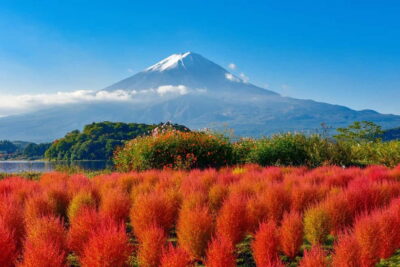
Mt. Fuji Tour, Hakone Ropeway, Owakudani, Lake Ashi
Read our review →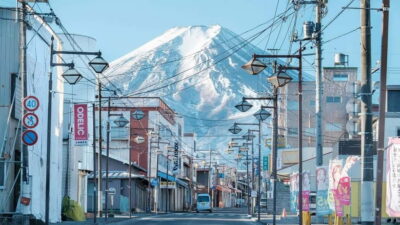
Mt Fuji Top 5 Spots Day Tour: Arakurayama Park,Oshino Hakkai
Read our review →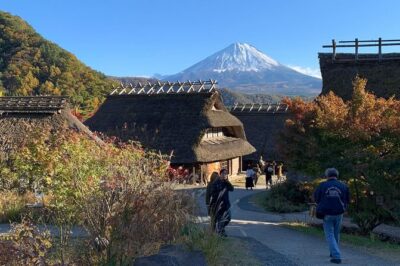
Private Tour to Mt. Fuji and Hakone (Fully Licenced Operator)
Read our review →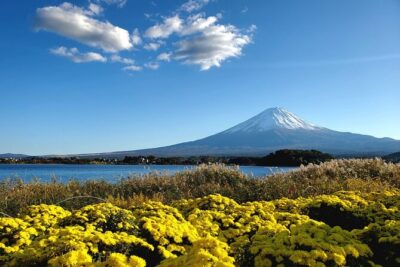
Mount Fuji Full-Day Private Tour from Tokyo (Customizable)
Read our review →Browse the lists this tour appears in