
REVIEW · NIKKO DAY TRIPS
Nikko Private Custom Tour with Local Guide
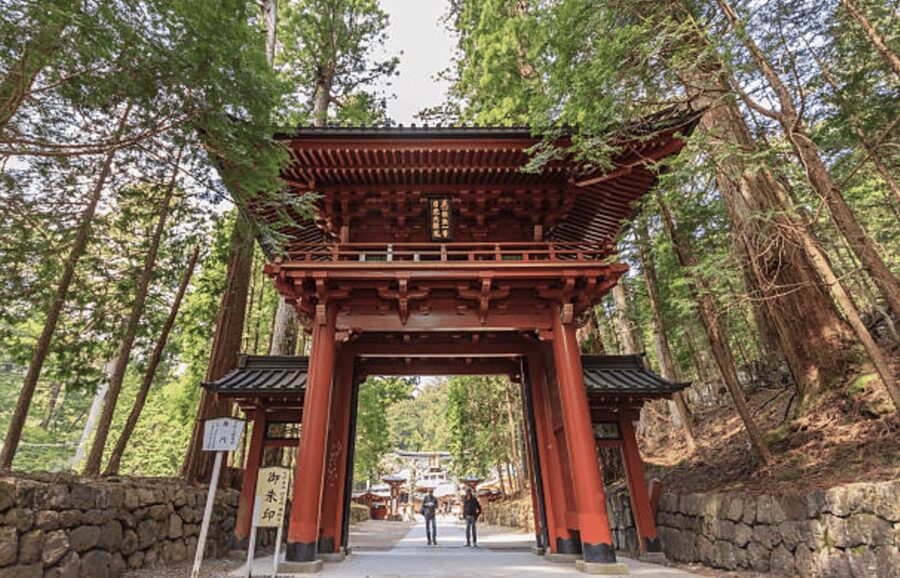
Nikko’s great strength is its mix of grand religious buildings and quiet cedar forest. This private tour puts Toshogu Shrine at the center, where gold, color, carvings, and Tokugawa power compete for your attention. You can then shape the day around nearby temples, shrines, or mountain scenery instead of following a fixed group schedule.
I like the one-to-one guide service, since the Edo-period details are easy to miss without context. I also like the freedom to focus on culture, nature, or both. The main caution is the price structure: at $214 per person, you still pay entrance fees, lunch, transport, and private vehicle costs separately.
In This Review
- Key points at a glance
- Why Nikko Works So Well as a Day of Contrasts
- Entering Toshogu Shrine Through Edo-Period Grandeur
- The Yomeimon Gate
- The Five-Story Pagoda
- The Three Wise Monkeys and Sleeping Cat
- Adding Rinnoji Temple for a Quieter Religious Mood
- Futarasan Shrine and the Sacred Mountains of Nikko
- Kegon Falls and Lake Chuzenji Change the Pace
- What a Six-Hour Private Format Really Gives You
- Is $214 Per Person a Fair Price?
- Who Will Get the Most From This Tour?
- Practical Booking Advice Before You Go
- Should You Book the Nikko Private Custom Tour?
- FAQ
- Where does this Nikko tour take place?
- How long does the tour last?
- Is the tour private?
- Is the tour conducted in English?
- Can I customize the itinerary?
- Is Toshogu Shrine included in the tour plan?
- Can I visit Rinnoji Temple and Futarasan Shrine?
- Can I include Kegon Falls and Lake Chuzenji?
- Are entrance fees, lunch, and transportation included?
Key points at a glance
- Toshogu Shrine’s carved symbols: See the Three Wise Monkeys, Sleeping Cat, Five-Story Pagoda, and Yomeimon Gate.
- A private six-hour plan: Adjust the day with an English-speaking local guide rather than joining a fixed group.
- Three major religious sites: Add Rinnoji Temple and Futarasan Shrine for a fuller picture of Nikko’s spiritual life.
- Culture and mountain scenery: Kegon Falls and Lake Chuzenji offer a strong contrast to the ornate shrine grounds.
- Extra costs matter: Entrance tickets, lunch, transport, and private vehicle service are not included.
- Best for curious first-time visitors: The guide can explain how Shinto and Buddhist traditions overlap in Nikko.
Why Nikko Works So Well as a Day of Contrasts
Nikko is more than a collection of beautiful buildings. Its appeal comes from the sharp change in mood between the town, the forest, the shrine complex, and the mountain area.
At Toshogu, you see the public face of the Tokugawa shogunate: formal, expensive, highly decorated, and designed to impress. A short distance away, the cedar trees and mountain shrines feel quieter and more removed from daily life. If you add Kegon Falls and Lake Chuzenji, the day shifts again, from political power and religious ceremony to open mountain scenery.
That range is the reason a private format can be useful. You can spend more time on the architecture if the carvings catch your eye, or move toward natural sights if you have already seen several Japanese temples and shrines.
The tour lasts six hours. That is enough time for a focused visit to Toshogu and nearby religious sites, but it may feel tight if you want to include every cultural stop plus Kegon Falls and Lake Chuzenji. Ask the guide to rank your priorities at the start.
More Nikko Day Trips in Nikko
- Nikko Full-Day Private Tour with Government-Licensed Guide
★ 5.0 · 259 reviews - Nikko – Beautiful Full-Day Personal and Private Tour
★ 4.9 · 119 reviews - Nikko Heritage & Nature Day Trip from Tokyo
★ 4.8 · 94 reviews
Entering Toshogu Shrine Through Edo-Period Grandeur
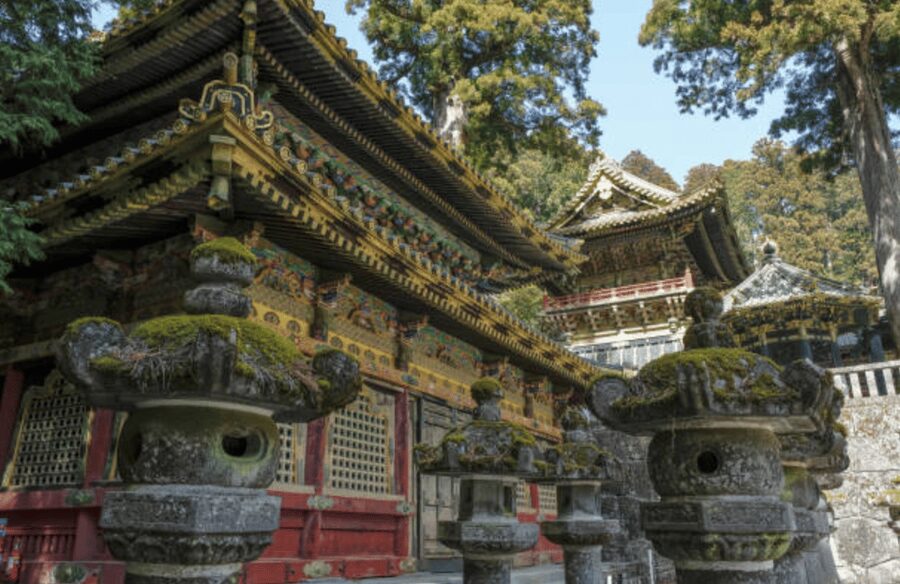
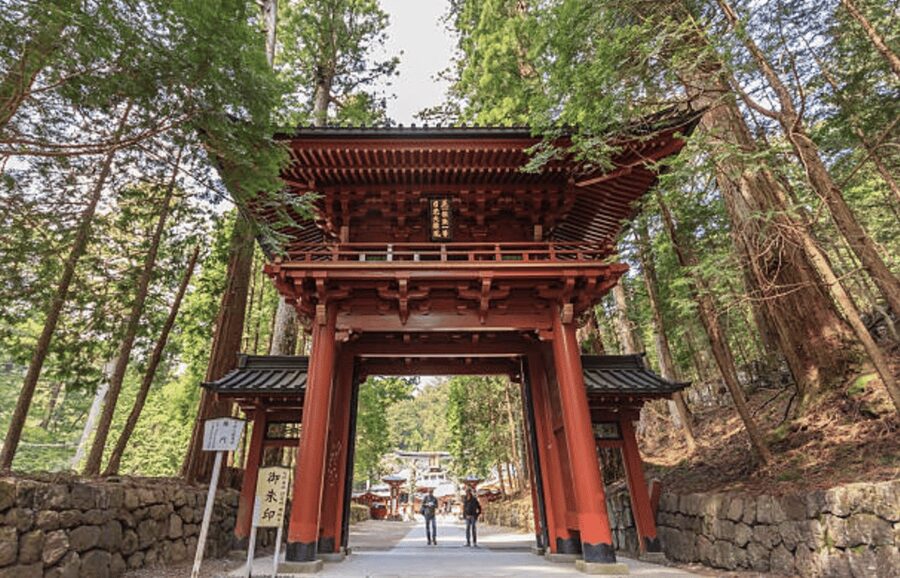
Toshogu Shrine is dedicated to Tokugawa Ieyasu, founder of the Tokugawa shogunate. The shrine was established in 1617, and its buildings reflect the authority given to Ieyasu after his death.
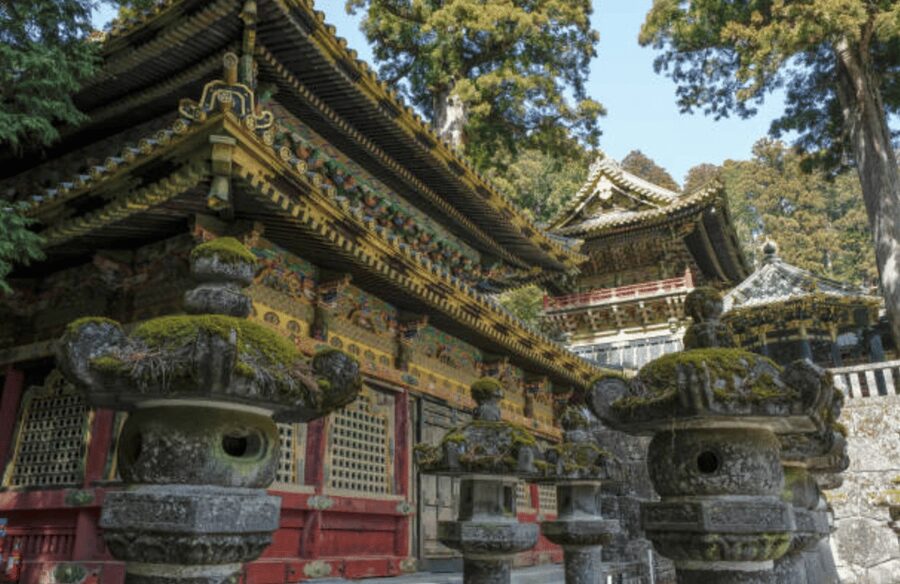
The complex contains more than a dozen structures among old cedar trees. Unlike a spare wooden shrine, Toshogu asks you to look in every direction. Bright colors, detailed carvings, gates, pagodas, and religious symbols fill the site. A guide adds real value here because the visual information can become a blur without a story connecting it all.
The complex blends Shinto and Buddhist elements, a common feature of Japanese religious life during the Edo period. That mixture also gives you a useful lesson in how modern labels do not always fit older Japanese sites neatly. You are not simply looking at one style of worship. You are seeing layers of belief and political history in the same place.
The Yomeimon Gate
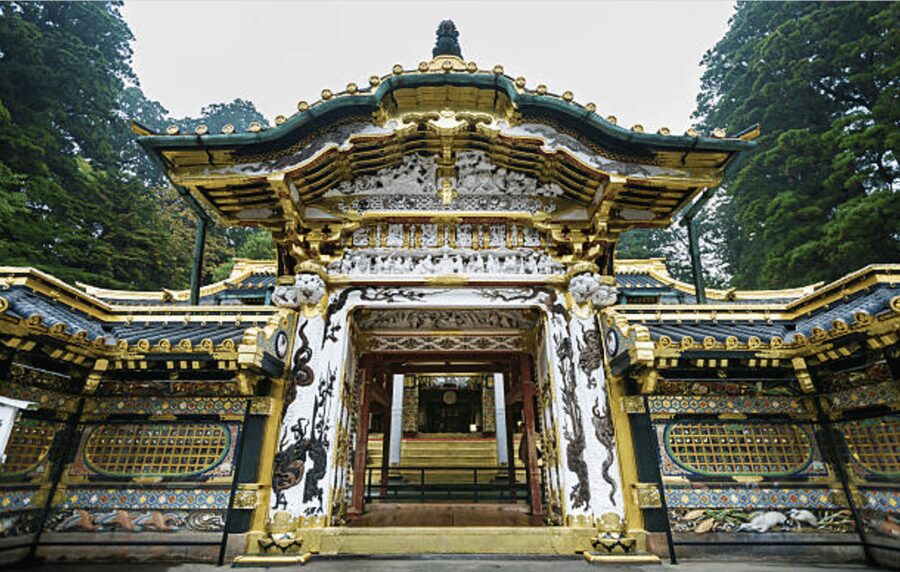
Yomeimon Gate is one of the visual high points. It is often called the Gate of Sunlight and carries more than 500 carvings of mythical creatures, flowers, and sages.
Give yourself time here. The gate is not something to glance at on the way through. Its details reward slow looking, and an English-speaking guide can point out why certain figures and patterns matter. The elaborate surface also makes clear how much labor and money went into expressing Tokugawa prestige.
The practical drawback is simple: a place this ornate can feel busy to your eyes. If you rush, you will remember color but not meaning. Use the private format to pause at the details that interest you.
The Five-Story Pagoda
The Five-Story Pagoda adds a strong vertical shape to the entrance area. Its red color and carefully finished decoration make it easy to spot, even before you understand its religious and architectural role.
A pagoda is not just a pretty tower. It reflects Buddhist influence and traditional architectural ideas. Your guide can help connect this building to the wider blend of Shinto and Buddhist practice found across the complex.
More nikko day trips in Japan:
- Nikko: Kegon Falls, Lake Chuzenji & Toshogu Temple
★ 4.6 · 1,577 reviews - Tokyo: Nikko Toshogu Shrine and Kegon Waterfall Tour
★ 4.5 · 1,266 reviews - From Tokyo: Nikko World Heritage Site Private Full-Day Trip
★ 4.9 · 243 reviews - Nikko: Edo Wonderland Edomura Cultural Theme Park Ticket
★ 4.3 · 205 reviews
The Three Wise Monkeys and Sleeping Cat
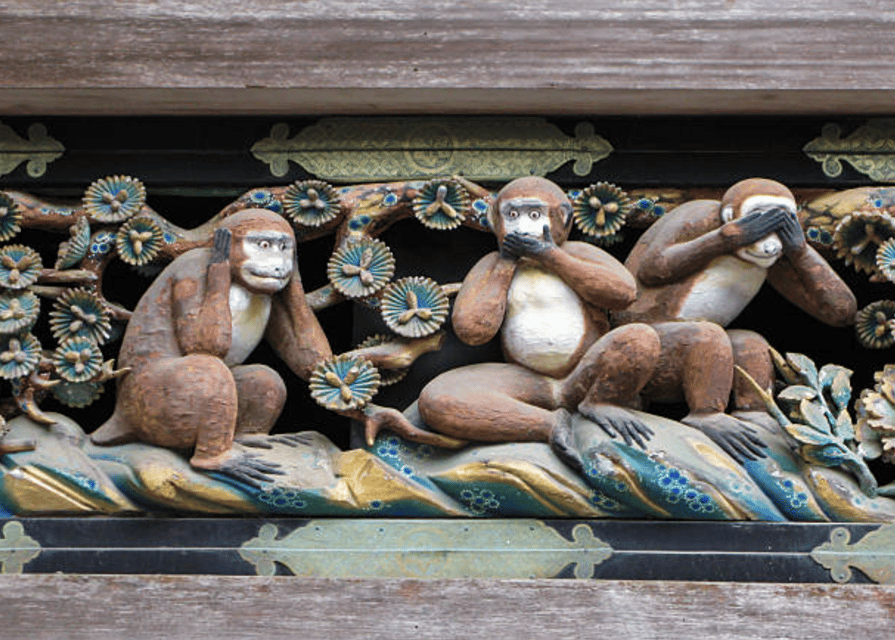
The Three Wise Monkeys are represented by the familiar gestures: see no evil, hear no evil, and speak no evil. The carving is tied to an ethical code associated with the Edo period.
The Sleeping Cat, or Nemuri-neko, appears above the Kuguri-mon Gate. Its calm pose is linked with peace and tranquility. These small carvings are easy to miss among the larger gates and buildings, which is exactly why a guided visit helps.
I like that these details give you something to search for. They turn the visit into more than a march past impressive structures. You can look for symbols, ask questions, and connect small images with wider ideas about conduct and power.
Adding Rinnoji Temple for a Quieter Religious Mood
Rinnoji Temple is a useful addition if you want more than the grand political display of Toshogu. It is known for three large gold-lacquered wooden Buddha statues.
The contrast matters. Toshogu is crowded with carved surfaces and ceremonial decoration, while the Buddha figures at Rinnoji offer a more focused place to consider Buddhist art and worship. The temple helps explain why Nikko is a major religious center, not only a memorial to one powerful ruler.
Since the tour is custom, you can ask to include Rinnoji rather than treating it as an afterthought. Entrance fees are extra, so include the ticket cost when you compare the tour with arranging the day yourself.
Futarasan Shrine and the Sacred Mountains of Nikko
Futarasan Shrine is dedicated to the deities of the Nikko mountains. It gives the day a different spiritual emphasis from Toshogu’s memorial to Tokugawa Ieyasu.
This is the place to pay attention to the connection between worship and nature. The mountains are not merely scenery behind the buildings. They are part of the religious setting. A guide can help you understand how Futarasan fits into Nikko’s wider sacred identity.
If you have six hours and want a culture-first itinerary, Toshogu, Rinnoji, and Futarasan make a sensible group of stops. You get three distinct experiences without scattering your time too far.
Kegon Falls and Lake Chuzenji Change the Pace
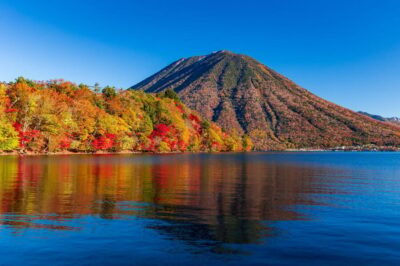
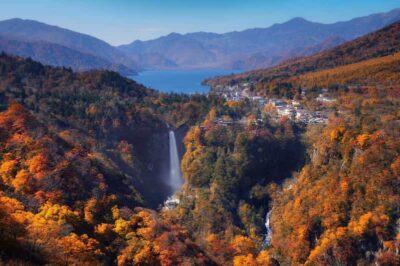
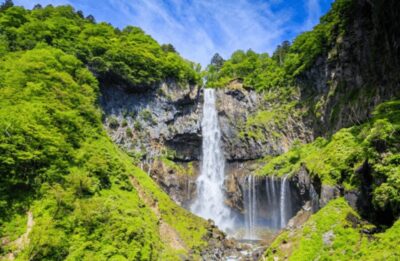
Kegon Falls and Lake Chuzenji are the main nature options listed for the tour. They offer a sharp break from shrine gates, temple halls, and carved figures.
Kegon Falls brings dramatic moving water to the day. Lake Chuzenji provides a broader mountain setting and a chance to step away from the dense detail of the heritage sites. Together, they can make the outing feel less like a string of religious buildings and more like a full look at Nikko.
There is a tradeoff. Six hours is a limited window, and the nature stops may require more transport time than the central shrine area. If Kegon Falls and Lake Chuzenji are your priorities, tell the guide before the day begins. If Toshogu is the main reason you booked, you may prefer to spend those hours exploring the shrine complex and nearby temples at a slower pace.
The tour description refers to private vehicle service, but the cost details list private transportation and transport fees as excluded. Treat that as an important point to confirm before booking. Ask exactly how you will move between sites and what you will pay for the vehicle, driver, or other transport.
What a Six-Hour Private Format Really Gives You
The chief benefit is control. You are not tied to a large group’s walking speed or forced to spend equal time at every stop.
A private English-speaking guide can also adjust the explanation to your interests. If you care about architecture, you can focus on gates, carvings, and construction. If you want Japanese history, the discussion can center on Ieyasu and the shogunate. If religion interests you, the guide can explain the Shinto and Buddhist elements at Toshogu, Rinnoji, and Futarasan.
That personal approach has limits. A private guide does not automatically make the day all-inclusive. You still cover your own entrance fees, lunch, and transport, as well as any necessary expenses for the guide during the tour. It is wise to ask for a clear estimate of these extras.
The walking-tour format also means you should expect time on foot. The provided details do not specify the walking distance, starting point, or exact route, so ask about those points if they affect your planning.
Is $214 Per Person a Fair Price?
At $214 per person, this is not the cheapest way to see Nikko. The price makes more sense if you value a private English-speaking guide and want to shape the day around your own interests.
You are paying for personal attention, local explanation, and itinerary control. Those features can be useful in a place where the most important details are not always obvious. The Three Wise Monkeys and Sleeping Cat, for example, are small carvings within a much larger complex. Context helps you notice what you might otherwise pass by.
The value is weaker if you mainly want transportation or a simple list of sightseeing stops. Since private transportation is not included, you may still need to organize and pay for movement between areas. A public-transport day arranged on your own could cost less, though it would not give you the same direct access to a guide’s explanations or the same ability to adjust the plan.
Before paying, work out your likely total:
- $214 per person for the tour
- Entrance fees for the sites you choose
- Transport fees and any private vehicle cost
- Lunch
- The guide’s necessary expenses during the tour
That calculation will tell you more than the headline price.
Who Will Get the Most From This Tour?
I would recommend this experience to a first-time Nikko visitor who wants the major sights explained rather than simply photographed. It is also a good fit for couples, families, or small private groups with different interests.
You will get the most from it if you arrive with a rough priority list. For example:
- Toshogu first, then Rinnoji and Futarasan for a culture-focused day
- Toshogu plus Kegon Falls and Lake Chuzenji for a mix of heritage and nature
- A slower Toshogu visit if carved details and Edo-period design are your main interests
The tour may be less suitable if you want a fully packaged outing with all transport and admission included. It may also feel expensive for anyone who is happy to explore at their own pace without a guide.
No guide name is provided, so you cannot choose a specific person in advance from the available details. The service is offered in English, and the guide is described as a local professional.
Practical Booking Advice Before You Go
Use the cancellation rule to protect your plans: you can cancel up to seven days in advance for a full refund. The tour is offered as a private group, and starting times depend on availability.
At booking, confirm four things in writing:
- Where the walking tour begins and ends.
- How transport between Nikko sights will be handled.
- The expected cost of private transportation, since it is excluded.
- Which entrance fees are needed for your chosen itinerary.
Also tell the guide whether you want more time at Toshogu or hope to reach the mountain sights. The six-hour length makes priorities important. A custom tour works best when you make the choices clear early.
Should You Book the Nikko Private Custom Tour?
Book it if you want personal historical explanation and the freedom to combine Toshogu with other sites. Nikko’s symbols and religious layers are easier to appreciate when someone can explain them as you go.
Think twice if you are watching every yen or expect private transportation, lunch, and admission to be covered. The tour can offer good value, but only after you add those costs to the $214 price.
For a focused, private introduction to Nikko, I like the basic idea. Keep Toshogu as your anchor, choose one or two extra stops, and confirm the transport arrangement before you commit.
FAQ
Where does this Nikko tour take place?
The tour takes place in Nikko on Honshu, Japan. The main focus is Nikko Toshogu Shrine, with nearby temples, shrines, and natural sights available through the custom itinerary.
How long does the tour last?
The tour lasts six hours.
Is the tour private?
Yes. It is offered for a private group.
Is the tour conducted in English?
Yes. The tour includes an English-speaking local guide, and English is the listed language.
Can I customize the itinerary?
Yes. The itinerary can be customized with the guide.
Is Toshogu Shrine included in the tour plan?
Yes. Nikko Toshogu Shrine is the central attraction described for the experience.
Can I visit Rinnoji Temple and Futarasan Shrine?
Yes. Both are listed as nearby attractions that you may include in the custom plan.
Can I include Kegon Falls and Lake Chuzenji?
Yes. Kegon Falls and Lake Chuzenji are listed as additional sights to consider. The six-hour duration may require you to prioritize among the available stops.
Are entrance fees, lunch, and transportation included?
No. Personal entrance fees, lunch, transportation fees, private transportation, and the guide’s necessary expenses during the tour are not included.
Just added around Japan
- Tokyo: Customizable Private Guided Walking Tour★ 4.5 · 129 reviews
- Private Harajuku Omotesando Architecture Tour★ 4.9 · 18 reviews
- Tokyo: Guided Helicopter Ride★ 4.9 · 24 reviews
- Tokyo: Guided Walking Tour of Tsukiji Market with Lunch★ 4.4 · 24 reviews
- Tokyo: Private Personalized Local Food Tour★ 4.5 · 101 reviews
- Tokyo GINZA: KONPARU Japanese Cabaret Show with Drink★ 4.8 · 38 reviews
- Tokyo: Guided Walking Tour of Tsukiji Market with Breakfast★ 4.4 · 134 reviews
- Tokyo: Gotokuji Cat Temple, Shinjuku Cat Cafe & 3D Cat Tour★ 4.9 · 38 reviews
Nikko Day Trips, compared.
Nikko Toshogu Shrine and Kegon Waterfall Tour
Read our review →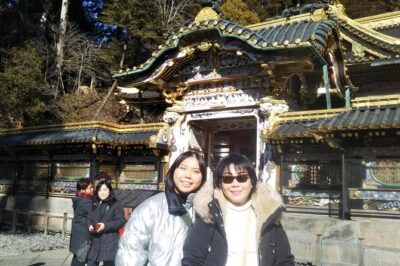
Nikko Full-Day Private Tour with Government-Licensed Guide
Read our review →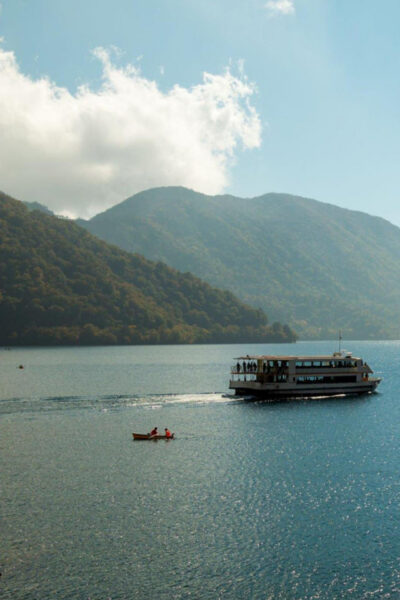
Edo Wonderland Edomura Cultural Theme Park Ticket
Read our review →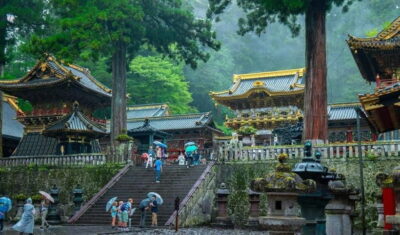
Browse the lists this tour appears in