
REVIEW · KAGOSHIMA TOURS
Kagoshima Highlights Private Tour, Sakurajima Volcano and more
Sakurajima is the star here: a real active volcano rising from Kagoshima Bay, with eruptions averaging about 200 times a year. You can see old lava fields, a buried shrine gate, and the volcano’s rocky face without treating the mountain like a distant postcard.
I like the private format, which lets Hitomi shape the day around your group, and I like the mix of volcano scenery, local food, and Shimazu history. The 100-meter hot-spring foot bath is a simple pleasure, while lunch in Tenmonkan gives you a taste of Kagoshima beyond the sightseeing circuit.
The main catch is cost. The advertised group price covers the guide fee, but you still pay for the chartered taxi, ferry, Sengan-en admission, and lunch. Clarify the full total before booking, especially for a group of fewer than four.
In This Review
- Key points to know before booking
- Why Sakurajima gives this tour its character
- A 100-meter foot bath beside the lava
- The buried shrine gate and the cost of an eruption
- Walking the 1946 lava field at Arimura
- Tenmonkan turns lunch into a local choice
- Sengan-en: Shimazu gardens beside the bay
- Shuseikan and Satsuma cut glass
- Extra city sights depend on your chosen route
- What the private format is worth
- Hitomi’s guiding style and group fit
- Who should book this Kagoshima day
- Final call: a strong private introduction, with costs to check
- FAQ
- How long does the Kagoshima private tour last?
- How many people can join the private tour?
- Is hotel or port pickup available?
- Is transportation included in the listed price?
- How much does the Sakurajima ferry cost?
- Is lunch included?
- Is admission to Sengan-en included?
Key points to know before booking
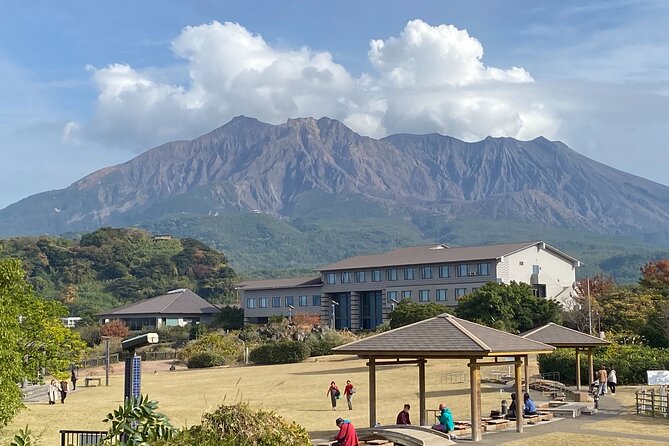
- Sakurajima is an active volcano: You visit lava fields, lookout points, and the volcano’s highest open viewing point at 373 meters.
- The tour is genuinely private: Your group alone takes part, with space for up to eight people.
- Hitomi leads in English: She can adjust the route and has helped families, cruise passengers, and groups with young children.
- The 100-meter foot bath is a highlight: Bring or wear something suitable for exposing your feet, and expect natural hot-spring water.
- Food is part of the experience: Lunch in Tenmonkan can include Wagyu beef, Kagoshima black pork, or ramen, but you pay separately.
- The listed price is not the final group cost: Taxi hire, ferry fares, Sengan-en admission, and lunch are extra.
Why Sakurajima gives this tour its character
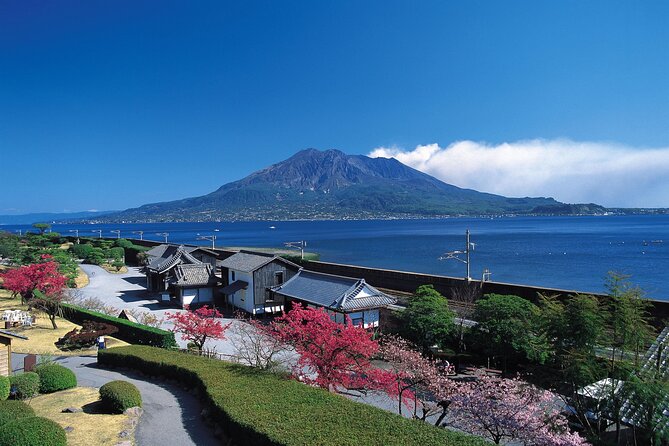
Many volcano visits are about looking at a mountain from a safe distance. Sakurajima feels different. It is still active, still erupting, and still part of daily life around Kagoshima Bay. The tour lets you see the practical side of living beside a volcano, not just the dramatic silhouette.
At the Sakurajima Visitor Center, you watch a 13-minute film with English subtitles. Panels explain past explosive eruptions, the return of plant life after eruptions, and the ways local residents live with volcanic activity. This is a useful first stop because it gives meaning to the black rock and sparse growth you see later.
The center is not a large attraction, and you spend only about 20 minutes there. That is enough for an introduction, but not enough for a long museum visit. If you want extensive scientific displays, this tour moves too quickly. If you want a clear briefing before heading outdoors, the timing works well.
A few more Kagoshima trips to weigh up
- Kagoshima Private & Custom Tour with Licensed Guide and Vehicle
★ 5.0 · 29 reviews - Port Pick-Up: Kagoshima Private Tour Licensed Guide & Vehicle
★ 4.5 · 22 reviews - Kagoshima Full-Day Private Tour with Government-Licensed Guide
★ 5.0 · 21 reviews
A 100-meter foot bath beside the lava
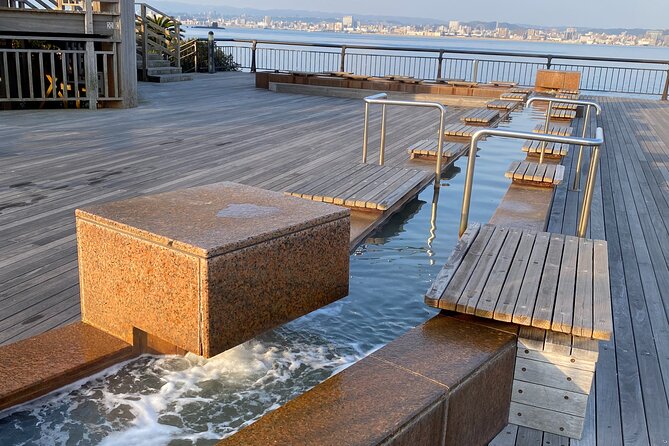
At Sakurajima Nagisa Foot Bath Park, you can soak your feet in natural hot-spring water fed from about 1,000 meters underground. The source temperature is around 42 degrees Celsius, so the water should feel properly hot rather than merely warm.
The bath stretches for about 100 meters, making it one of Japan’s largest foot baths. I like this stop because it slows the day down. After several volcano viewpoints, sitting with your feet in hot water gives you a quiet break and a direct connection to the island’s geothermal activity.
Plan on roughly 20 minutes here. That is long enough to enjoy the water, but you may want more time if your group includes children or anyone who particularly likes hot springs. The tour information does not specify towel availability, so carrying a small towel is sensible.
The buried shrine gate and the cost of an eruption
The Buried Shrine Gate is one of the most memorable stops because it shows the force of the 1914 eruption in a single object. A roughly 3-meter torii gate at Kurokami Shrine was buried, leaving only the upper beam visible.
The village elder decided not to dig it out. Leaving the gate in place preserves a stark record of what happened. You do not need a long explanation to understand the scale of the eruption when you see a shrine entrance swallowed by ash and earth.
This is a short stop of about 10 minutes. It is more about reflection and a quick photograph than a long visit. The ground and volcanic surroundings may be uneven, so take care with your footing.
At Shioyagamoto, you get another view of volcanic change. The small port shows how vegetation returns on lava from different periods, including lava about 1,300 years old and lava from roughly 80 years ago. The stop lasts about 10 minutes, so the value comes from the guide’s explanation and the contrast between the two areas.
Walking the 1946 lava field at Arimura
Arimura Lava Lookout sits on a small hill within the lava field created by the great 1946 eruption. It lies along a 1-kilometer lava promenade and offers a close view of Sakurajima’s volcanic slopes.
This is where the volcano becomes more than a scenic backdrop. You are standing among material produced by an eruption within living memory. The 20-minute stop gives you time to walk a little and take in the scale, but it is not a full hike.
The tour also visits Yunohira Lookout, the highest point people can reach on Sakurajima. At 373 meters above sea level, it provides views toward the rough volcanic rock face and across Kagoshima Bay toward the opposite peninsula.
The word highest needs a little context. You are not climbing to the summit, and the tour does not involve a strenuous ascent. You are driven to the lookout, then spend around 15 minutes viewing the mountain and bay. That makes this a good choice for groups who want strong scenery without committing to a long walk.
Weather matters throughout the Sakurajima portion. Rain does not automatically ruin the experience, and Hitomi has continued tours in wet conditions, but cloud can reduce the views. The operator requires good weather and may cancel for poor conditions, offering another date or a full refund.
Same city, a completely different kind of day:
- Sakurajima Century Lava Climb Journey with E-bike
★ 5.0 · 54 reviews - Discover the Wonders of Sakurajima Half Day Tour in Kagoshima
★ 5.0 · 34 reviews - Sakurajima Century Lava Climb Journey with E-bike
★ 4.9 · 27 reviews - Discover the Wonder of Sakurajima Half Day Tour in Kagoshima
★ 4.8 · 24 reviews
Tenmonkan turns lunch into a local choice
After Sakurajima, you head to Tenmonkan, Kagoshima’s main shopping and dining area, for about an hour. Lunch is not fixed, which is useful for groups with different tastes.
You can choose Wagyu beef, Kagoshima black pork, ramen, or another meal in the area. Several groups especially enjoyed a Wagyu yakiniku lunch, where you cook the meat at your table. That format makes the meal social and gives you something more distinctive than a quick restaurant stop.
The guide can recommend a place, but lunch is not included. Budget for the meal separately, and tell Hitomi in advance if your group has strong preferences. The flexible approach works well for families, though an hour can pass quickly if you want a relaxed meal and shopping time.
Tenmonkan also gives the tour a useful change of pace. Sakurajima is raw nature and volcanic geology. Tenmonkan is everyday Kagoshima, with food, shops, and a chance to see how the city spends its lunch hour.
Sengan-en: Shimazu gardens beside the bay
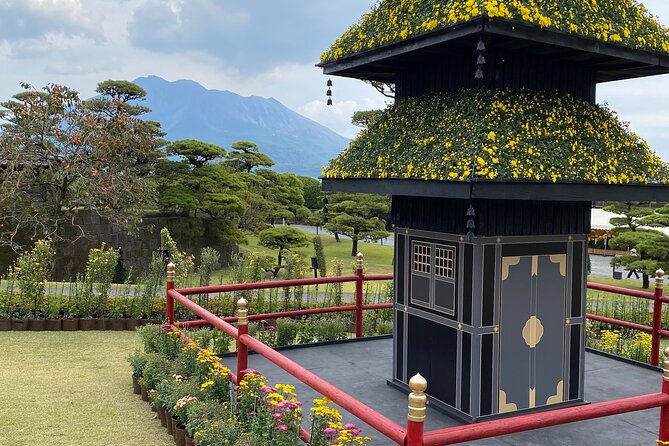
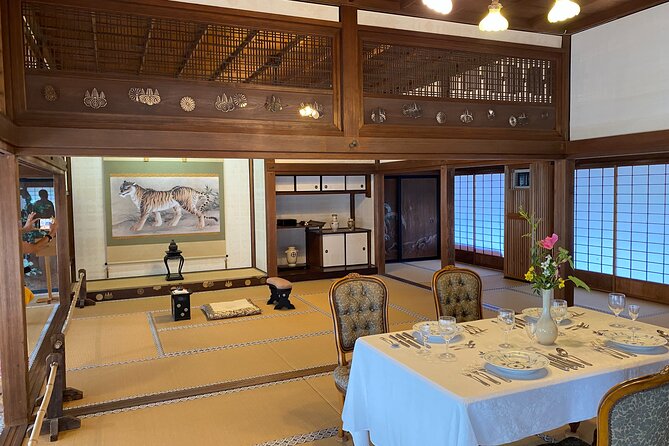
Sengan-en is a 12-acre traditional garden built in 1658 as a villa for the Shimazu clan. It includes ponds, streams, shrines, bamboo, and a mountain trail with views over Kagoshima Bay.
The garden’s setting is a major part of its appeal. It was designed with the surrounding scenery in mind, so the bay and volcano form part of the view rather than sitting outside the garden as separate attractions. After the exposed lava fields, Sengan-en feels calm and carefully arranged.
You spend about an hour here. That is enough for the main garden paths, but the mountain trail may require more time than the schedule allows. Ask Hitomi how much walking fits your group’s pace before setting off.
Sengan-en admission is not included. The listed price is ¥1,600 per person. That extra cost is worth noting for a larger group, since eight admission tickets add up quickly.
Shuseikan and Satsuma cut glass
The Shoko Shuseikan Museum occupies the former Shuseikan Machine Factory, whose main building dates to 1865. The factory produced metalwork for ships and other projects and is described as the oldest surviving example of its kind in Japan.
This stop adds industrial and political context to Sengan-en. The Shimazu clan was not only concerned with gardens and castle life. It also pursued Western technology and manufacturing during a period when Japan was changing fast.
You have about 20 minutes at the museum, and admission is extra. That is enough for a focused visit, not a full museum study. If you prefer gardens and outdoor scenery to displays, you may find this stop less compelling. If you want to understand Kagoshima’s role in Japan’s modernization, it earns its place.
At Iso Kogeikan, you can see Satsuma cut glass. The factory began in 1851, closed in 1877, and was revived about a century later. Artisans cut through thick colored glass to reveal clear glass beneath, producing gentle color changes across each piece.
The visit is also about 20 minutes and admission is listed as free. It is a compact stop, but the glasswork gives you a tangible souvenir option and a look at a local craft rather than another historical building.
Extra city sights depend on your chosen route
The tour can be customized for six, seven, or eight hours. The listed route includes several additional Kagoshima city sights that may be fitted in depending on timing and your priorities.
Possible stops include Gion-no-su, where Spanish missionary Francis Xavier landed in 1549, and Terukuni Shrine, which honors Shimazu Nariakira, the 28th head of the Shimazu clan. You may also visit a monument connected with Saigo Takamori, a major figure in the Meiji Restoration, Kagoshima Castle, and the former lodgings of British engineers who helped build Japan’s first Western-style spinning mill.
This flexibility is useful, but it also means you should not assume every named place fits into a standard seven-hour day. Sakurajima alone includes six stops before lunch, and Sengan-en plus the museums takes another substantial block of time.
Tell Hitomi what matters most. A first-time visitor who wants the volcano and gardens should keep the route focused. Someone interested in modernization and local political history might trade one lava stop or shorten lunch for city sights.
The wider description also mentions Chiran, sand bathing, artisan rice vinegar, and the Mars and Kanosuke whiskey distilleries. These are appealing subjects, but they are not part of the detailed 10-stop route described here. Treat them as possible custom-tour ideas, not guaranteed seven-hour stops.
What the private format is worth
The group price is listed at $459.81 for up to eight people, but the important detail is that the guide fee is separate from several large expenses. A 7-hour chartered taxi averages ¥34,000 for up to three people or ¥46,000 for up to eight people.
You also pay the round-trip Sakurajima ferry, listed at ¥500 per person, plus a car fare of ¥4,700 depending on vehicle size. Sengan-en costs ¥1,600 per person, and lunch is your responsibility.
For a full group of six to eight, the guide fee and vehicle cost can make reasonable sense per person, especially if you value a private route and English guidance. For one or two people, the total becomes much harder to justify compared with public transport and independent sightseeing.
The private taxi is not just a luxury here. It helps you reach several Sakurajima stops in one day and keeps the route workable for families, older relatives, or cruise passengers with limited time. A group of six grandparents, parents, and adult children reportedly used the format successfully, which gives you a good idea of who benefits most.
Hitomi’s guiding style and group fit
Hitomi is the named English-speaking guide. The feedback around her consistently highlights clear communication, warmth, flexibility, and strong knowledge of Kagoshima’s history and scenery. She has adjusted tours for a short six-hour visit, a large family, two young children, and groups booking more than one day.
That matters because this is not a scripted bus tour. You need a guide who can explain why a buried torii matters, answer questions about volcanic activity, and still help a family decide where to eat. Hitomi’s replies also show that she communicates before the tour, which is useful for confirming the vehicle cost and your preferred route.
The tour is marked as suitable for most people, and only your group participates. Still, you should consider the walking involved at the lava promenade, garden paths, and possible mountain trail. The foot bath requires you to expose your feet, and rain can affect outdoor viewing.
Who should book this Kagoshima day
I would choose this tour if you have limited time in Kagoshima and want the volcano, food, and gardens in one organized day. It is especially useful for a cruise-port visit, a multigenerational family, or a group that wants English explanations without joining strangers.
It also suits you if you care about local context. The route connects volcanic eruptions with shrine traditions, hot springs, food, industrial development, and the Shimazu family. That is a far better introduction to Kagoshima than simply taking a photograph of Sakurajima from the city.
I would hesitate if your budget is tight, your group is very small, or you prefer a slow visit to one place. The additional taxi and admission costs can make the final bill much higher than the headline price, and the seven-hour schedule covers a lot of ground.
The experience has a 5.0 rating from 20 ratings, with 100 percent recommending it. That record supports the tour’s strongest points: Hitomi’s personal guidance, flexible planning, the volcano stops, and the Wagyu lunch option. It does not remove the need to check the final cost or set realistic expectations about weather.
Final call: a strong private introduction, with costs to check
Book this tour if you want a well-shaped first look at Kagoshima and can share the transport cost with a medium or large group. The combination of Sakurajima’s lava fields, a hot-spring foot bath, Tenmonkan food, and Sengan-en’s gardens gives you both the dramatic and human sides of the city.
Before paying, confirm the exact route, vehicle arrangement, weather terms, and total cost including the ferry, Sengan-en, and lunch. If you do that, this is a practical and memorable way to see Kagoshima in one day, with Hitomi helping you spend your limited hours where they matter most.
FAQ
How long does the Kagoshima private tour last?
The standard tour lasts about seven hours. A six-hour or eight-hour version can also be arranged through customization.
How many people can join the private tour?
Up to eight people can participate in one group. Only your own group takes part.
Is hotel or port pickup available?
Pickup is offered. The provided tour information does not specify every pickup location, so confirm your exact meeting point when booking.
Is transportation included in the listed price?
No. The guide fee is included, but a 7-hour chartered taxi is extra. The average taxi price is ¥34,000 for up to three people or ¥46,000 for up to eight people.
How much does the Sakurajima ferry cost?
The round-trip passenger fare is listed as ¥500 per person. A car fare of ¥4,700 may also apply, depending on vehicle size.
Is lunch included?
No. You pay for lunch separately. In Tenmonkan, you can choose options such as Wagyu beef, black pork, ramen, and other local food.
Is admission to Sengan-en included?
No. Sengan-en admission is listed at ¥1,600 per person. Admission to the Shoko Shuseikan Museum is also not included, while the other listed stops have no admission charge shown.
Just added around Kagoshima
- Port Pick-Up: Kagoshima Private Tour Licensed Guide & Vehicle★ 4.5 · 22 reviews
- Kagoshima Nature and Food Culture Private Tour★ 5.0 · 15 reviews
- Kayaking in Anbo River★ 5.0 · 19 reviews
- Kagoshima Full-Day Private Tour with Government-Licensed Guide★ 5.0 · 21 reviews
- Kagoshima: Ibusuki City and Mount Kaimon Dake Tour★ 5.0 · 14 reviews
- Kagoshima-city Sightseeing spot Private Tour★ 5.0 · 16 reviews
- Experience the blessings of volcanoes in Kagoshima, Kyushu★ 4.9 · 13 reviews
- Discover the Wonder of Sakurajima Half Day Tour in Kagoshima★ 4.8 · 24 reviews
Kagoshima Tours, compared.
Sakurajima Century Lava Climb Journey with E-bike
Read our review →
Discover the Wonders of Sakurajima Half Day Tour in Kagoshima
Read our review →
Kagoshima Private & Custom Tour with Licensed Guide and Vehicle
Read our review →Sakurajima Century Lava Climb Journey with E-bike
Read our review →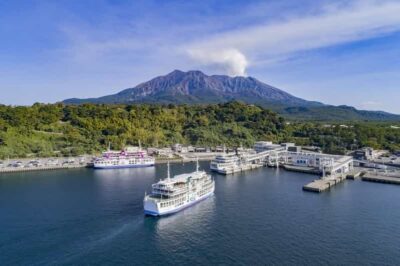
Discover the Wonder of Sakurajima Half Day Tour in Kagoshima
Read our review →
Port Pick-Up: Kagoshima Private Tour Licensed Guide & Vehicle
Read our review →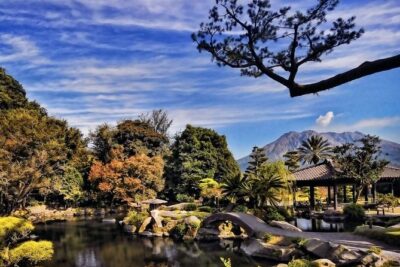
Kagoshima Full-Day Private Tour with Government-Licensed Guide
Read our review →
Browse the lists this tour appears in