
REVIEW · KAGOSHIMA TOURS
Discover the Wonders of Sakurajima Half Day Tour in Kagoshima
Sakurajima is not a dormant postcard volcano. It is an active one, and this half-day tour brings you close enough to feel its presence while still keeping the day easy to manage. You cross Kagoshima Bay by ferry, ride the island’s public bus, and reach Yunohira Lookout for broad views of the crater area and bay.
I like the volcanic ash art because it gives you a small, personal souvenir rather than another shelf-bound trinket. I also like the 100-meter hot spring footbath, a welcome break after walking and riding around the island.
The main thing to consider is that this is not a private vehicle tour. You use the Sakurajima Island View Bus, which can be crowded, and part of the outing involves walking. Guide quality and English fluency may also vary by date.
In This Review
- Key points to know before booking
- Why Sakurajima makes a strong half-day outing
- Meeting at the Kagoshima Ferry Terminal
- Crossing Kagoshima Bay by ferry
- Tsukuyomi Shrine, a quiet first stop
- Sakurajima Visitor Center and the facts behind the ash
- Nagisa Foot Bath Park, a 100-meter pause
- Ougaku Togei and the volcanic ash painting
- Yunohira Lookout at 373 meters
- How the public bus affects the experience
- The guide can make or break the day
- Weather, walking, and who should book
- Cancellation and overall value
- Should you book the Sakurajima Half-Day Tour?
- FAQ
- How long does the Sakurajima half-day tour last?
- What is included in the price?
- Where does the tour start and finish?
- Do I need to bring anything for the footbath?
- Is the tour suitable for cruise passengers?
- What happens if the weather is poor?
Key points to know before booking
- Sakurajima by ferry: The crossing from Kagoshima takes about 20 minutes and is included in the price.
- A practical island circuit: The route covers a shrine, visitor center, footbath, pottery studio, and Yunohira Lookout in about four and a half hours.
- Make art from the volcano: You create a picture with colored volcanic ash, and the activity takes at least 20 minutes.
- Highest public viewpoint: Yunohira Lookout sits 373 meters above sea level on the North Peak.
- English-speaking guide support: Guides such as Yuki, Yukiko, Naomi, Kuni, and Aya have led this outing, though English ability is not perfectly consistent.
- Good cruise-port timing: The tour starts and ends at the Sakurajima Ferry Kagoshima Terminal, with the return ferry included.
Why Sakurajima makes a strong half-day outing
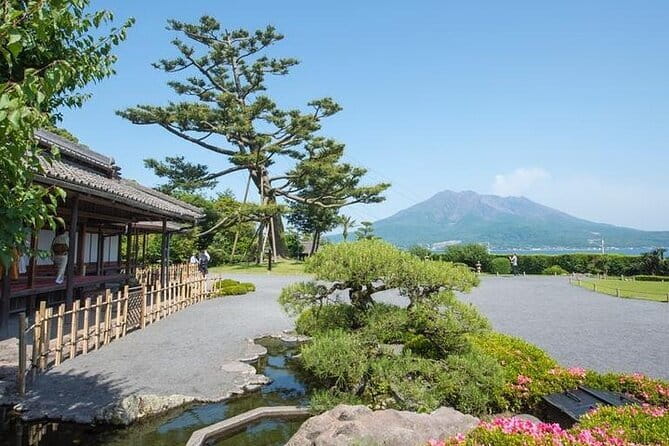
Sakurajima is Kagoshima’s defining sight. The volcano rises across the bay from the city, and its activity shapes daily life on the island. Ash falls, eruptions occur frequently, and residents must live with the practical demands of an active volcano rather than treat it as scenery alone.
That makes this tour more useful than a simple viewpoint visit. You see the volcano, but you also learn how people live beside it. The Sakurajima Visitor Center explains past eruptions, the volcano’s formation, local plants, tourism, and disaster planning. At the pottery workshop, volcanic material becomes something decorative and useful.
The outing is built for a visitor with limited time. In four hours and 30 minutes, you get transport, interpretation, several short stops, and a hands-on activity. If you are staying in Kagoshima for only a day or arriving by cruise ship, that efficient route is the chief reason to consider it.
The tour costs $95.54 per person. That is not the cheapest way to see Sakurajima. You can arrange the ferry and island bus on your own for less, and one description of the ferry places the one-way fare at 230 yen. But the price here also covers the ferry, volcanic ash art, and a guide who handles the public transportation and timing. You are paying for structure and local explanation, not just admission tickets.
Other Japan days people book alongside this one:
- Mt Fuji and Hakone 1-Day Bus Tour Return by Bullet Train
★ 5.0 · 26,383 reviews - 1-Day Tokyo Bus Tour
★ 5.0 · 14,250 reviews - PERFECT KYOTO 1-Day Bus Tour
★ 5.0 · 13,518 reviews
Meeting at the Kagoshima Ferry Terminal
The meeting point is the Sakurajima Ferry Kagoshima Terminal in Honkoshinmachi. You need to arrive at least 10 minutes before departure. The tour ends at the same terminal, which makes the plan simple, but you are responsible for getting to the terminal on time.
This detail matters if you are coming from a cruise ship. The terminal is not necessarily right beside your ship, so allow time for disembarkation, immigration if needed, and the trip across the port area. A taxi may be the easiest choice from the cruise terminal. Some cruise passengers have also used a shuttle bus and then walked across the parking area to the ferry terminal.
The operator has sometimes worked with cruise passengers whose arrival time was uncertain, but you should not rely on that flexibility. The stated meeting time controls, and missing it means no refund.
Crossing Kagoshima Bay by ferry
The ferry ride takes about 20 minutes in the planned schedule. It is a pleasant way to begin because Sakurajima comes into view as you leave the city. The crossing also gives you a useful sense of the volcano’s place in Kagoshima. This is not an isolated mountain reached after a long drive. It rises directly across the bay from an active regional capital.
Your ferry ticket is included. You return by ferry at the end of the circuit, so there is no need to sort out separate tickets during the morning or afternoon.
The ferry is transport first, not a sightseeing cruise, so keep your expectations sensible. The value is the view and the change of setting. You move from urban Kagoshima to an island where volcanic activity is part of ordinary life.
Tsukuyomi Shrine, a quiet first stop

Tsukuyomi Shrine sits near Sakurajima Port and has a history of about 1,300 years. The tour allows roughly 30 minutes here, enough to walk through the grounds and pause in the natural setting.
This is a good contrast with the ferry and the volcano. Sakurajima is often described through eruptions, ash, and geology, but the shrine shows the older cultural layer of the island. You get a short period of quiet before the more explanatory stops begin.
Do not expect a huge temple complex or a long formal religious visit. The appeal is the setting and the chance to learn how local tradition fits into a place shaped by nature. Your guide can also make the stop more meaningful by explaining customs and regional culture.
Same city, a completely different kind of day:
- Tokyo: TOKYO SKYTREE® Admission ticket
★ 4.5 · 11,192 reviews - Tokyo: teamLab Planets TOKYO Digital Art Museum Entry Ticket
★ 4.6 · 9,779 reviews - Mt Fuji & Hakone Cruise, Drum Show Bullet Train 1 Day from Tokyo
★ 4.0 · 7,413 reviews - Tokyo: Sumo Show Experience with Chicken Hot Pot and a Photo
★ 4.8 · 6,678 reviews
Sakurajima Visitor Center and the facts behind the ash
The Sakurajima Visitor Center is one of the most useful stops on the route. You spend about 45 minutes with exhibition panels and displays covering eruptions, the volcano’s formation, vegetation, tourism, and disaster prevention.
I would pay close attention here. Without this stop, the viewpoint can become a quick photo opportunity. The center gives you the background needed to understand what you are seeing. The ash is not just an unusual souvenir material. It is part of the volcano’s ongoing activity and a practical concern for people who live nearby.
The displays also help explain why the island has such a strong identity. Sakurajima is not only a scenic attraction for Kagoshima. It is a place where eruption records, evacuation planning, plants, transport, and tourism all meet.
This stop is particularly valuable in poor weather. Rain or fog can hide the upper volcano at Yunohira Lookout, but the Visitor Center still gives you a solid sense of the mountain’s behavior and history.
Nagisa Foot Bath Park, a 100-meter pause
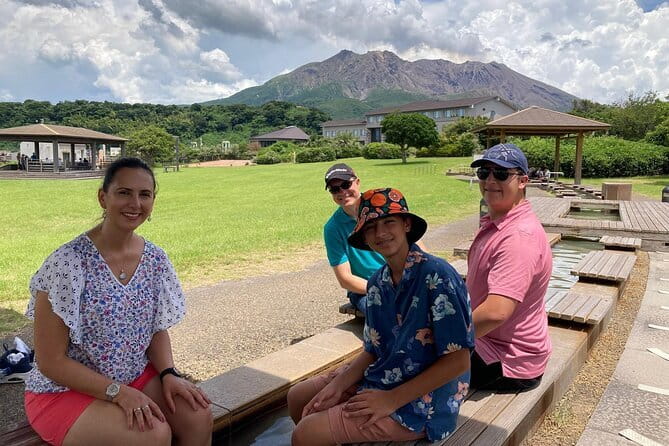
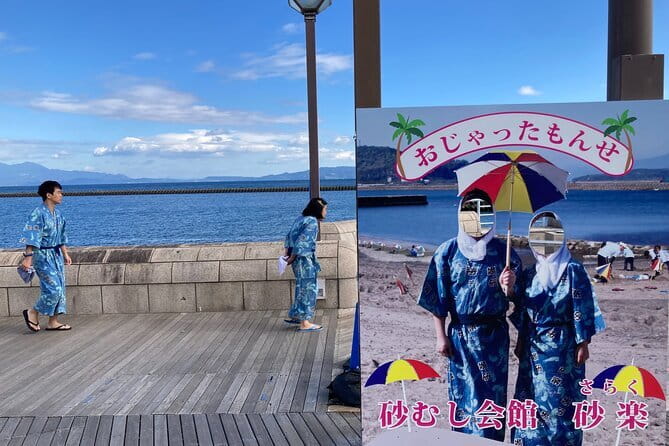
At Nagisa Foot Bath Park, you can soak your feet in a natural hot spring that rises from about 1,000 meters underground. The footbath stretches roughly 100 meters, making it one of Japan’s longest. The water has a terra-cotta color because of its iron content.
You get around 30 minutes here. That is enough time to sit, relax, and give your feet a break from the walking and bus transfers. The stop adds a simple pleasure to a tour that could otherwise feel like a rapid series of educational visits.
Bring your own towel. Towels are not listed as included, and wet feet are not a good match for the next part of the day.
The footbath is also a reminder that Sakurajima’s activity is not only destructive. Underground heat creates a soothing local resource. You are literally sitting with one of the quieter effects of the volcanic system.
Ougaku Togei and the volcanic ash painting
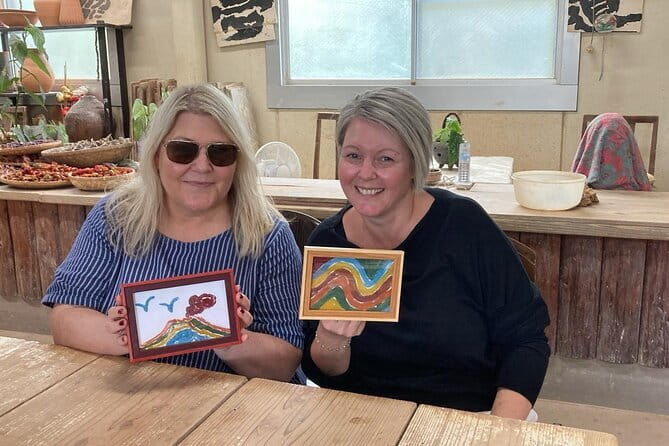
The pottery stop is the most distinctive part of the tour. At Ougaku Togei, you learn about Sakurajima-yaki, pottery made with natural volcanic ash, then create a picture using colored ash from Sakurajima.
The scheduled visit lasts about one hour and 15 minutes, though the actual ash-art activity takes at least 20 minutes. You do not need to be an artist. The activity offers different options, so you can make something simple or spend more time shaping a personal design. Finished pieces can be framed as a small keepsake.
This is where the tour becomes more than sightseeing. You are not only looking at volcanic material in a display case. You are handling it and turning it into something you can take home. Families and teenagers have found this part especially approachable, and even reluctant artists can usually find a way into it.
The studio is also a chance to buy pottery and other souvenirs. The artistry of the local mother-and-daughter team has impressed many visitors, so allow a little time to look around if you enjoy handmade work.
One practical point: the activity is listed as included, but shopping is not. If you want to bring home finished pottery, budget separately.
Yunohira Lookout at 373 meters
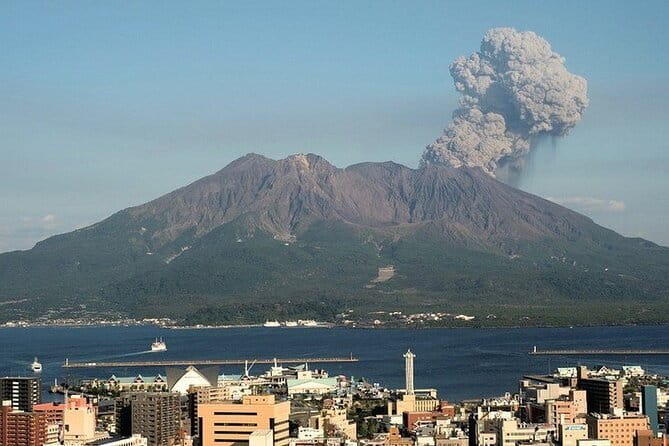
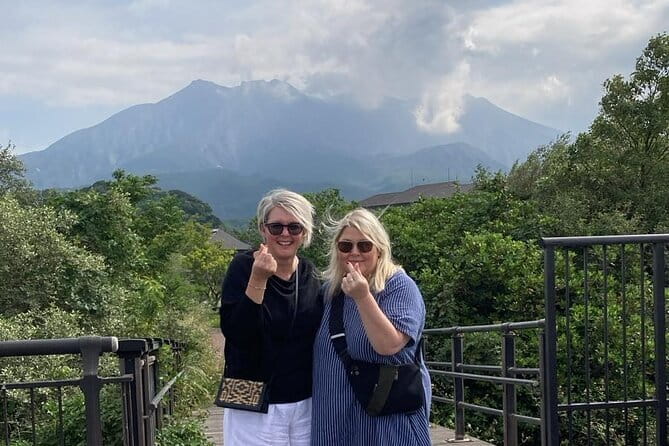
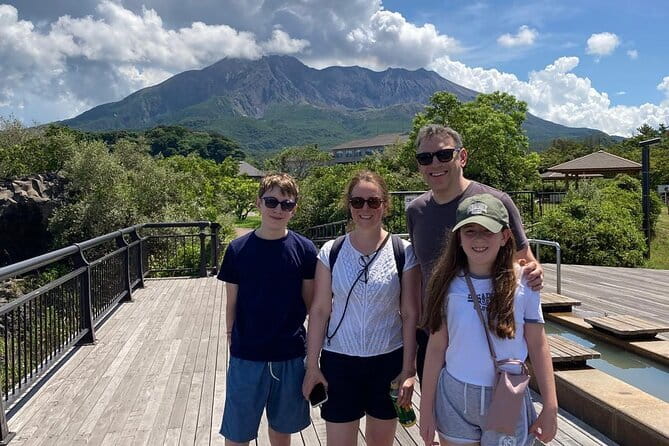
The final major stop is Yunohira Lookout, at the fourth station on the North Peak and 373 meters above sea level. It is the highest point on Sakurajima accessible to the public. You have about 50 minutes here.
On a clear day, this is the visual payoff. You can look across the volcanic slopes and Kagoshima Bay, with the city and surrounding area spread beyond the water. The height gives you a much broader view than the port area.
The weather matters greatly. Several outings have faced rain, cloud, or fog, and those conditions can block the upper volcano. The guide can still explain the site, but you may not get the dramatic view shown in promotional photographs. Bring a rain layer and keep your expectations flexible.
The volcano may also be active during your visit. One outing coincided with an eruption while the group was near the viewpoint, creating an unforgettable moment. That possibility is part of Sakurajima’s appeal, but it also explains why conditions and access can change.
How the public bus affects the experience
The Sakurajima Island View Bus lets the tour cover several parts of the island without a long private-car price tag. It is a practical choice for a half-day route, and the guide helps you board and stay on schedule.
The tradeoff is comfort and privacy. Buses can be crowded, and you may stand or move through busy boarding areas. This is public transportation, not a reserved sightseeing coach. If you want a quiet ride with a vehicle dedicated to your group, look for a private tour instead.
The public bus does add a local feel. You are using the same basic transport system that connects the island’s sights, rather than moving between them in a sealed tour vehicle. Still, anyone with mobility concerns or a strong dislike of crowds should ask questions before booking.
The maximum group size is 30, but actual groups can be much smaller. Some outings have had only a few people, while others have felt more like a standard group tour. Your guide may need to keep a larger group together at bus stops and viewpoints.
The guide can make or break the day
The strongest part of the experience is the human guidance. Guides who have led the route include Yuki, Yukiko, Naomi, Kuni or Kunihiro, Aya, and others. Yuki has been praised for clear English, patience, energy, and help with onward travel. Naomi has been described as calm and thorough, with clear explanations at each stop. Kuni has used prepared materials to explain the volcano and regional culture.
A good guide adds context you would not get from simply buying a bus ticket. You learn how residents live with frequent ash, why the island needs disaster planning, and how the volcano connects to local crafts and hot springs.
English ability is not guaranteed to be identical on every departure. One outing was hindered by limited English, and another had some difficulty with explanations after a last-minute guide change. That is the clearest weakness in the experience. The tour is advertised with an English-speaking guide, but communication may be easier with some guides than others.
Weather, walking, and who should book
This tour suits you if you want a guided overview rather than a slow, independent day. It works well for cruise passengers, first-time visitors to Kagoshima, families, and anyone who wants a mix of scenery, culture, transport, and a hands-on activity.
You should be comfortable with walking between meeting points, ferry areas, bus stops, and attractions. The itinerary includes sitting opportunities, especially at the footbath and visitor center, but it is not a ride-only excursion.
Rain can change the character of the day. The shrine, visitor center, footbath, and pottery activity still work in wet weather, but the lookout may be foggy. The experience requires good weather, and if the operator cancels for that reason, you can choose another date or receive a full refund.
The minimum group requirement is two people. If you are booking a private tour, the instructions say to select one person. Check the exact booking option carefully so you choose the right format.
Cancellation and overall value
You can cancel up to 24 hours before the start for a full refund. Cancellations or changes made inside 24 hours are not accepted for a refund. The operator may also cancel if the minimum number is not reached.
At $95.54, I see this as a convenience-focused purchase. A do-it-yourself visit can cost less, especially if you are comfortable reading bus information, timing the ferry, and finding the stops independently. The tour earns its price through the guide, the included ash-art activity, and the tightly arranged route.
It is also cheaper than some cruise-line excursions, according to the information provided for this experience. That matters if you are visiting Kagoshima on a ship and want a smaller, more personal alternative to a large shore group. Just leave enough time to return to the ship after the tour ends.
Should you book the Sakurajima Half-Day Tour?
Book it if you want to see the main Sakurajima sights in one organized morning or afternoon, especially if you are visiting by cruise ship. The combination of ferry, shrine, volcano displays, hot spring footbath, ash painting, and high viewpoint gives you a satisfying range of experiences.
I would choose it for the ash art and the local explanation, not simply for the lookout. Clear weather can make Yunohira the highlight, but rain may hide the volcano. The pottery activity and Visitor Center keep the outing worthwhile when the sky does not cooperate.
Skip it if you want complete independence, a private vehicle, or a guaranteed small group. You can visit Sakurajima by public transport on your own for less, but you will need to manage the route and provide your own interpretation.
For most first-time visitors with limited time, this is a practical and memorable introduction to Kagoshima’s active volcano. Check the meeting point, bring a towel and rain layer, and allow extra time if you are coming from a cruise terminal.
FAQ
How long does the Sakurajima half-day tour last?
The tour lasts approximately 4 hours and 30 minutes, including the ferry rides, island visits, bus travel, and return to the Kagoshima Ferry Terminal.
What is included in the price?
The price includes the ferry ticket to Sakurajima and the volcanic ash art experience fee. Lunch is not included.
Where does the tour start and finish?
It starts at the Sakurajima Ferry Kagoshima Terminal in Honkoshinmachi, Kagoshima, and ends back at the same meeting point.
Do I need to bring anything for the footbath?
You are encouraged to bring your own towel for the footbath at Nagisa Foot Bath Park.
Is the tour suitable for cruise passengers?
Yes. The tour starts and ends at the ferry terminal, and several participants have used it during a Kagoshima cruise stop. You need to allow enough time to reach the terminal and return to your ship.
What happens if the weather is poor?
The experience requires good weather. If the operator cancels because of poor weather, you will be offered another date or a full refund. You can also cancel for a full refund if you do so at least 24 hours before the start time.
Just added around Japan
- Tokyo: Customizable Private Guided Walking Tour★ 4.5 · 129 reviews
- Private Harajuku Omotesando Architecture Tour★ 4.9 · 18 reviews
- Tokyo: Guided Helicopter Ride★ 4.9 · 24 reviews
- Tokyo: Guided Walking Tour of Tsukiji Market with Lunch★ 4.4 · 24 reviews
- Tokyo: Private Personalized Local Food Tour★ 4.5 · 101 reviews
- Tokyo GINZA: KONPARU Japanese Cabaret Show with Drink★ 4.8 · 38 reviews
- Tokyo: Guided Walking Tour of Tsukiji Market with Breakfast★ 4.4 · 134 reviews
- Tokyo: Gotokuji Cat Temple, Shinjuku Cat Cafe & 3D Cat Tour★ 4.9 · 38 reviews
Kagoshima Tours, compared.
Sakurajima Century Lava Climb Journey with E-bike
Read our review →
Kagoshima Private & Custom Tour with Licensed Guide and Vehicle
Read our review →Sakurajima Century Lava Climb Journey with E-bike
Read our review →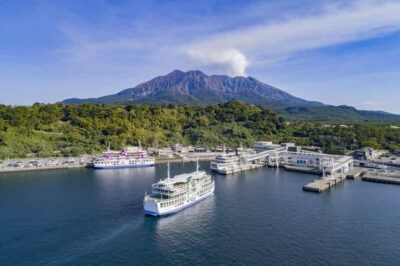
Discover the Wonder of Sakurajima Half Day Tour in Kagoshima
Read our review →
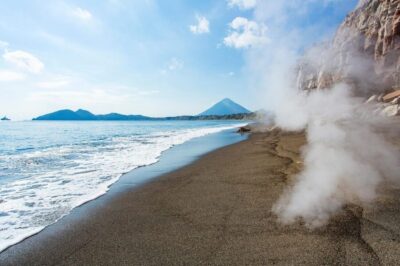
Experience the blessings of volcanoes in Kagoshima, Kyushu
Read our review →Browse the lists this tour appears in